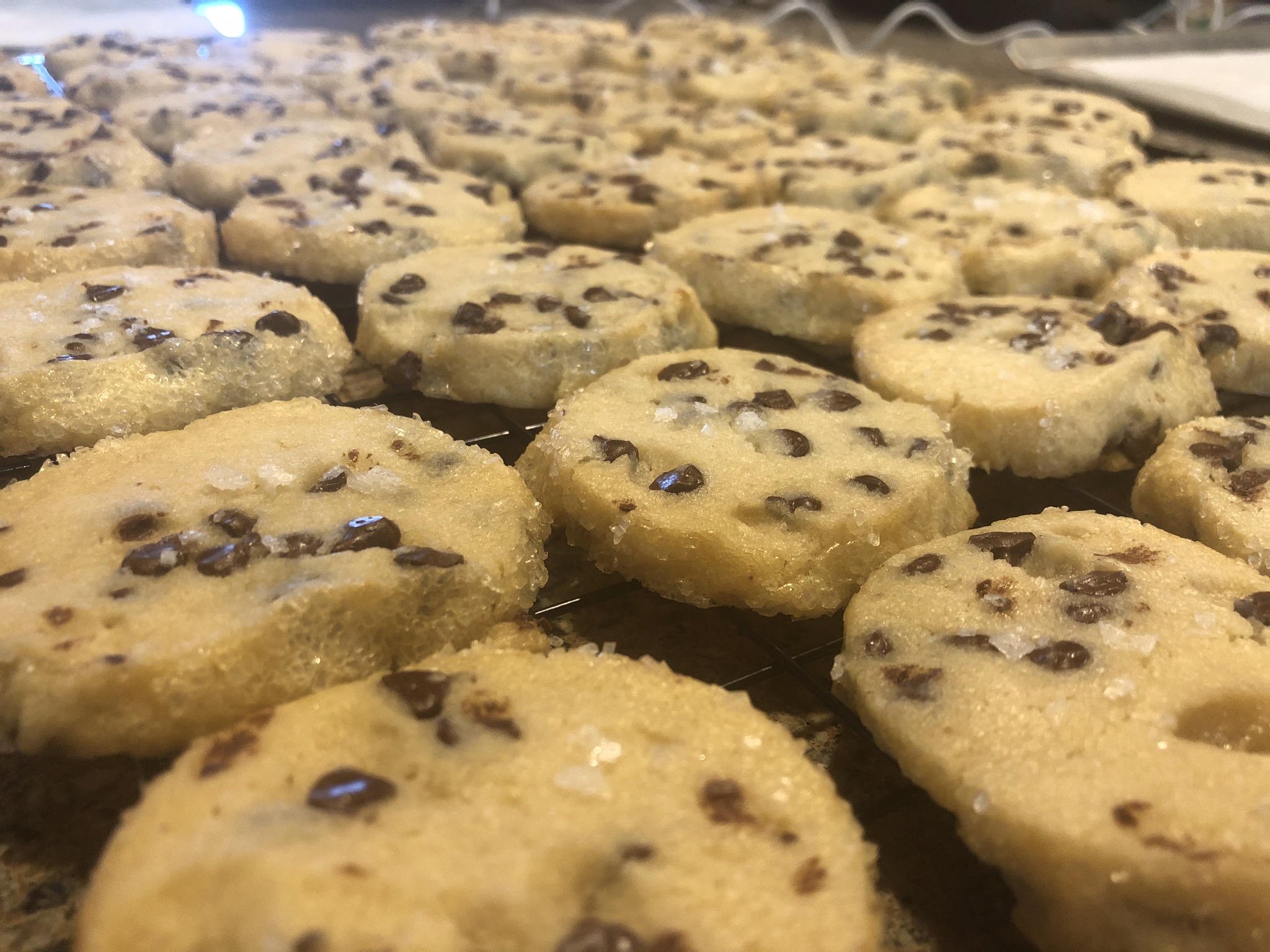
Jane’s Shortbread Chocolate Chunk Cookies

More pandemic baking.  I got this recipe from my friend Jane, hence the blog title.  Everyone in my family who has eaten these cookies loves them.  They are a little bit sweet, a little bit salty.  Not too soft, not too crunchy.  I like them better with no chocolate, but I did all chocolate when I baked these.  They’re very easy to make and the dough can be made ahead and refrigerated or frozen until you’re ready to bake.  If you like warm cookies best, just bake a few at a time.  Every house has at least one Cookie Monster and these will be big hit.

Ingredients:

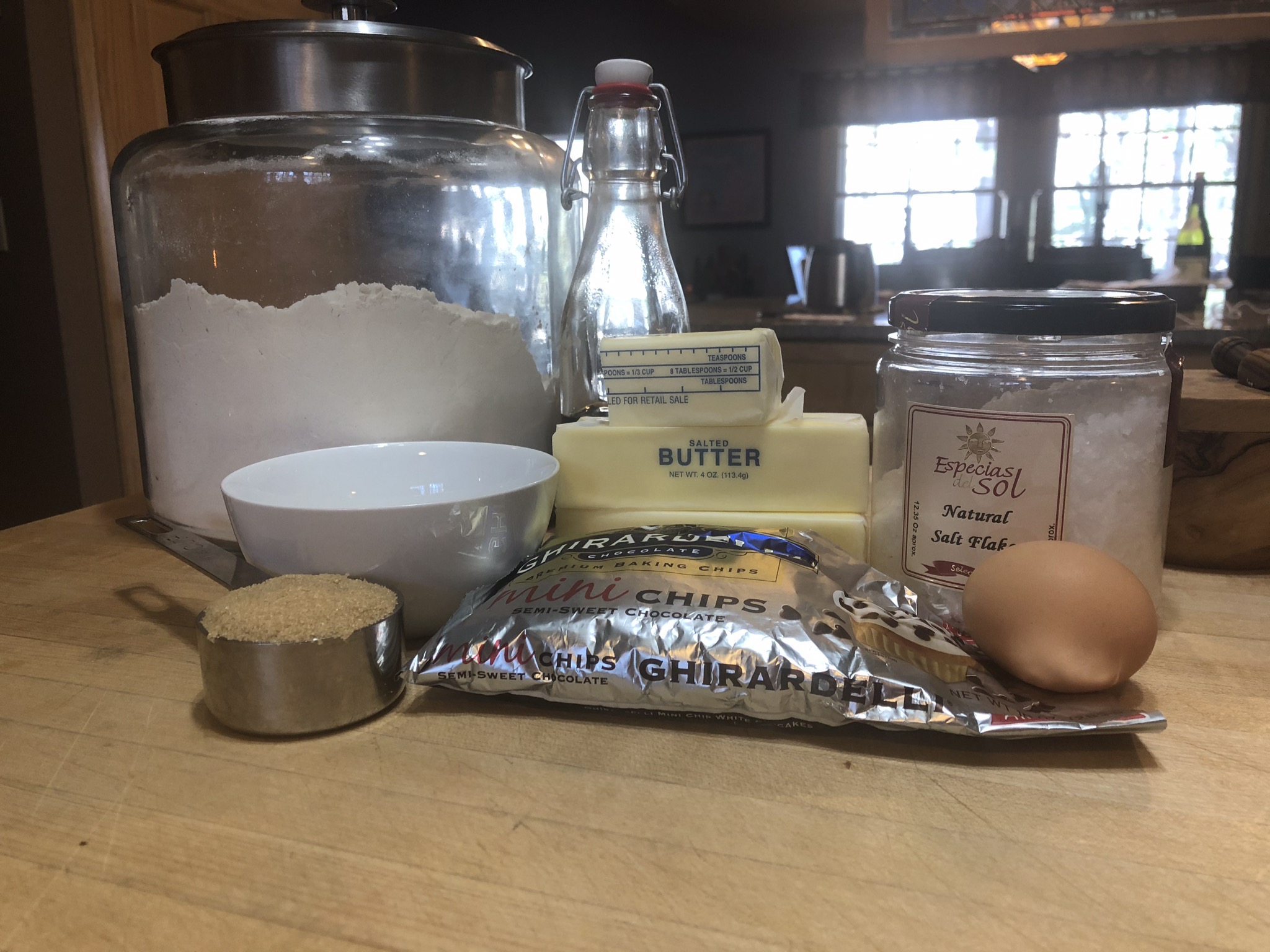
18 T cold, salted butter (2 1/4 sticks)

1/2 cup granulated sugar

1/4 cup packed brown sugar

1 tsp vanilla

2 1/4 cups AP flour

6 oz semi-sweet or bitter-sweet dark chocolate chopped

1 large egg beaten

Demerara sugar for rolling

Salt flakes for topping

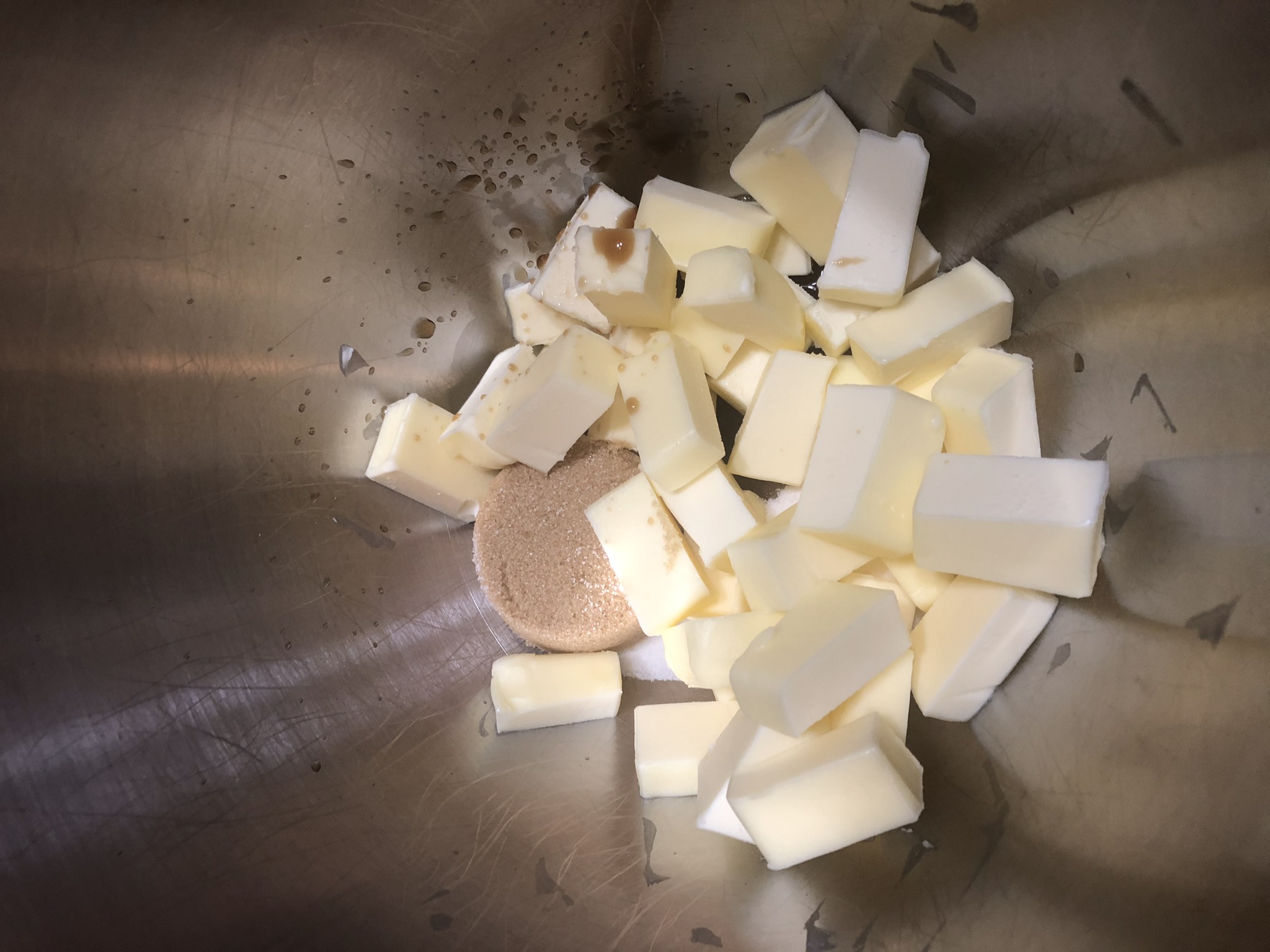
Cut the cold butter into 1/2” pieces.  Put the cubed butter, granulated and brown sugar, and vanilla in the bowl of your stand mixer.

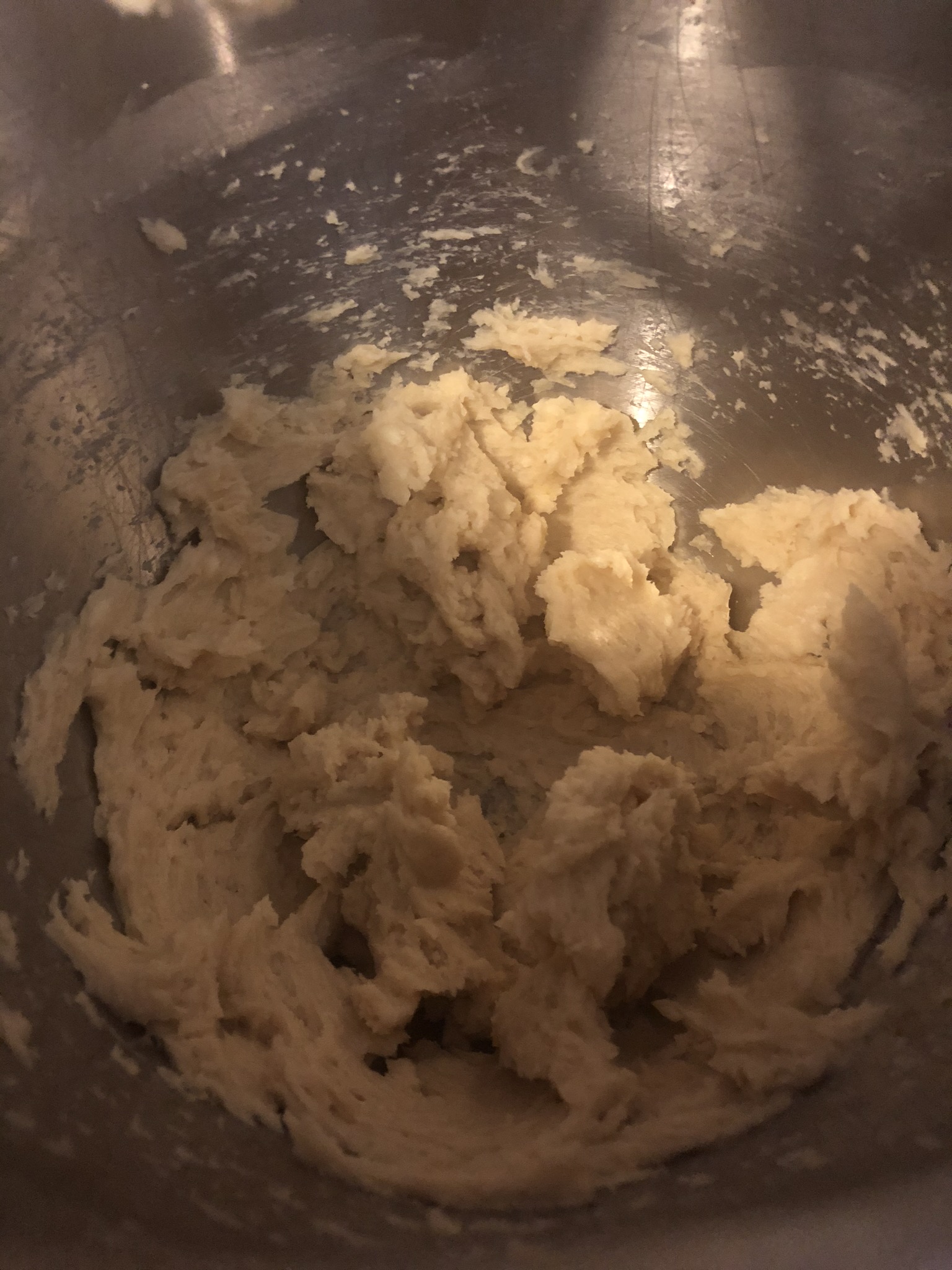
Using the paddle attachment beat on medium speed until light and fluffy, 3-5 minutes.  Scrape down the sides of the bowl as needed.

With the mixer on low speed slowly add the flour followed by the chocolate chunks.   Beat just to blend.

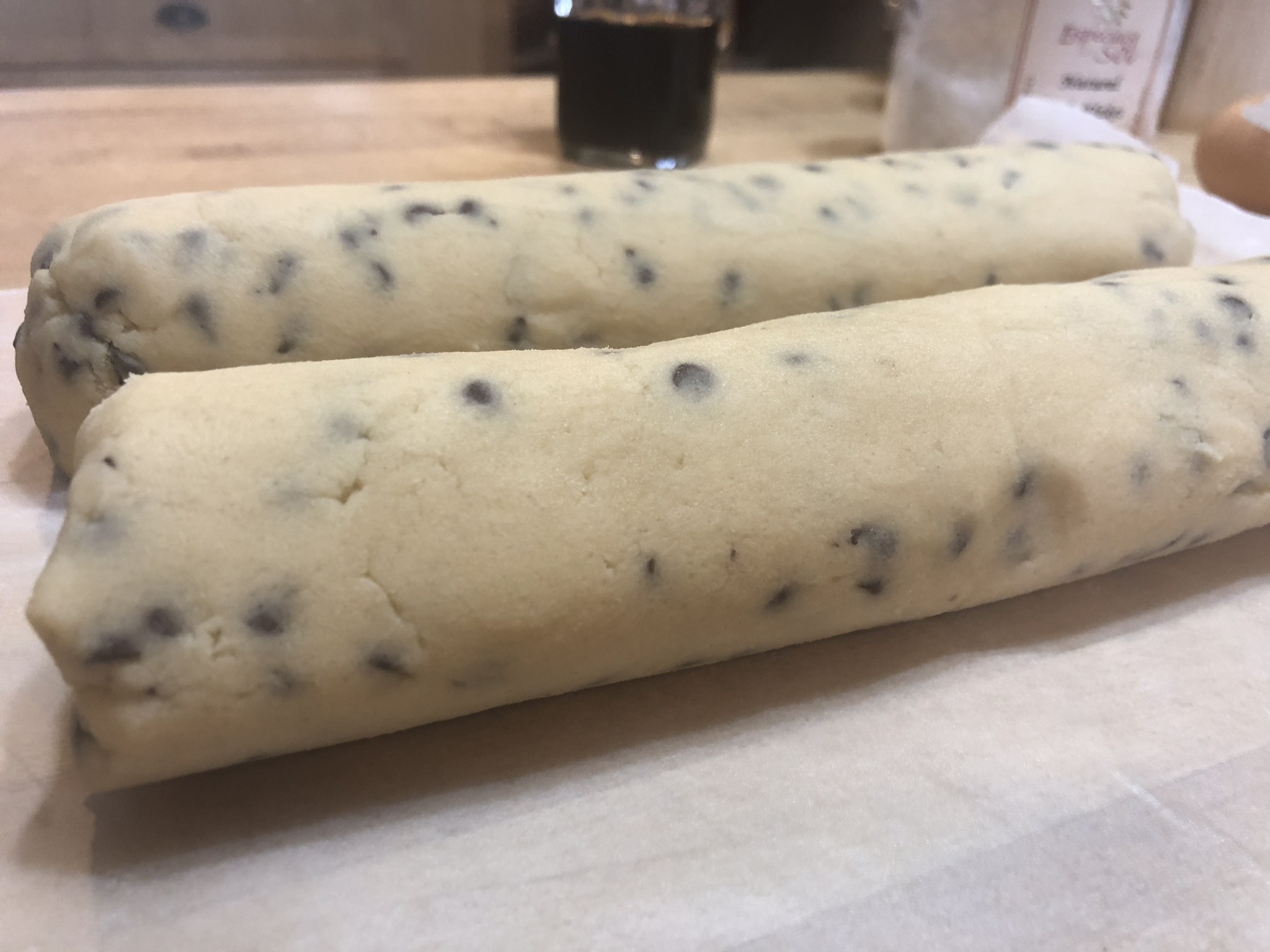
I happened to have mini chocolate chips so I used those.  If the only chocolate chips you have are regular size, chop them up a bit.  Or chop a 6 oz block of semi-sweet or bitter-sweet chocolate.  Slicing the cookie dough will be much easier with smaller pieces of chocolate.  Once the dough is mixed divide it in half.  Place each half on a large piece of plastic wrap or wax paper and form the dough into a log about 2” in diameter.  Chill until firm, about 2 hours.

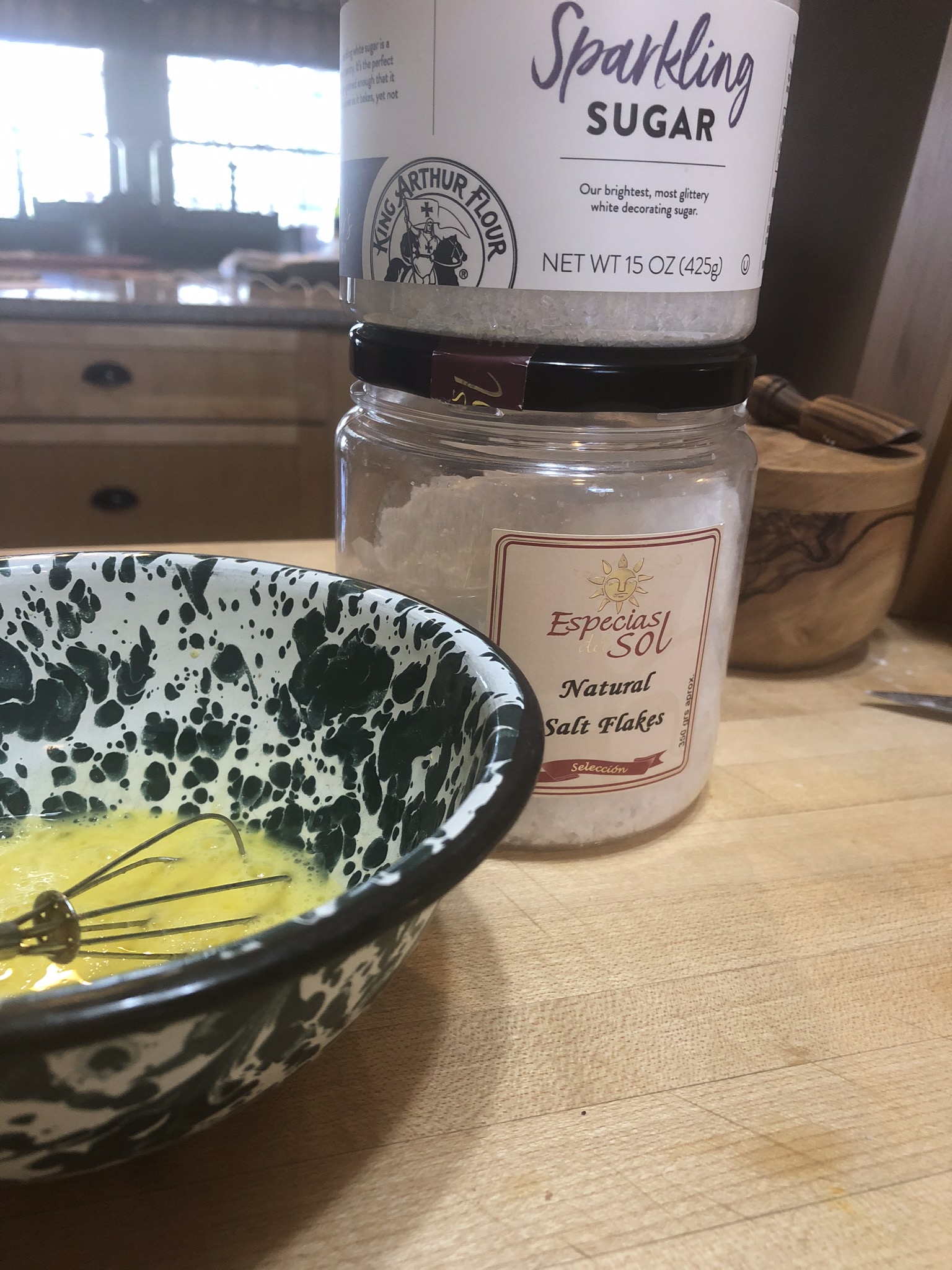
Preheat your oven to 350.  Brush each of the rolls with the egg wash and roll in the Demerara sugar for delicious crispy edges.  Demerara sugar is raw, brown granulated sugar.  I used coarse sparkling sugar because it’s what I had.

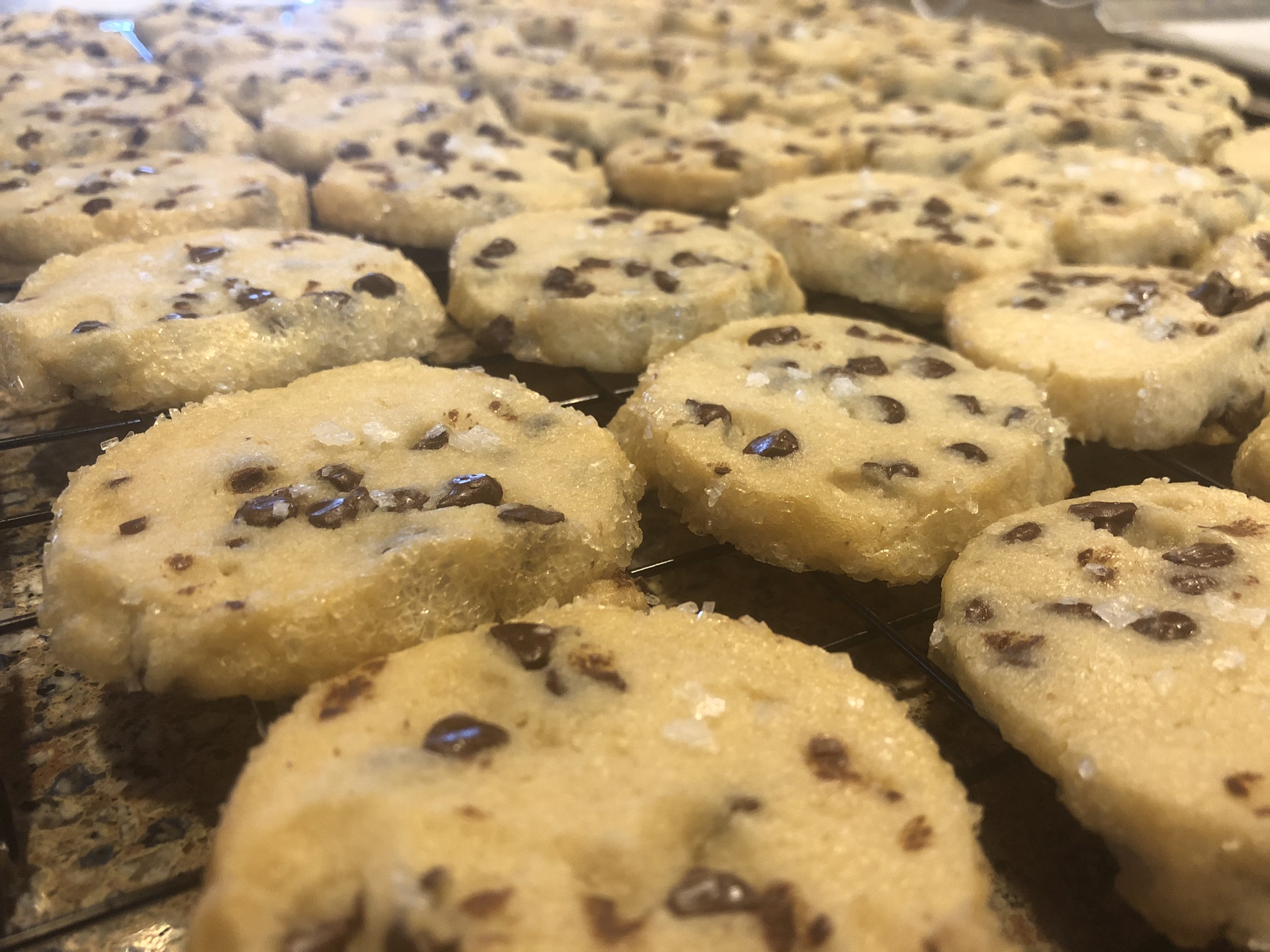
Slice into 1/2” thick rounds and place about a half inch apart on a parchment lined cookie sheet.  Sprinkle each cookie with a few salt flakes.  Bake for 12-15 minutes.

Cool the cookies on a wire rack and enjoy!

NOTE:  These are excellent with no chocolate.  At least from my perspective.  I put 4 cookies per zip lock bag and freeze them.  Perfect to pull out when you have a craving for something sweet.  Like I mentioned earlier, the dough can be refrigerated for a few days or frozen.  Make a double batch if you want to do half with chocolate, half without.

Sour Dough Bread

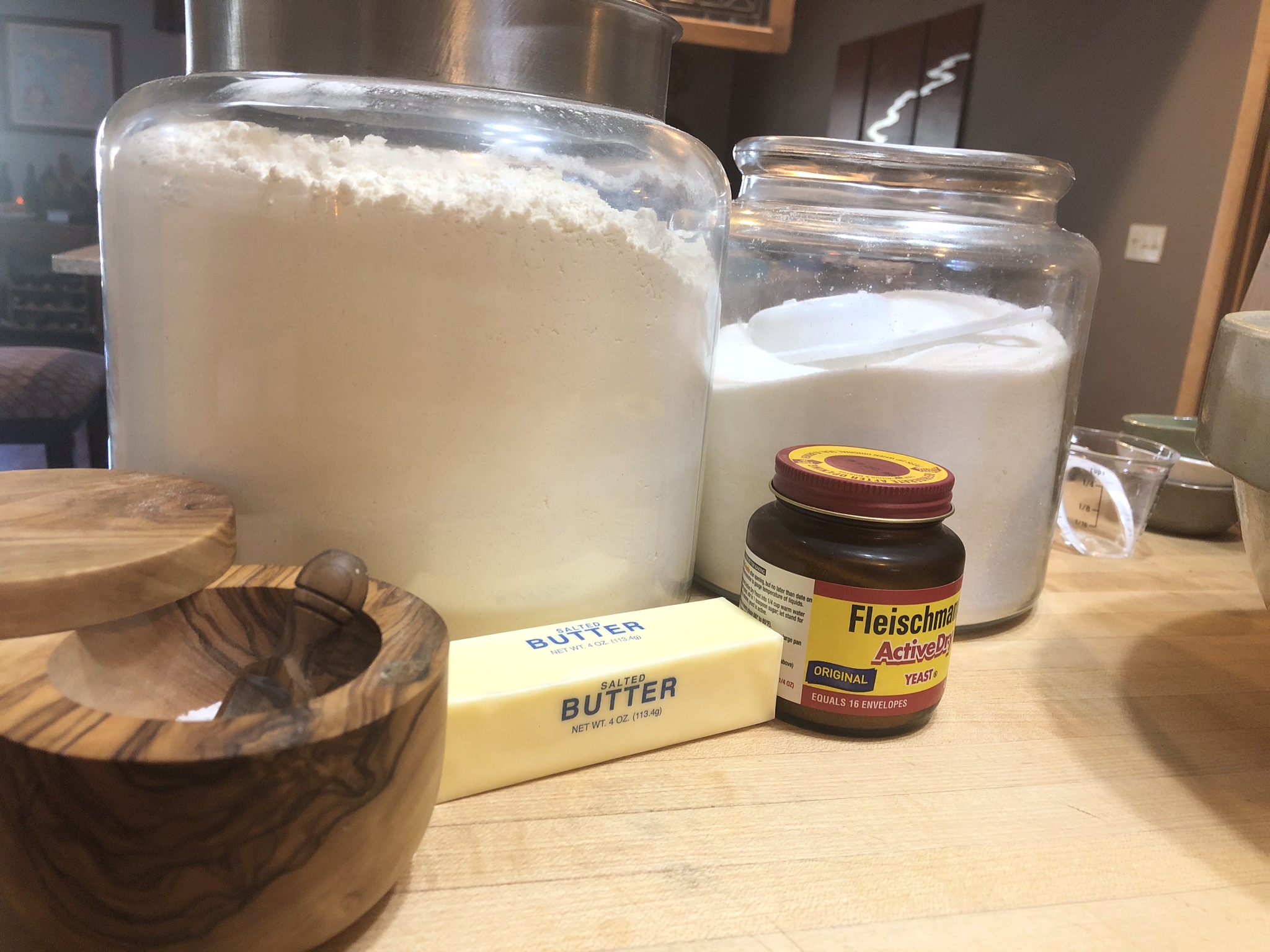
I’ve always enjoyed baking bread and often use the dough hook on my mixer to do the kneading.  But, during this pandemic, I have been doing an awful lot of bread making and kneading by hand.  Punching that dough can be therapeutic plus none of us are able to go to the gym so I’m thinking it also counts as exercise.  As my daughter said, sometimes you just have the need to knead.  Amazingly enough I have never made sour dough bread so this was a first for me.  But you can’t just wake up in the morning and say I’m going to make sour dough bread.  You have to plan ahead and start a starter.  A few days ahead.  But right now we are all on orders to stay at home so I have nothing but time.  My friend Jane gave me her recipes for the sourdough starter and the bread.  This bread recipe is Viola Tibbets’ Sourdough White Bread.  I think the recipe has been around a long, long time.  Step one is make your starter.  You’ll need a good size glass or ceramic bowl.  I have a perfect enameled metal bowl that I was going to use but after I googled it I decided against using a metal bowl.

Starter Ingredients:

1 tsp active dry yeast

1/4 cup warm water

2 T sugar

1 T vinegar

1 tsp salt

2 cups AP flour

2 cups warm water

Dissolve the yeast in 1/4 cup of warm water.  Add the next four ingredients and add the 2 cups of warm water.

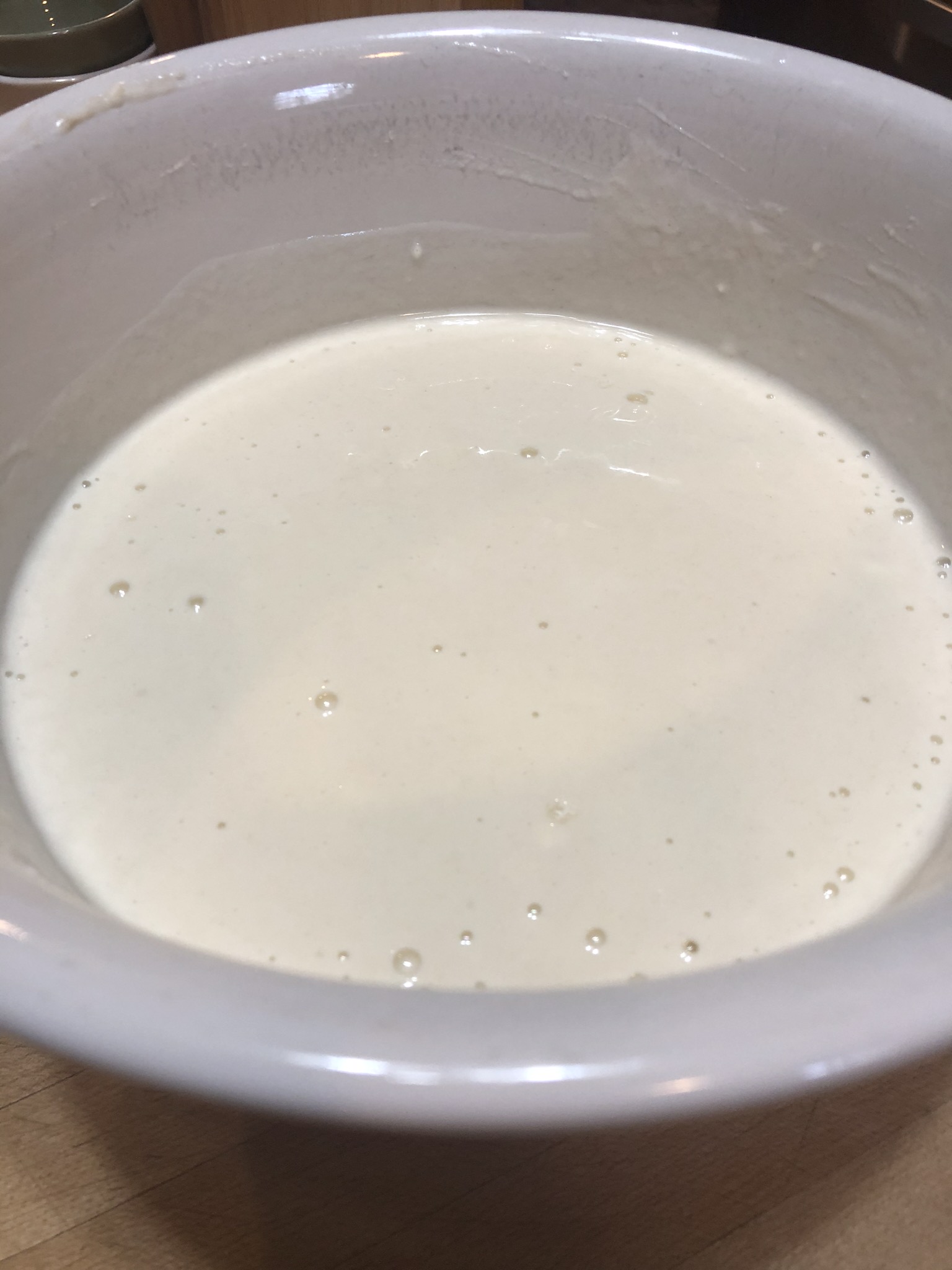
Cover the bowl loosely and allow it to stand in a warm place for two or three days to ferment.  I just laid a piece of wax paper over the top.  It will be bubbly and sour when it’s ready.  Actually kind of gross, slimy, and smelly.

Your sourdough starter can be kept alive by replacing the starter you use with the same measurements of flour and water called for in the recipe.  For instance, my recipe called for 1 1/2 cups of starter so I added 1 1/2 cups of flour and 1 1/2 cups of water to the remaining starter.  Your starter can be kept indefinitely but you need to use it at least once a week for it to stay alive, just like the BeeGees song.  You can put the starter in a glass jar and refrigerate.  Just remember to use it or remove some of the starter and feed it once a week.  Now that you have this sour, kind of gross starter ready, you can move on to making your bread.

Bread Ingredients:

1 cup hot tap water

3 T sugar

2 T butter

2 1/4 tsp of dry yeast (or 1 cake of yeast)

1 1/2 cups of starter

4-5 cups of unbleached or AP flour

2 tsp salt

Dissolve your yeast in 2 T of warm water.  Set aside.  Measure your butter and sugar into a large mixing bowl and pour hot water over them.  Stir and allow the mixture to cool to lukewarm.  Once the mixture has cooled add the yeast, starter, two cups of flour and salt.

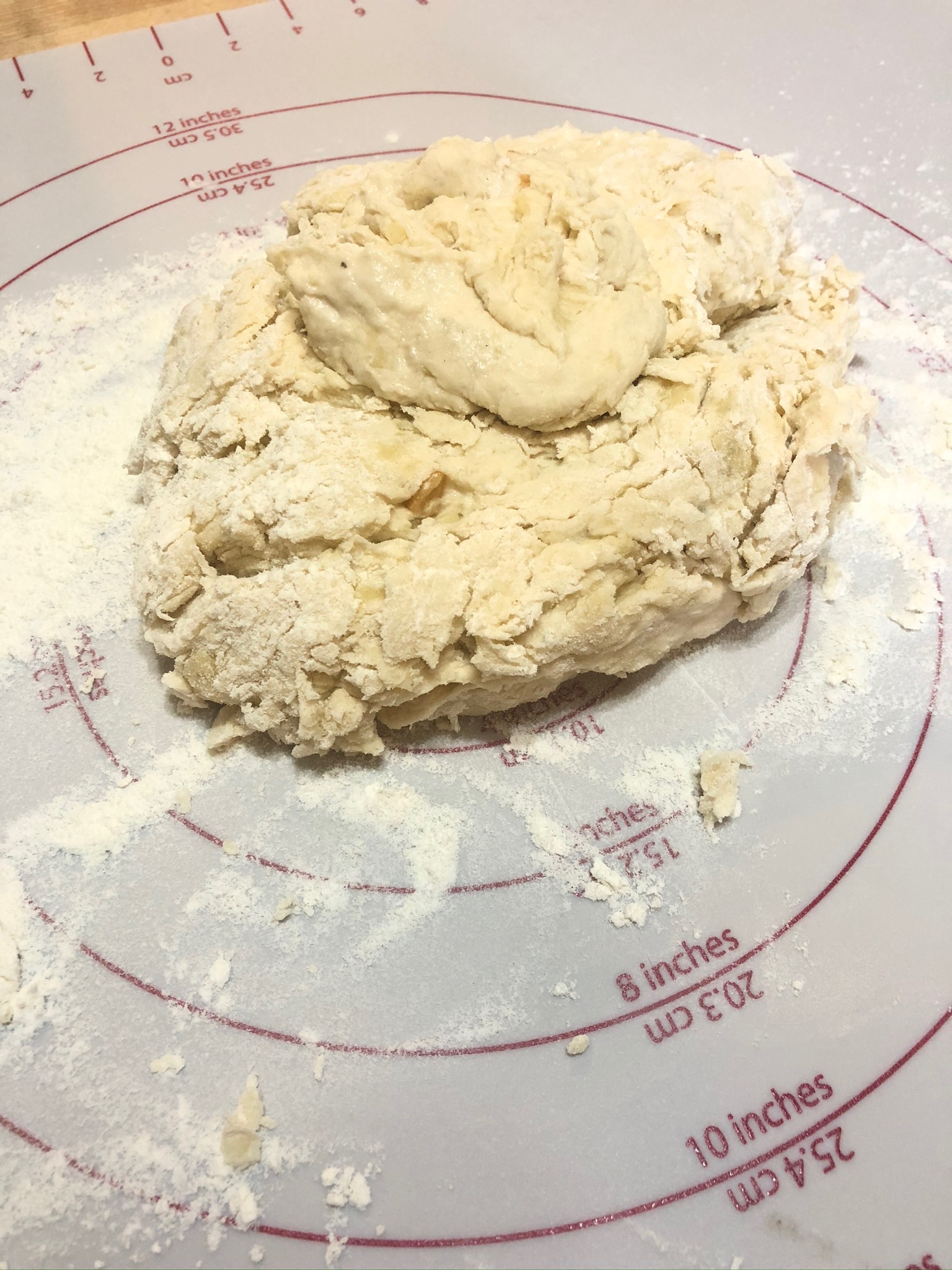
Using a wooden spoon beat to blend the ingredients.   Stir in the remaining flour to make a firm dough.  The dough will look shaggy.

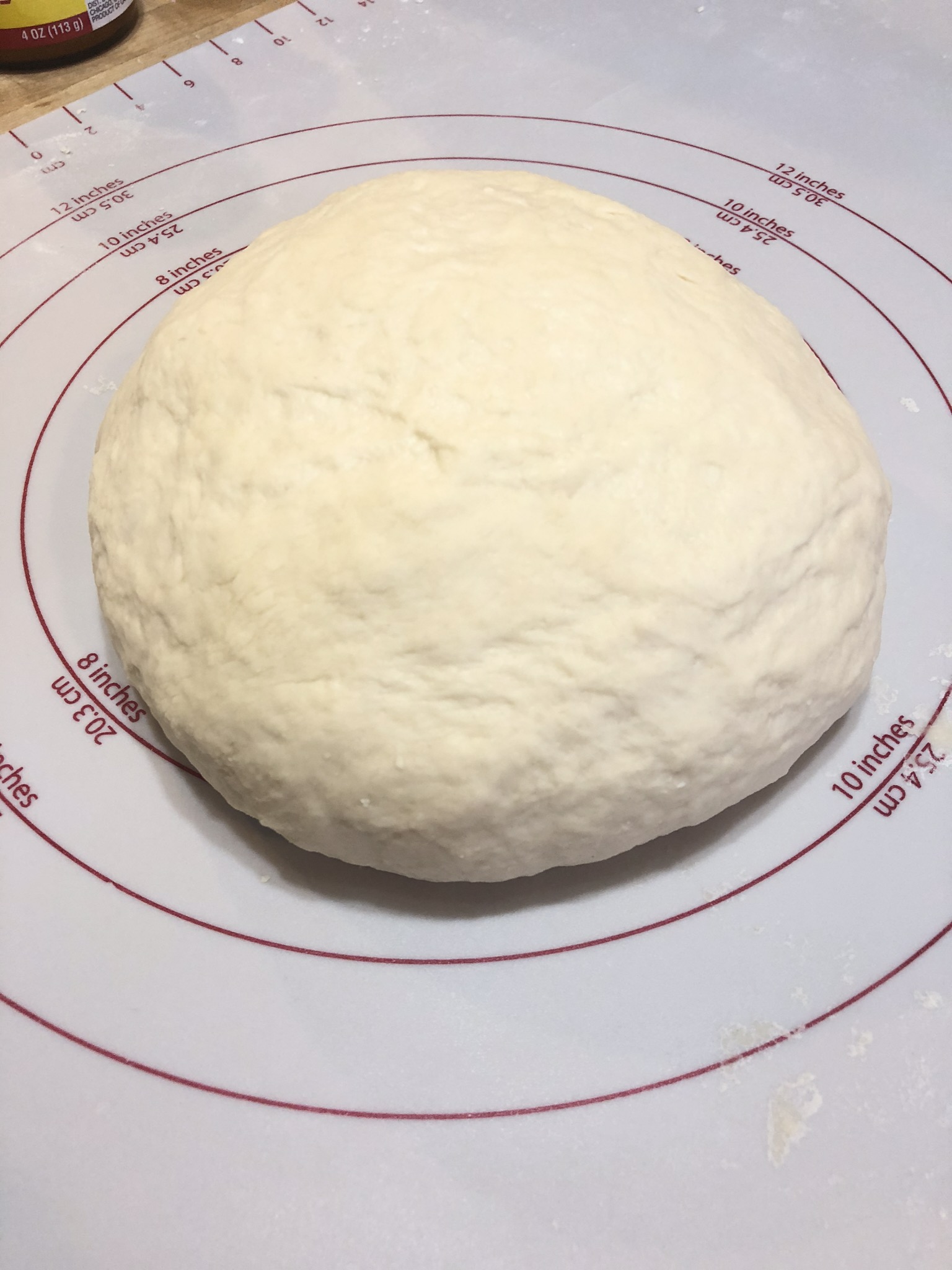
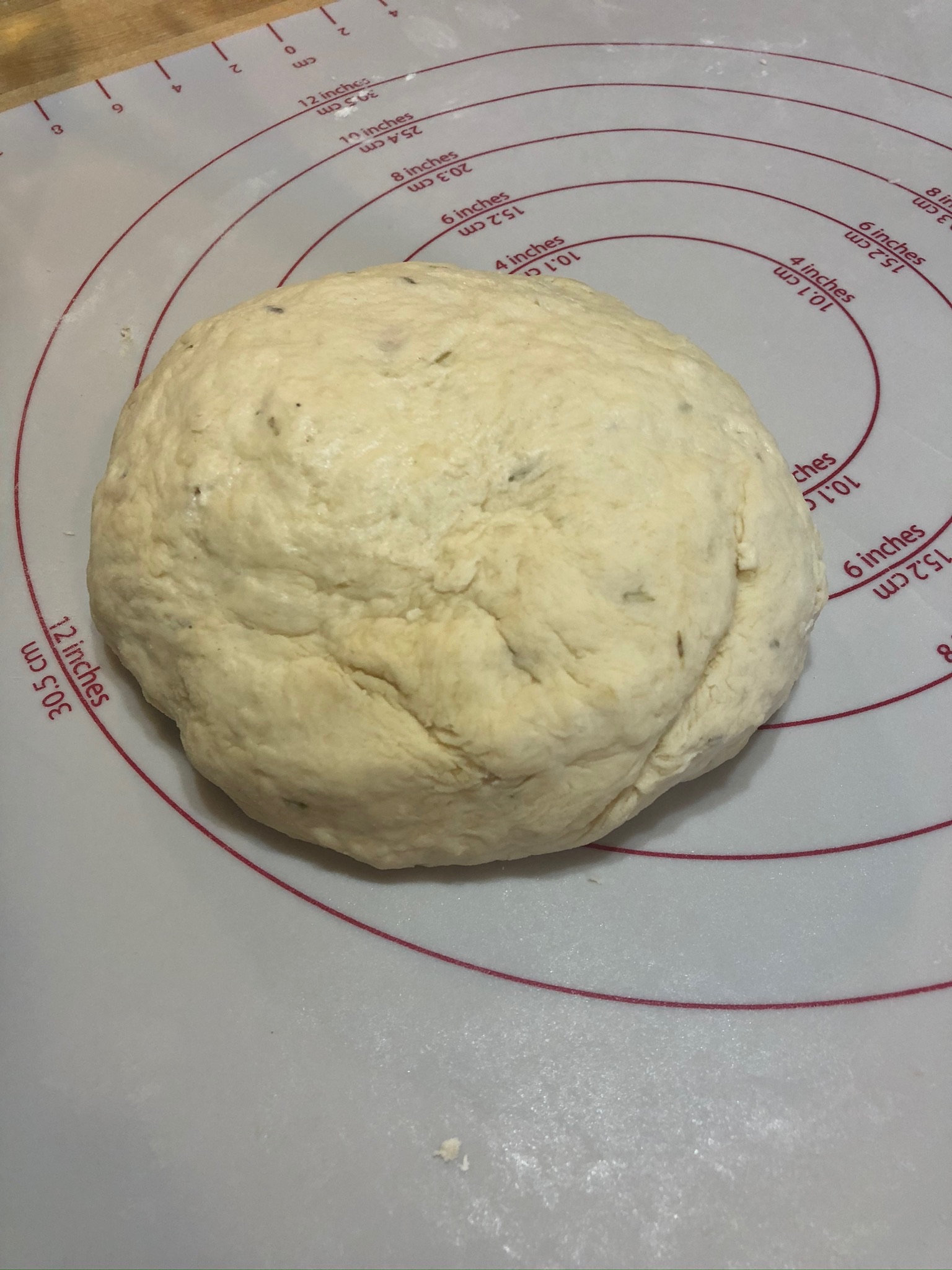
Turn the dough out on a lightly floured surface and knead for about 10 minutes until you have a nice smooth, elastic dough.

Place the dough into a lightly greased bowl and cover with a clean dish towel.  I never expect anyone to actually use a dirty dish towel, but recipes I read always suggest a clean towel so I’m just following suit.  Put the dough in a cold oven to rise until the dough has doubled in bulk.  My oven has a proof setting, but Viola’s recipe specifically said a cold oven.

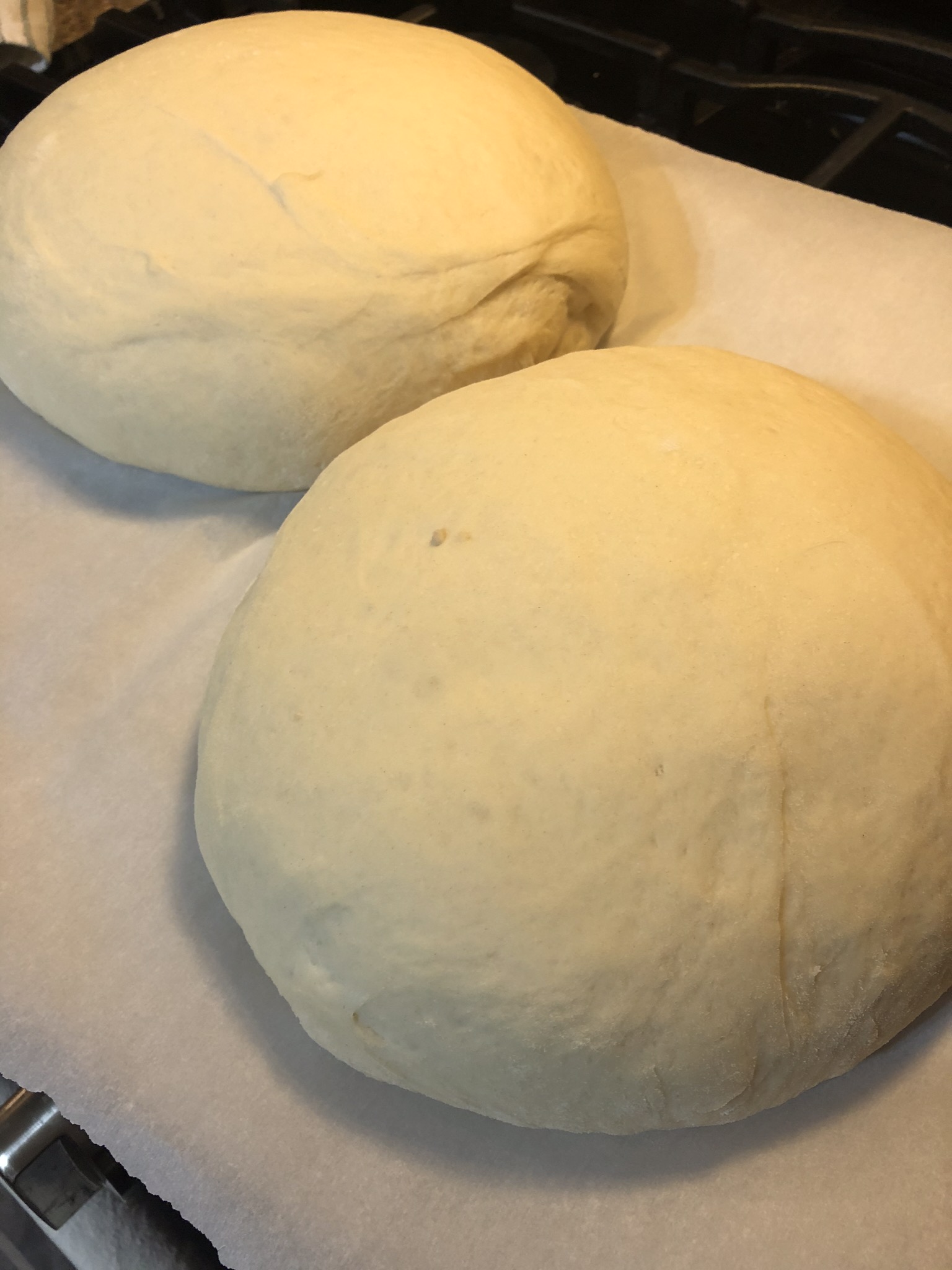
Punch the dough down, cover with that same clean towel, and let it rise for another half hour.  Turn the dough out onto a lightly floured surface and allow it to rest for 10 minutes.  Divide the dough into two parts.  I did two round loaves and put them on a parchment lined sheet pan.  If you prefer you can lightly grease two loaf pans and shape the dough accordingly.

Again the towel.  Cover  the loaves and put them back into the cold oven and allow them to rise until double in bulk, about an hour.

Remove the loaves from the oven and preheat to 400 degrees.  Once the oven reaches 400 return the loaves to the hot oven and bake for 35 minutes.

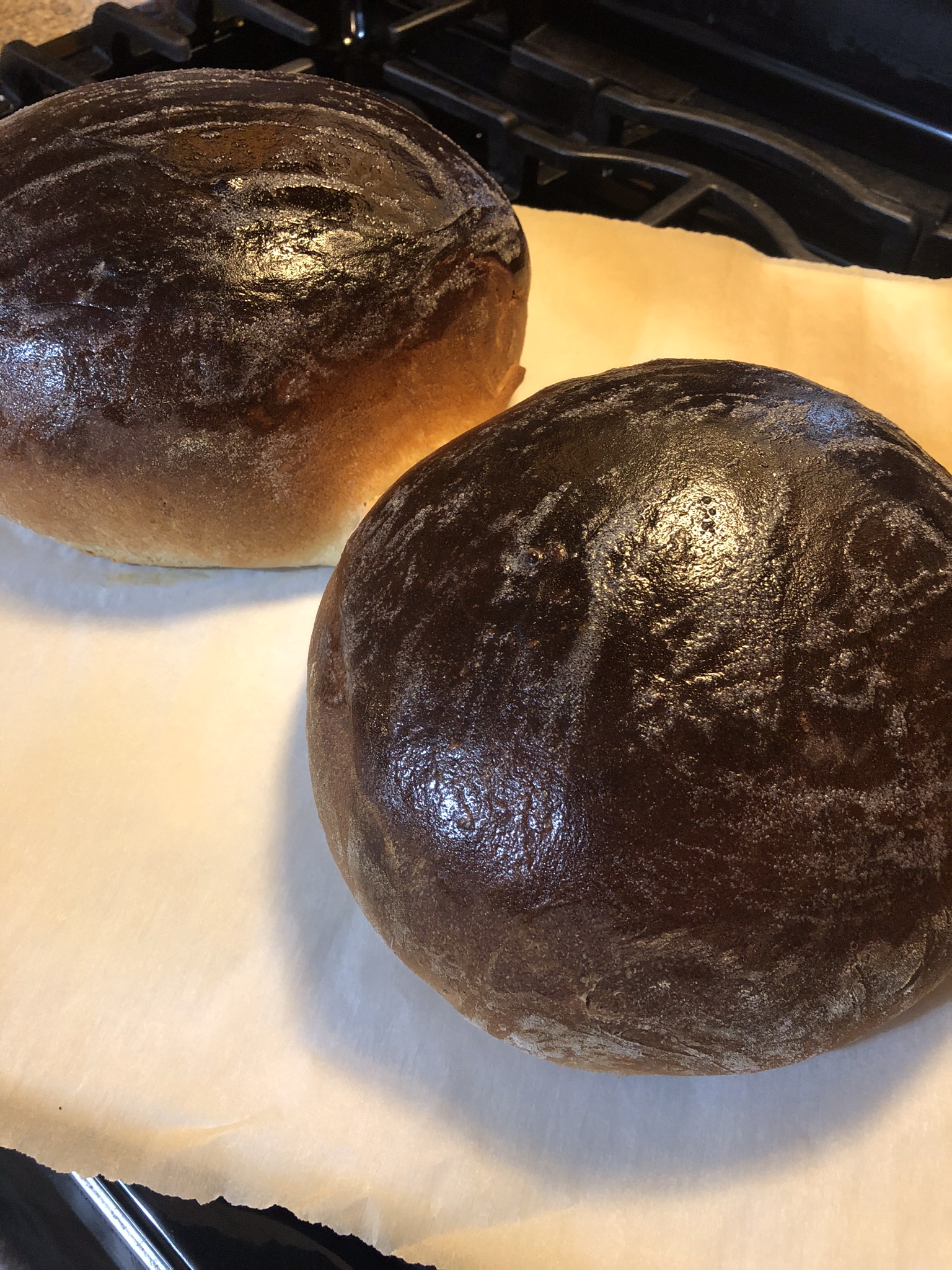
I say 35 minutes but the original recipe said 50 minutes.  I set my timer for 40  because I always like to check on progress early.  Well, 40 minutes was at least 5 too long.  The tops of my loaves were burnt.  Not to a crisp.  But burnt.

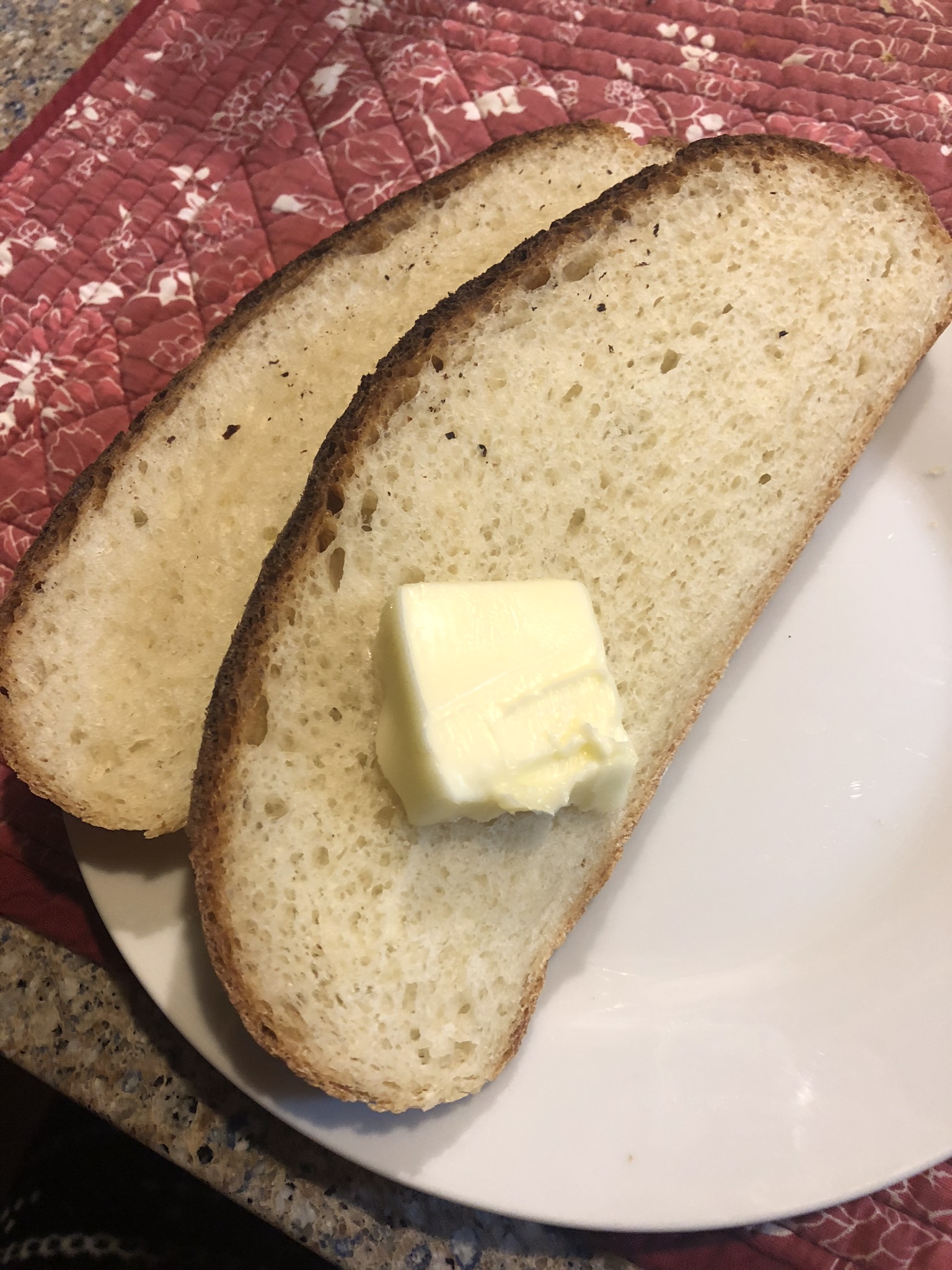
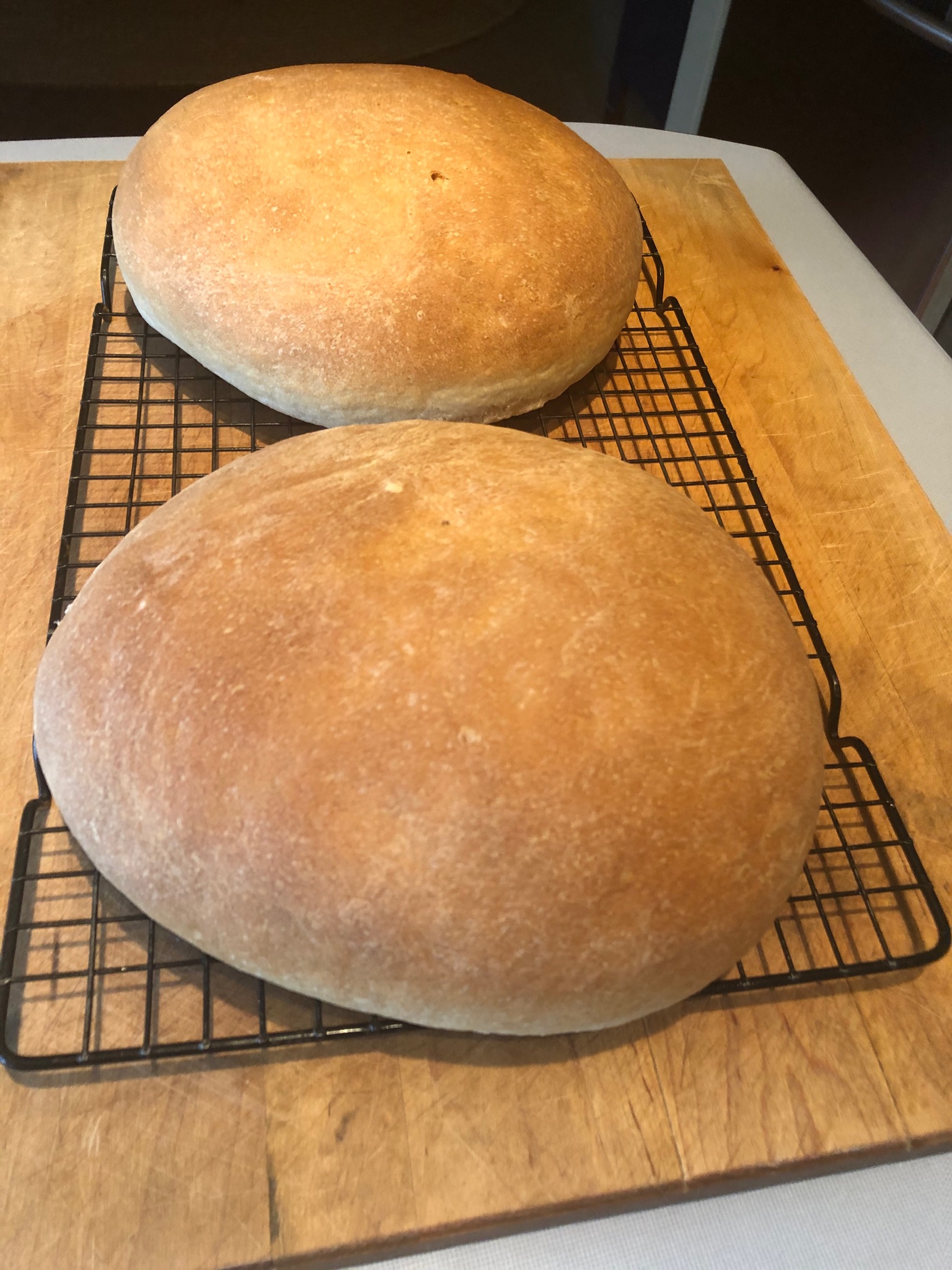
So lesson learned.  The bread tastes great minus that top crust. My friend just baked some for 35 minutes.  And you can see what a difference 5 minutes makes!

I fed my starter and put it in a quart jar in the refrigerator for next time.

I will try this again soon but I will be watching my bake time very carefully.  I made avocado toast this morning and it was perfect!

NOTE:  The longer you keep your sour dough starter around the more your bread will have that distinctive flavor.  This starter was only two days old so the flavor is very “white bread”.  Also, unlike this recipe, many sourdough bread recipes use only the starter and no additional active dry or cake yeast.  The starter itself is what makes the dough rise.  There is plenty of information online to help answer your questions about feeding and maintaining a sourdough starter.

Wacky Cake

During this Coronavirus Pandemic we are all spending more time on the internet.  Food has become a preoccupation and, if we aren’t cooking, we’re on line looking for recipes.   A week or so ago I came across a post with this recipe for Wacky Cake.  This particular version is from a cookbook called “Really Cookin” by Carol Ferguson.  Credit where credit is due.  I messaged this recipe to my friend Georgia and asked if this was the same recipe she uses.  She said yes.  She has been making this cake for years and she always doubles the recipe.  It’s one of their family favorites.  The recipe was created as a result of rationing during World War II when milk and eggs were scarce.  If you research the recipe it’s also called Crazy Cake, World War II Cake, and Depression Cake.  One of the few cake recipes I’ve seen that has you use an ungreased pan and actually has you mix the cake right in the pan.  I did make a double batch  so that I could share one pan with our neighbors.  I mixed it in my mixing bowl and divided the batter between two ungreased pans.  But I get the logic of mixing the batter right in the pan…much less cleanup.

Ingredients Doubled:

3 cups AP flour

2 cups sugar

6 T cocoa

2 tsp baking powder

2 tsp baking soda

1 tsp salt

2/3 cup vegetable oil

2 T white vinegar

2 tsp vanilla

2 cups warm water (or coffee…I used coffee)

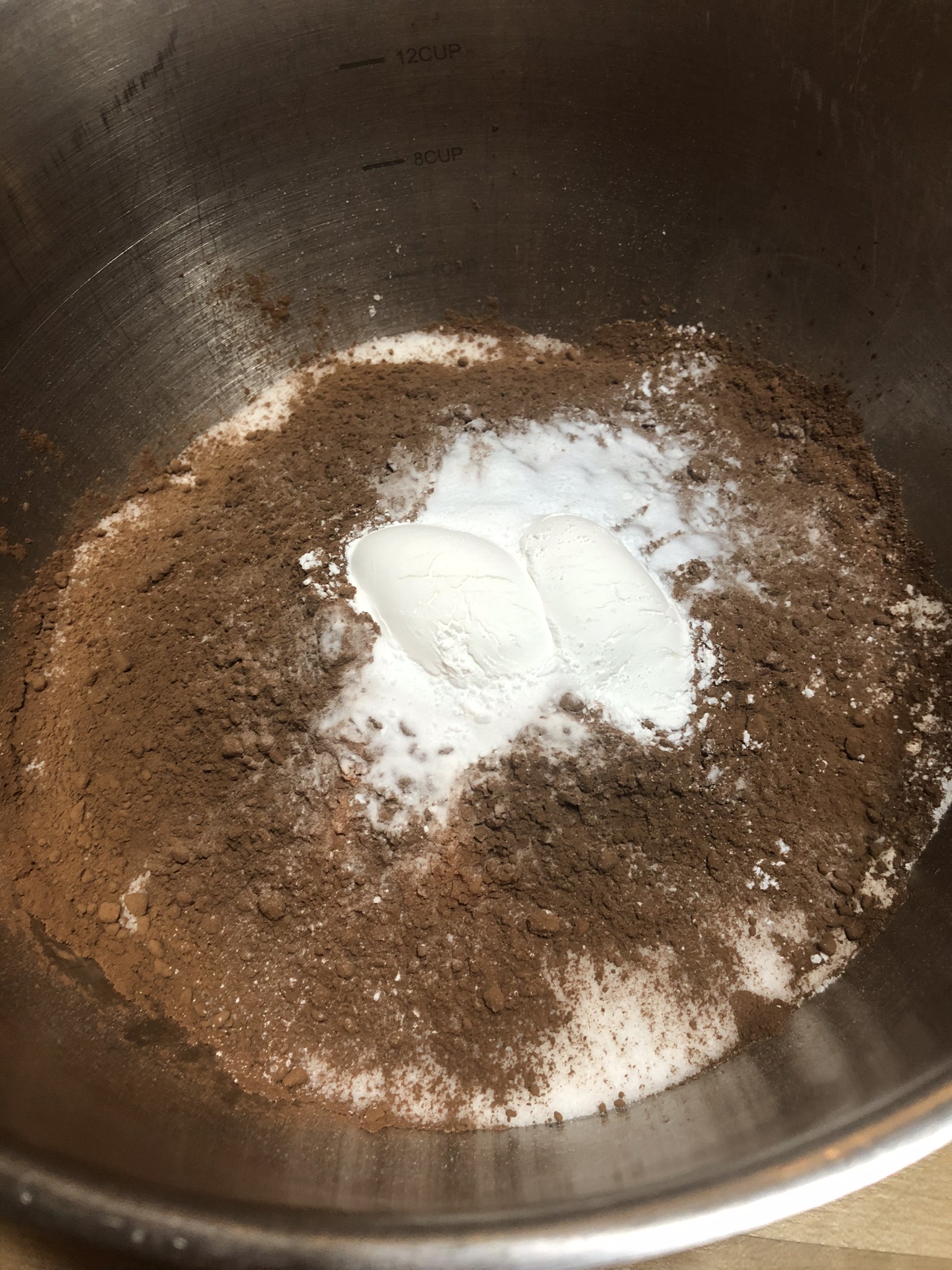
No mixer.  No bowl.  Simple directions.  Get out one 9×13 pan or 2 8×8 pans.  Or don’t double and just use one 8×8 pan if you want less cake to tempt you.  Preheat your oven to 350.  Combine all of your dry ingredients and mix thoroughly with a whisk or a fork.

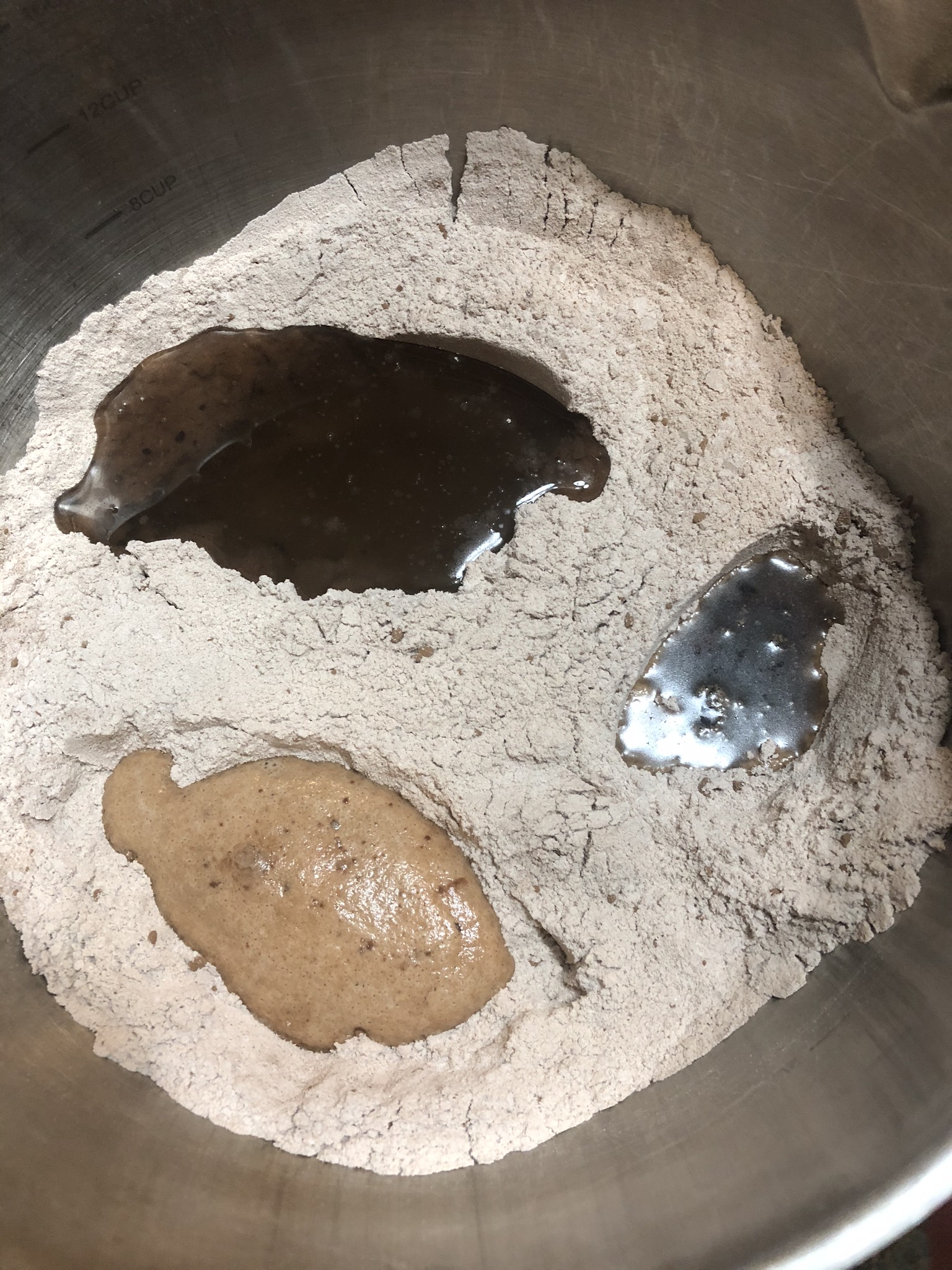
Once the dry ingredients have been mixed, level off the top and make three wells.  Pour your oil in one, your vinegar in one and your vanilla in one.

Now pour your warm water or coffee over everything and mix thoroughly with a fork or whisk.

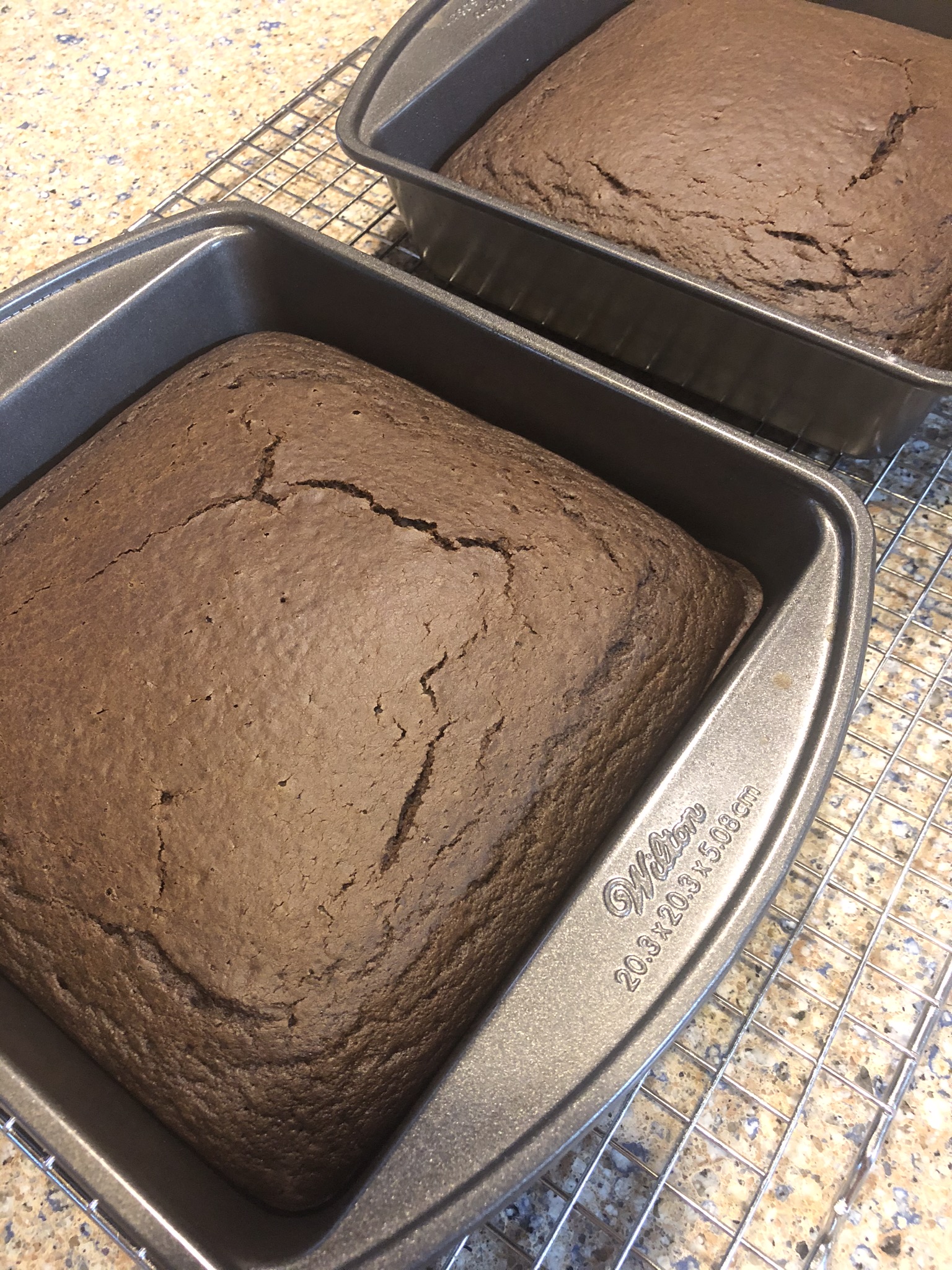
Put your pans in the oven and set your timer for 25 minutes.

Once the cake is done remove from the oven and allow it to cool completely on a wire rack,

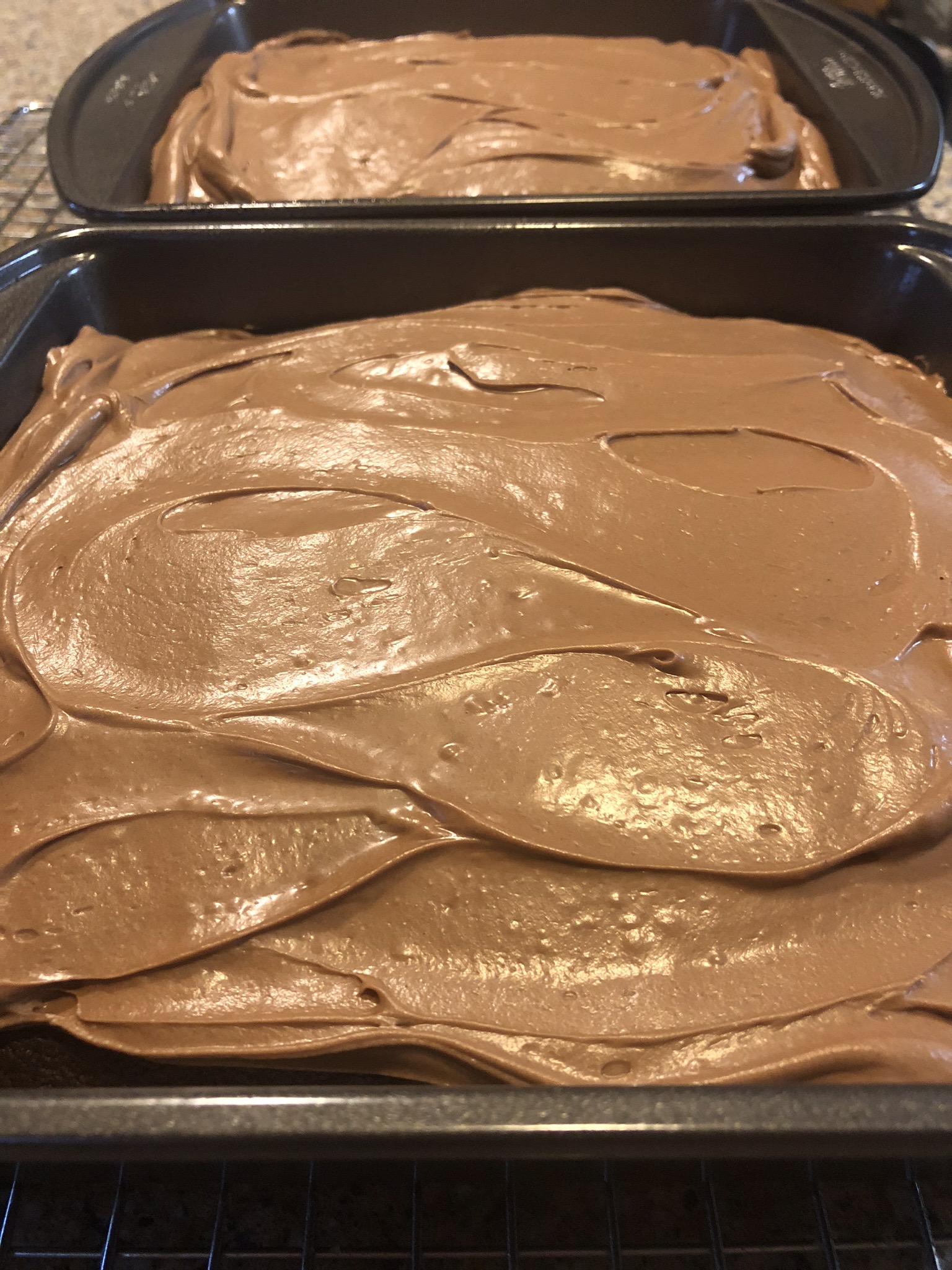
When your cake has cooled completely you can dust with powdered sugar or ice with a ganache or a chocolate  buttercream.  I used a chocolate butter cream.

Slice and enjoy.

NOTE:  I can’t eat chocolate but I’m thinking this might also be good with a peanut butter icing or a vanilla butter cream.  I substituted warm leftover coffee for the water because I’m told that coffee brings out the rich chocolate flavors.

Would really have to search to find a cake recipe easier than this one.  And it will be perfect during our Coronavirus Pandemic if you are short of eggs and/or milk.


Oatmeal Bread

More pandemic bread making.  I am using one of the last envelopes of yeast my neighbor was kind enough to share with me.  Yeast and flour are extremely hard to come by right now.  I’ve never before had trouble finding yeast on the grocery store shelves.  Apparently toilet paper isn’t the only thing people are hoarding. A friend messaged me a couple days ago after finding a jar of yeast in her freezer which had a 2013 expiration date on it.  She wanted to know if I thought it was still good.  I sent her a link with instructions for testing the yeast to see if it would still work.  Testing is really very simple.  You put a little yeast in warm water with a pinch of sugar and it should start bubbling after a few minutes.  If it bubbles, you’re good to go.  Amazingly her yeast was still good.  Freezing or refrigerating dry yeast lengthens its shelf life as long as it is in an airtight container.  Cake yeast should not be frozen.  But truthfully, I haven’t seen cake yeast in years!!

Back to my oatmeal bread.  This recipe is one that I found years ago in the food section of a local newspaper.  It’s a hearty, dense bread.  Easy to make. The brown sugar and whole wheat flour give it a bit of a sweet molasses like flavor.  We toasted some this morning and enjoyed it with a cup of coffee.

Ingredients:

1 cup old fashioned oats

1/2 cup whole wheat flour

1/2 cup brown sugar

1 T salt

2 T butter

2 cups boiling water

2 1/4 tsp dry yeast

1/2 cup warm water

4 cups AP flour, 1/2 cup whole wheat flour

Combine the first five ingredients in a large bowl, pouring the boiling water over the butter and dry ingredients.  Stir and set aside until it cools to lukewarm.

Dissolve the yeast in the 1/2 cup of lukewarm water.  Once the oatmeal mixture has cooled, add the yeast.  If it is too hot it will kill the yeast so make sure you’ve allowed it to cool sufficiently.  Start stirring in the 4 cups of AP flour and the 1/2 cup of wheat flour.  You’ll have a shaggy dough.

Empty the dough onto a clean work surface and knead for 5 to 10 minutes.  Add a little additional flour if necessary.  After kneading you should have a smooth, slightly sticky dough.

Place the dough in a bowl that has been lightly greased with butter.  Cover with a clean kitchen towel.  This bowl belonged to my grandmother who regularly made pulla (a Finnish braided bread with cardamom) and limpu (a Finnish rye bread).  Over the years I watched lots of bread dough rise in that bowl making it extra special to me.

Put the bowl in a warm place and allow the dough to rise until it is double in size.  Many new ovens have a proof setting that you can use to speed the rise process a bit.

Punch the dough down and divide into two loaves.  You can shape them into standard loaves and put them in greased pans or shape them in rounds on a parchment covered sheet pan.  Whatever your shape preference.  Cover with a towel and allow the dough to once again double.  While your dough is rising preheat the oven to 350 degrees.

Bake for 30 to 40 minutes until golden brown.  Remove from the pans and allow the loaves to cool on a wire rack.  Slice and enjoy. There’s nothing like homemade bread.  The ultimate comfort food.

NOTE:  This dough can be made using the dough hook on your KitchenAid.  But I think hand kneading is much more satisfying.  As my daughter says, sometimes you just have the need to knead.  If you keep making bread during this pandemic, it becomes important and necessary to share it with someone.

Babka

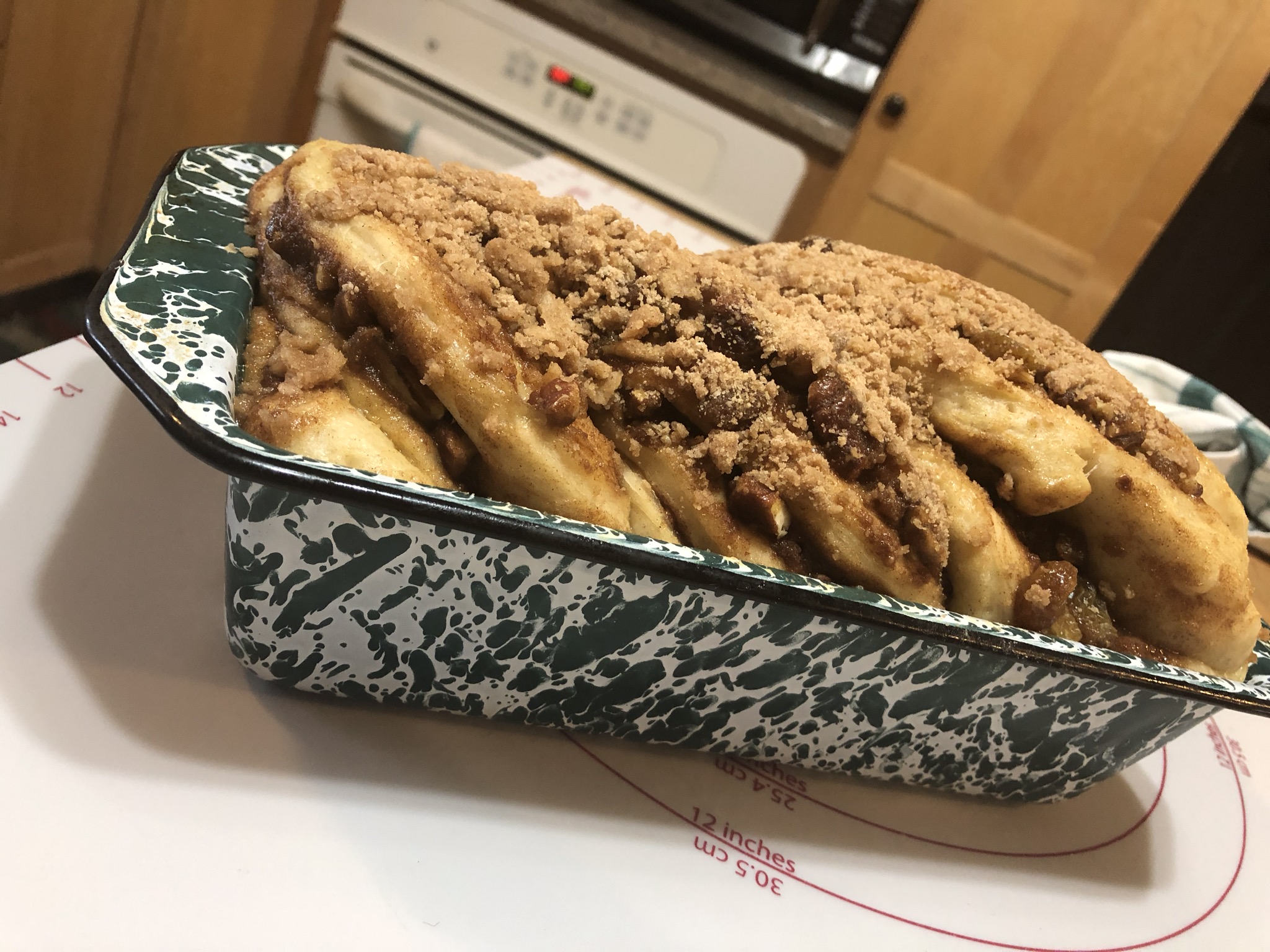
During this Coronavirus pandemic many of us have been busy cooking and baking. The stores, at least temporarily, are out of yeast and flour. Fortunately we had a small stockpile. Last week my friend Jane and I were on voluntary quarantine with my daughter in Chicago. We decided baking bread was a good project to pass the time. Our first loaf of bread was an herb loaf that we apparently allowed to rise too long. It fell during baking and, while it tasted okay hot out of the oven, it was too dense and it later became croutons. A second batch of dough didn’t want to rise at all. We tried deep frying dough balls to simulate donut holes on the theory that anything tastes good deep fried. Wrong. Everything does not taste good deep fried. Our “donut holes” were overcooked on the outside and raw in the center. Even liberal dosing with cinnamon sugar didn’t help. Then we decided to make a Babka. Babka is a traditional Polish Jewish bread. In Polish Babka means old lady or grandmother. If I was a grandmother I wouldn’t mind being called Babka. Soft and sweet and smelling of cinnamon and vanilla. Babka is thought to have originated in the early 1800s when extra challah dough would be spread with cinnamon or jelly and rolled up before baking. The recipe we used is a King Arthur Cinnamon Babka recipe with golden raisins and pecans. Last week we made an initial babka run. I failed at reading the instructions correctly and we cut the dough wrong. It still tasted great! Once I got back home I made another loaf of babka. This time I knew how to properly cut the dough.

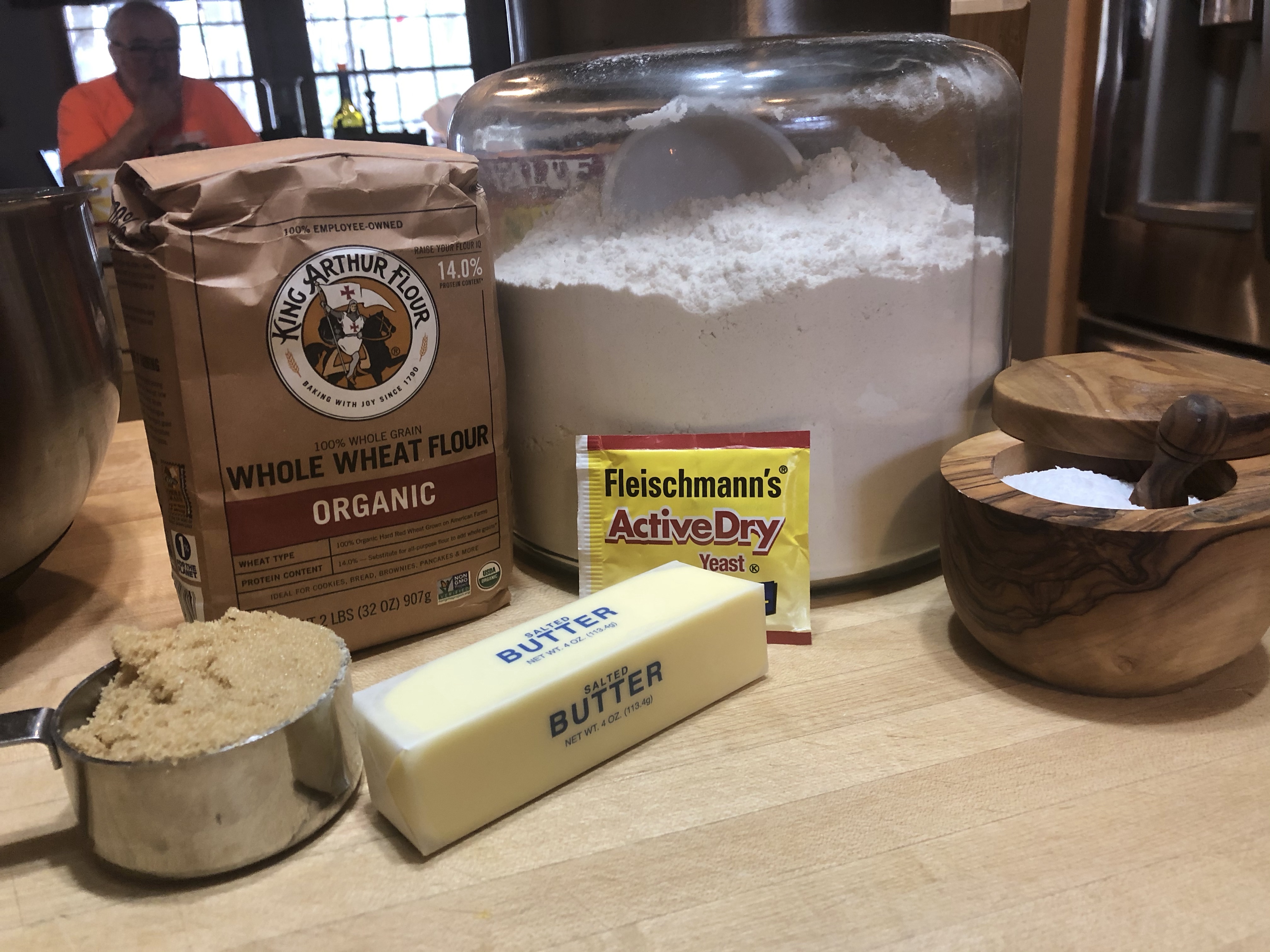
Dough Ingredients:

3 cups (361g) AP flour

2 tsp instant yeast

1/4 tsp cinnamo

1/4 cup sugar

1 1/4 tsp salt

1 large egg

5 T unsalted butter at room temperature

1 1/2 tsp vanilla extract

Combine all of your dough ingredients in a large mixing bowl, starting with the lesser amount of water. With a wooden spoon mix all of the ingredients together until everything is moistened. If necessary add more of the water until the dough comes together. Cover the bowl with a clean towel and allow it to rest for 20 minutes. Remove the dough to a clean, lightly floured work surface and knead until soft and smooth. Place the dough into a lightly buttered bowl, cover, and allow the dough to rise for 1 1/2 to 2 hours until the dough is quite puffy.

While your dough is rising make your filling.

Filling Ingredients:

1/2 cup brown sugar

4 tsp cinnamon

1 T AP flour

1/4 cup melted butter

1/2 cup diced pecans

1/2 cup golden raisins


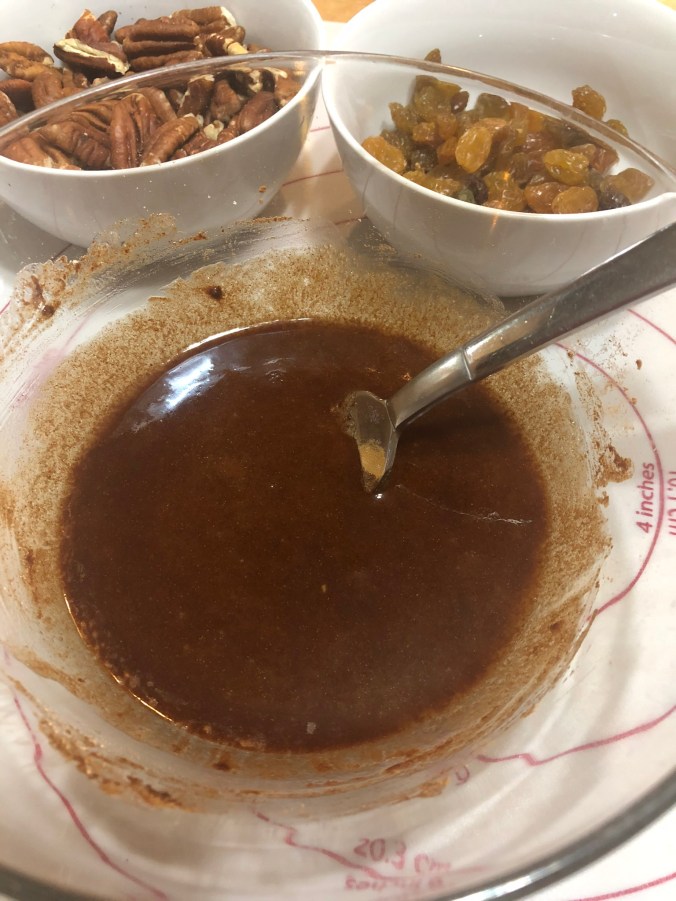
Just before you’re ready to shape the dough combine the sugar, flour and cinnamon and stir in the water and melted butter. Set aside.

Once the dough has risen place it on a clean, lightly floured surface and shape into a 9” by 18” rectangle that should be about 1/4 inch thick. If the dough is fighting you let it rest about 10 minutes, then stretch some more. I used my hands to shape the dough.

Smear the dough with the filling coming to within an inch of the edges. Sprinkle with the nuts and raisins.

Starting with the short end roll the dough gently into a log sealing the seam and ends.

Using a pair of scissors or a sharp knife, cut the log in half lengthwise, not crosswise.  You should have two pieces of dough, each about 10” long.  Take care to prevent too much filling from spilling out.  With the filling side up, twist the two pieces into a braid, tucking the ends underneath.  Place the twisted loaf into a lightly greased 9×5 loaf pan.

Whisk an egg with a pinch of salt and brush the top of the loaf with the egg wash.  Cover the loaf and let it rise until very puffy and crowned a good inch over the rim of the pan, 1 1/2 to 2 1/2 hours.  Toward the end of the rise time preheat the oven to 350 degrees.

Now the bread is ready for the oven.  Bake the bread for 40-50 minutes, tenting with aluminum foil during the final 15 to 20 minutes of baking.  The loaf should be a deep golden brown and the internal temperature should be about 195.

Remove the babka from the oven and immediately loosen the edges with a spatula or kitchen knife.  Allow to cool for about 10 minutes and then turn out onto a rack to cool completely.

Slice and enjoy.

NOTE:  King Arthur suggests a topping (also known as supreming) consisting of:

2 T AP flour

1 T brown sugar, firmly packed

1/2 tsp cinnamon

pinch of salt

1 T cold butter

Mix the topping ingredients until crumbly and sprinkle over the loaf before rising.  

I used the topping on one loaf but not on the other.  We also omitted the raisins in the first loaf.  As with so many recipes, it’s all a matter of personal preference.  

It seems like it would make excellent French toast but I haven’t tried that.  It is excellent briefly warmed in the microwave or oven.


Meatballs

Meatballs are a classic comfort food and they are so versatile.  You’ll find countless recipes in cookbooks and online.  Spaghetti and meatballs, Swedish meatballs, meatball subs, teeny tiny meatballs in Italian wedding soup.  They can be adapted to different ethnic cuisines by altering the meat you use, the seasonings and the sauces.   Jewish meatballs made with ground lamb, veal or chicken.  Middle Eastern are made with bulgur (cracked wheat) and ground lamb, beef, goat or camel. Traditional German meatballs are made with beef liver or pork.  In Austria spleen is mixed in with the liver.  And, of course, Finnish meatballs, which are made with ground beef, fried in butter, and finished in a milk gravy.  I just made a very large batch of meatballs to take to a funeral dinner.  The ingredients below are for a small batch…about 15-20 medium size meatballs.  I multiplied the recipe by eight.  Use the ground meat of your choosing.  I used half ground round and half bulk Italian sausage.

Ingredients:

1 pound ground meat

1 egg

1/2 cup grated Parmesan or Romano cheese

1/2 cup milk or half n half

1 cup bread crumbs

2 tsp garlic salt

1 T Worcestershire

2 T fresh flat leaf parsley chopped

1/2 c finely diced onio

1 tsp dried oregano

1 tsp dried basil

I save ends of bread and grind them up in my food processor for bread crumbs.  I added my parsley near the end of the grind.

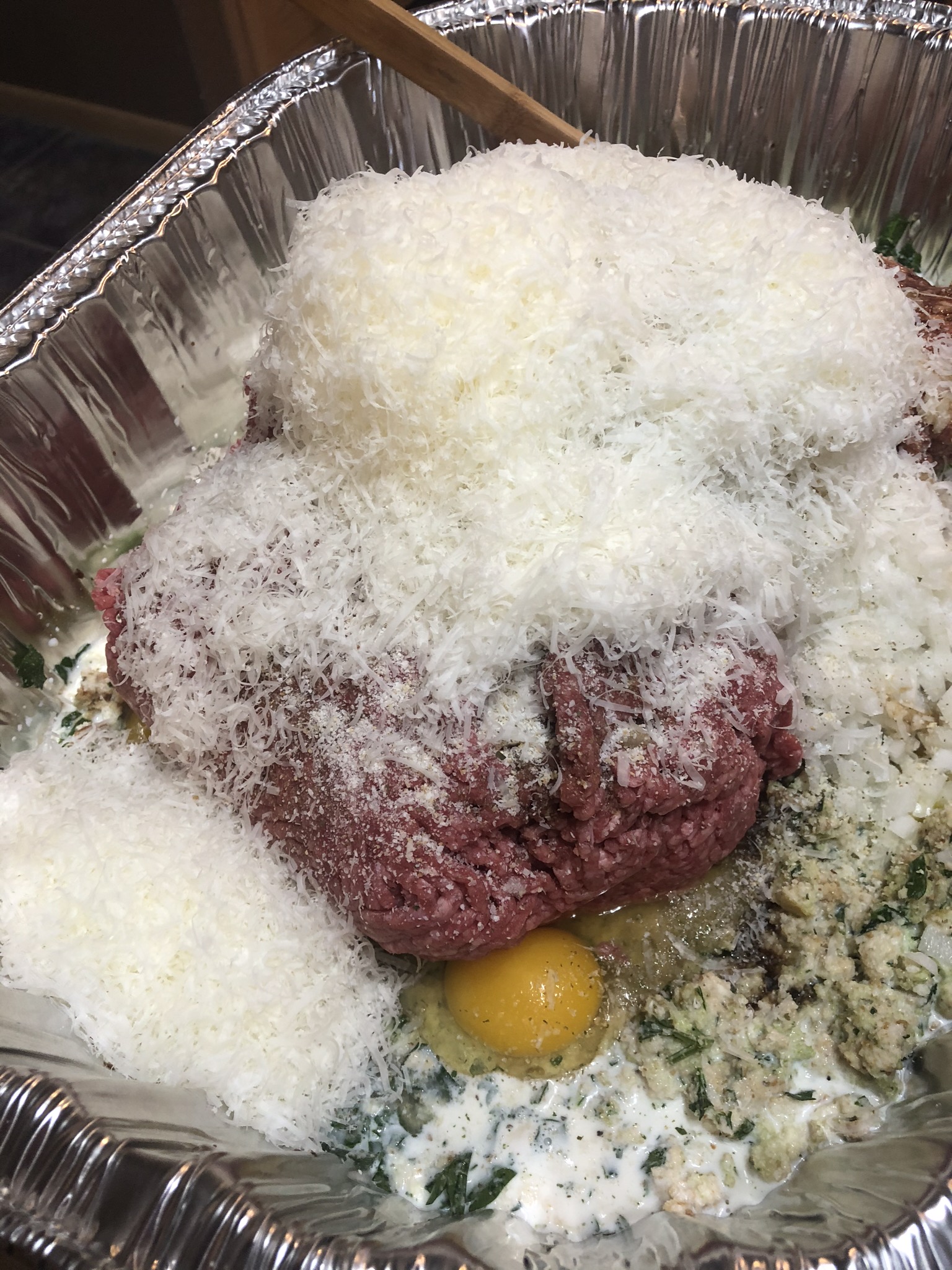
Once your bread is in the bowl stir in your milk or half n half and add the eggs.

Add the ground meat, onions, Worcestershire, garlic and herbs.

Add the fresh grated cheese.

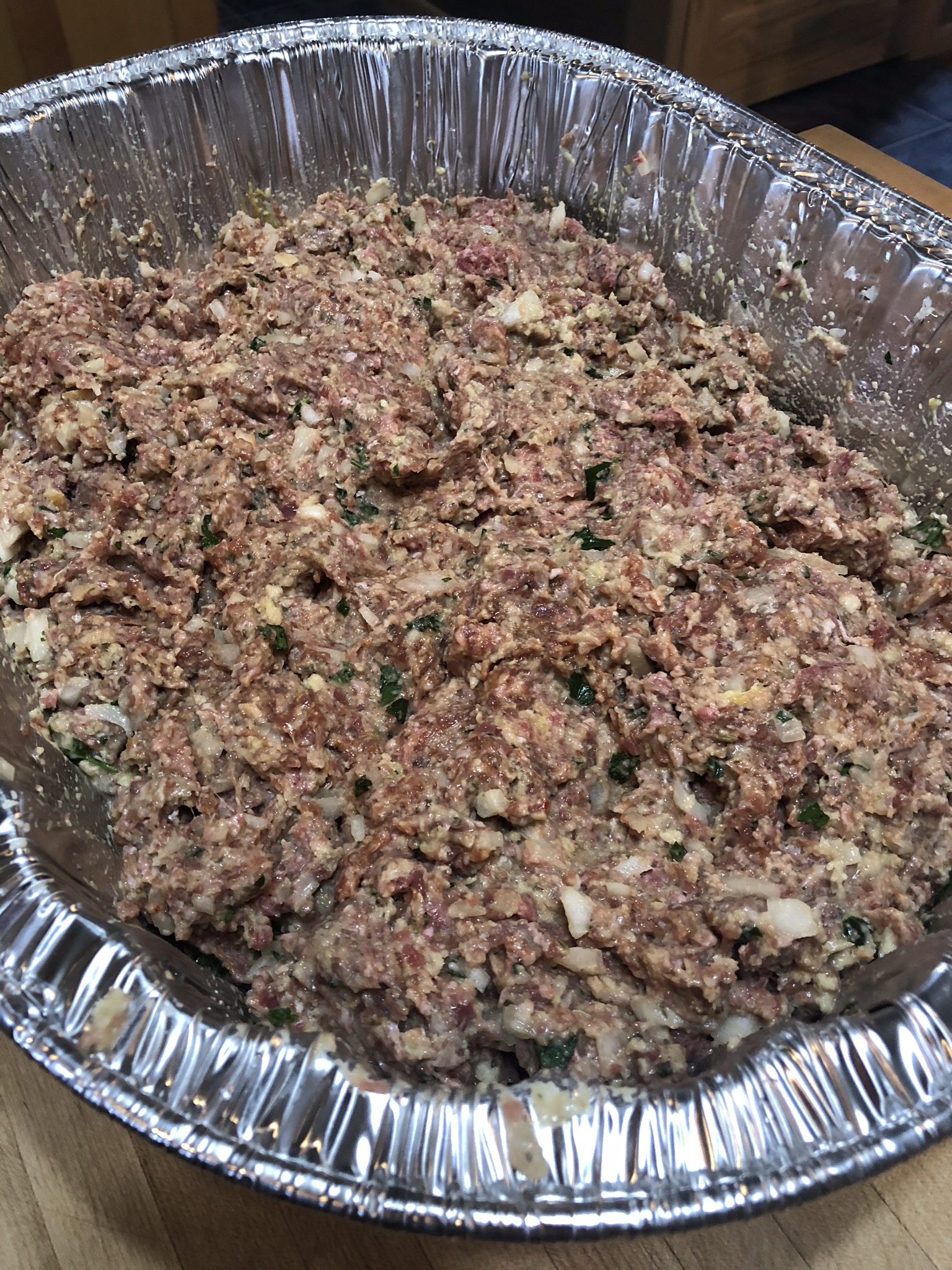
Now comes the fun part.  Take off your rings, roll up your sleeves and dig in with both hands.  Mix all of the ingredients together well.  Once everything is incorporated you’re ready to start making balls.

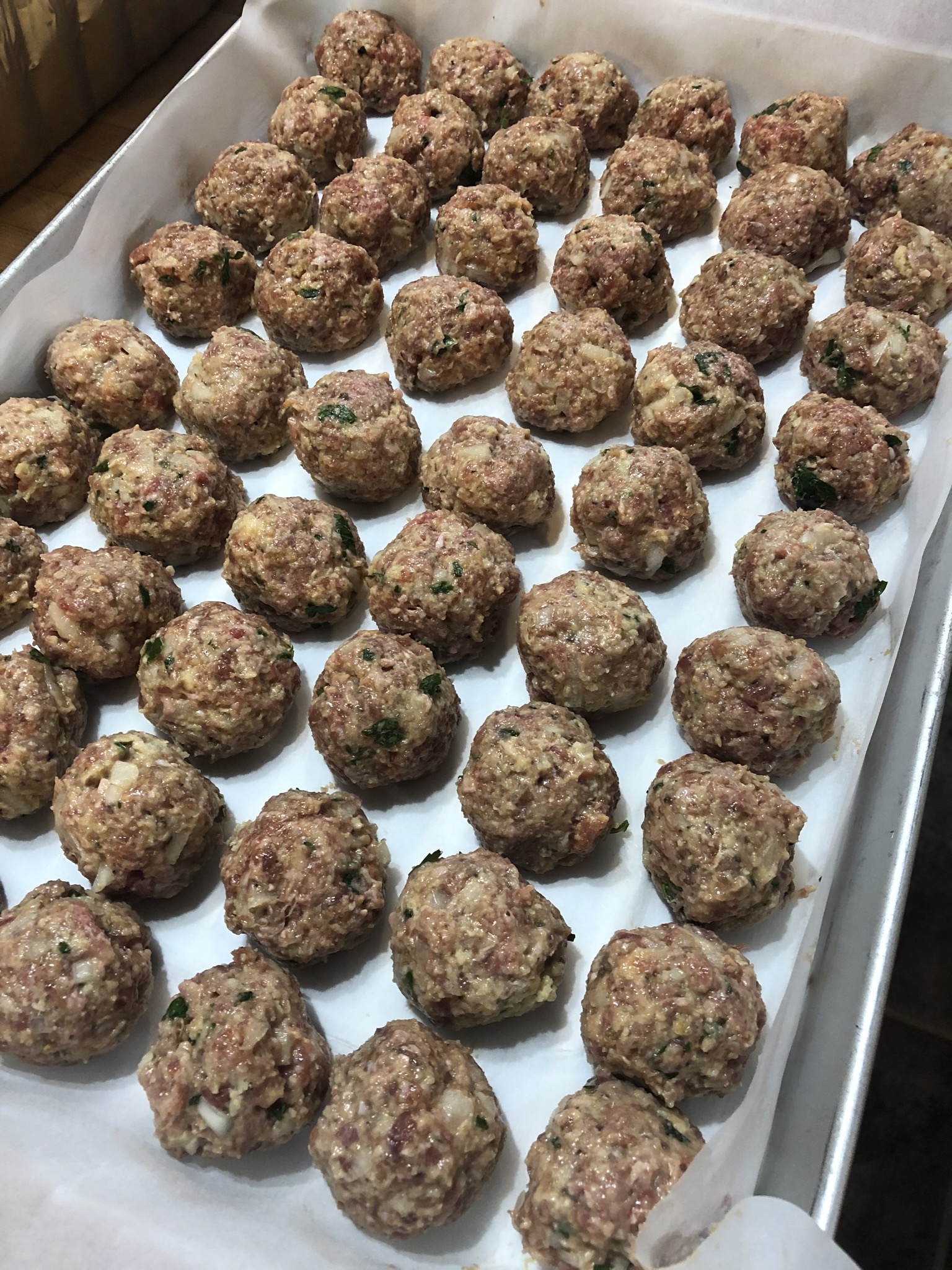
I lined a baking sheet with parchment paper (easier clean up) and used a scoop to make my meatballs a consistent size.

I baked these at 375 for approximately 20 minutes.  Baking time will vary based on the size and number of meatballs.  Internal temperature should ideally be 160 degrees.  Meatballs can also be fried on top of the stove in butter or olive oil.  I almost always bake my meatballs unless I’m making a small batch in which case I may do them over medium high heat in a cast iron skillet.

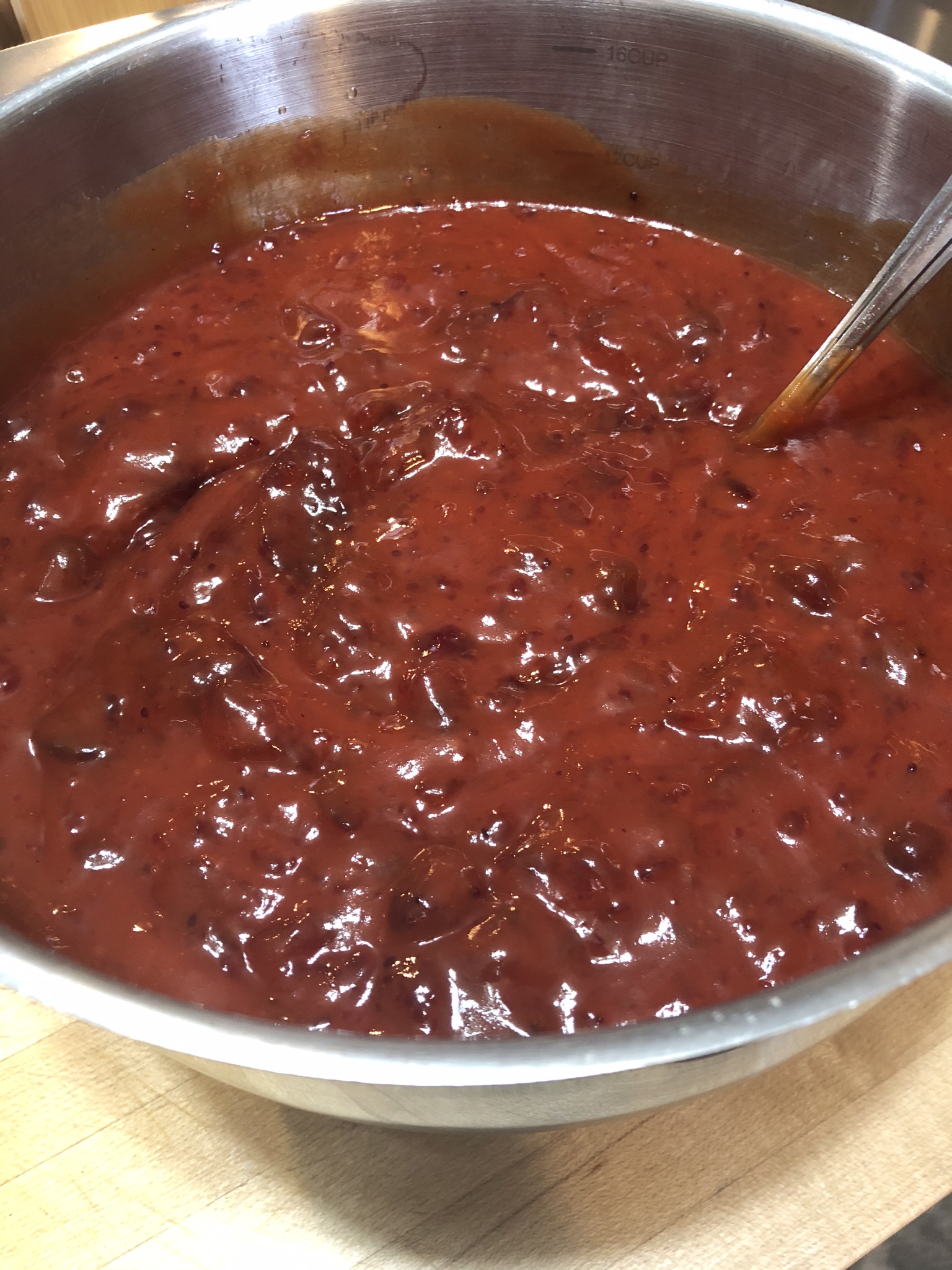
Once the meatballs are done it is time to sauce them.  You can add them to your pasta sauce, pizza sauce, or gravy depending on what you’re serving.  I used what I call a sweet and sour and it’s been a standby for years.  One bottle of Brooks Tangy catsup and one can of Ocean Spray Whole Cranberry Sauce.  Stir the two together and ladle over the meatballs.

Because I made 8X the recipe, I layered the meatballs and sauce in the roaster.  By doing that you ensure that the sauce reaches all of the meatballs for best results.

Once they’ve been sauced I put them in the oven at 325 degrees for about an hour to meld the flavors.  And that’s that.  Enjoy!

NOTE:  If you’re making meatballs they freeze well.  You’re already making a mess and getting your hands dirty so you might as well double or triple the recipe.  Allow them to cool completely, put them in freezer bags and they’ll be ready for a quick dinner or appetizer.  One of my Dad’s favorite foods was meatloaf.  I used to make up enough for several miniature loaf pans and freeze them for easy dinners.

Change up the ground meat…chicken, turkey, pork, lamb, beef or a combination.  Change up the spices depending on the dish you’re serving and the flavor profile you’re looking for.

Focaccia Garden


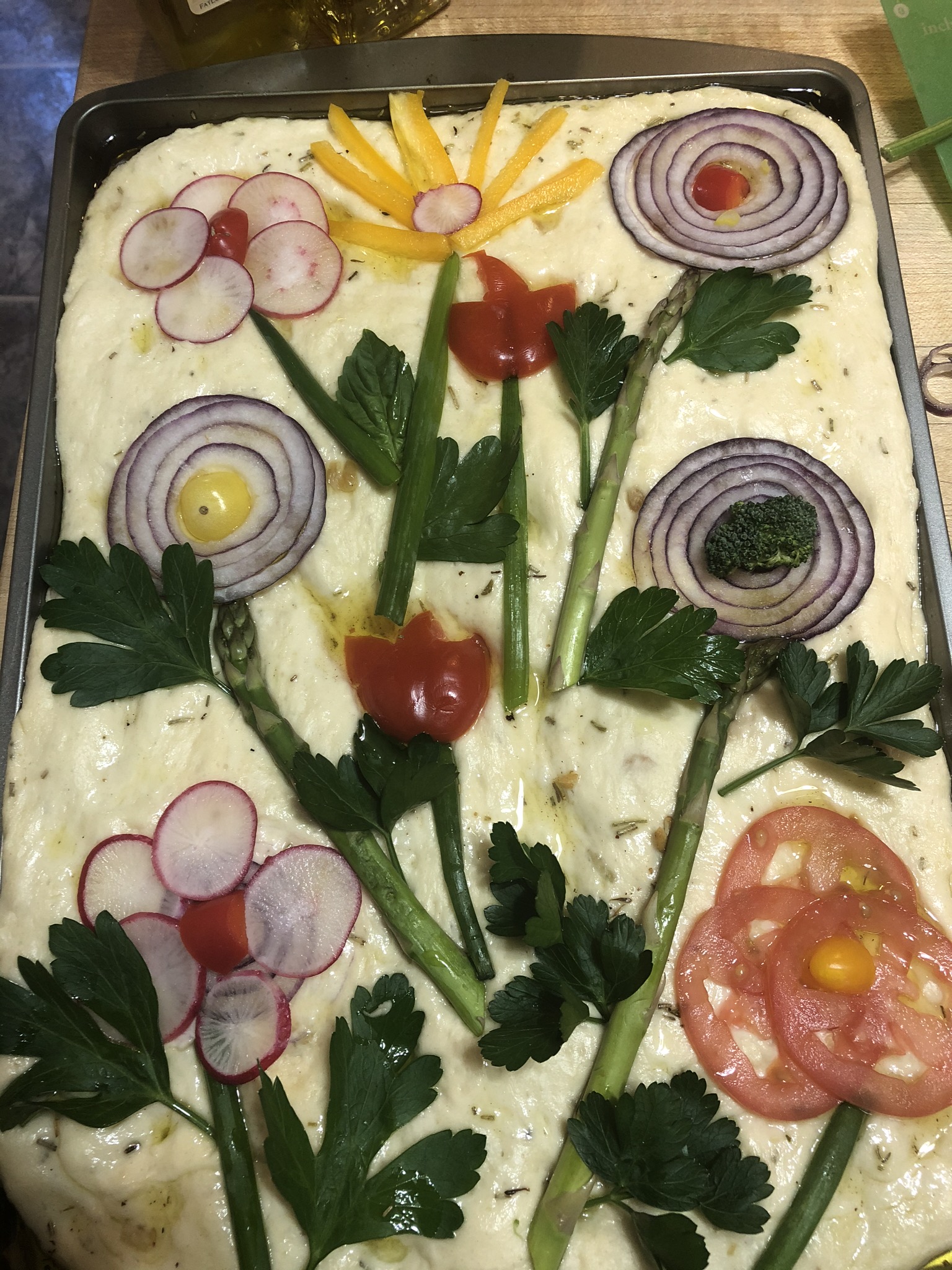
About a week ago a friend posted a picture of a beautiful pan of focaccia bread.  And I had to make it.  There are lots and lots of recipes for focaccia bread on line.  The recipes almost all have lots of olive oil and herbs.  Some have olives, cheeses, tomato, bits of bacon or vegetables…the possibilities are endless.  Focaccia bakes up a little crispy on the outside (I’m sure due to all the olive oil) and soft on the inside.  It is a yeasted flat bread that I believe originated in Italy.  Originally focaccia was cooked in wood fired ovens which would obviously be wonderful…adding that smoky flavor to all of the garlic and herbs.  My fascination with this particular loaf was the flower garden of vegetables.  Focaccia is a really easy bread to make and creating the garden was just a bonus!  And who doesn’t like some warm bread fresh from the oven??

Bread Ingredients:

1/2 cup olive oil

3-4 cloves of garlic minced

1 tsp dried thyme (or 1 T fresh)

1 tsp dried rosemary (or 1 T fresh)

fresh ground black pepper

1 cup warm water

2 1/4 tsp yeast

1/4 tsp honey

2 1/2 cups flour

1/2 tsp fine sea salt

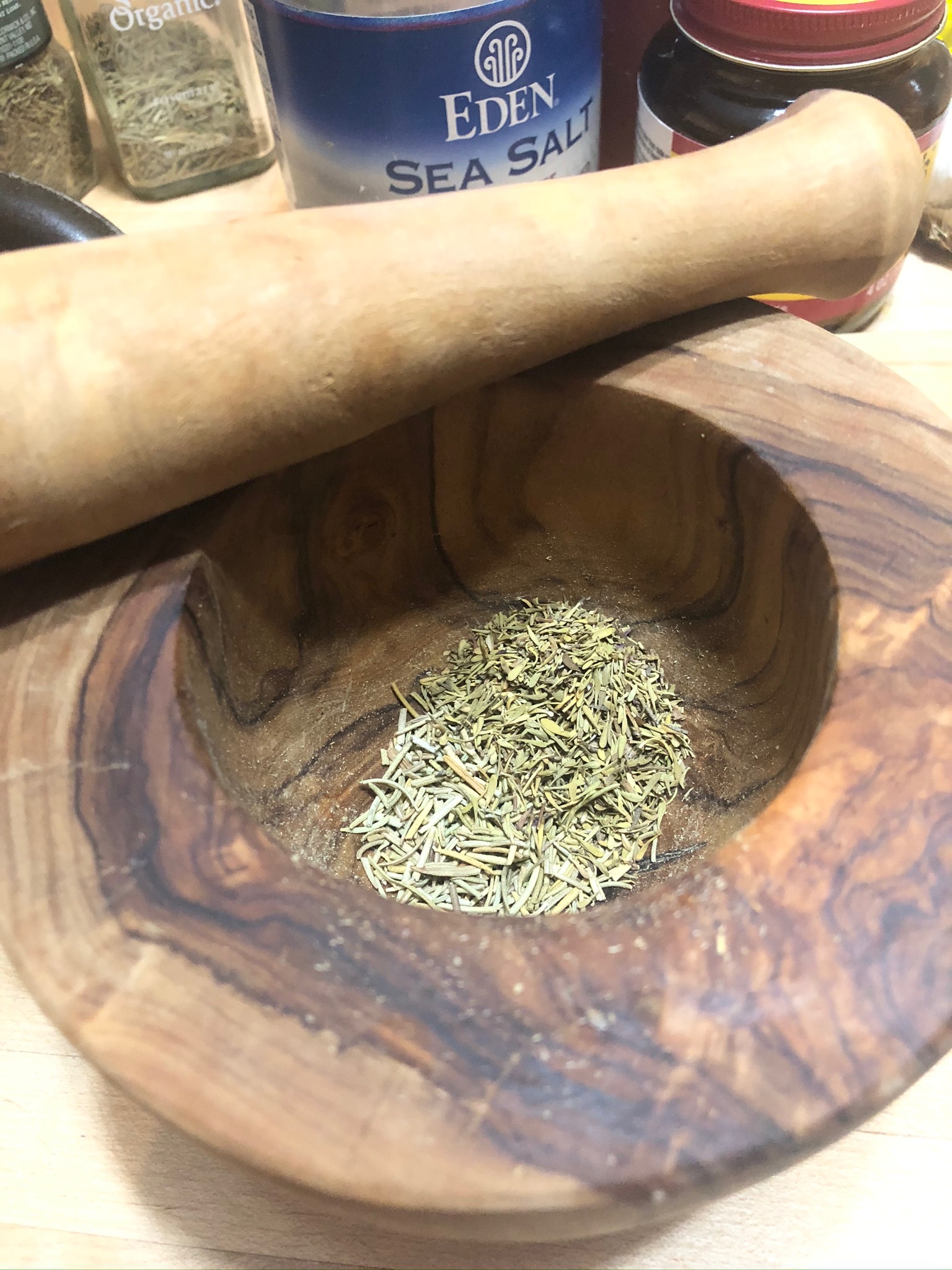
In a small cold skillet, combine the olive oil, rosemary and thyme, black pepper and garlic.  I combined the rosemary, thyme and black pepper in my mortar to bring out the flavors before adding them to the oil.

Cook over low heat, stirring occasionally, for 5-10 minutes until oil is aromatic being careful not to brown the garlic.  If the garlic is browned it can give off a bitter, off-putting taste.  Set the oil aside and allow to cool.  You don’t want to add it into the flour and yeast mixture when it is too hot or you will kill the yeast.

Combine warm water, yeast and honey in a large bowl.  Stir to combine and let sit for 5 minutes.  Add 1/4 cup of garlic and herb infused oil and 1 cup of flour to the yeast and stir until flour has been moistened.  Allow it to rest another 5 minutes.

Stir in the remaining flour and salt until the dough comes together.  Turn out onto a lightly floured surface and knead a half dozen times until the dough is smooth.

Put the kneaded dough into a lightly oiled bowl.  Cover with a clean kitchen towel, set in a warm place, and allow to rise for about an hour.

Preheat  the oven to 450.

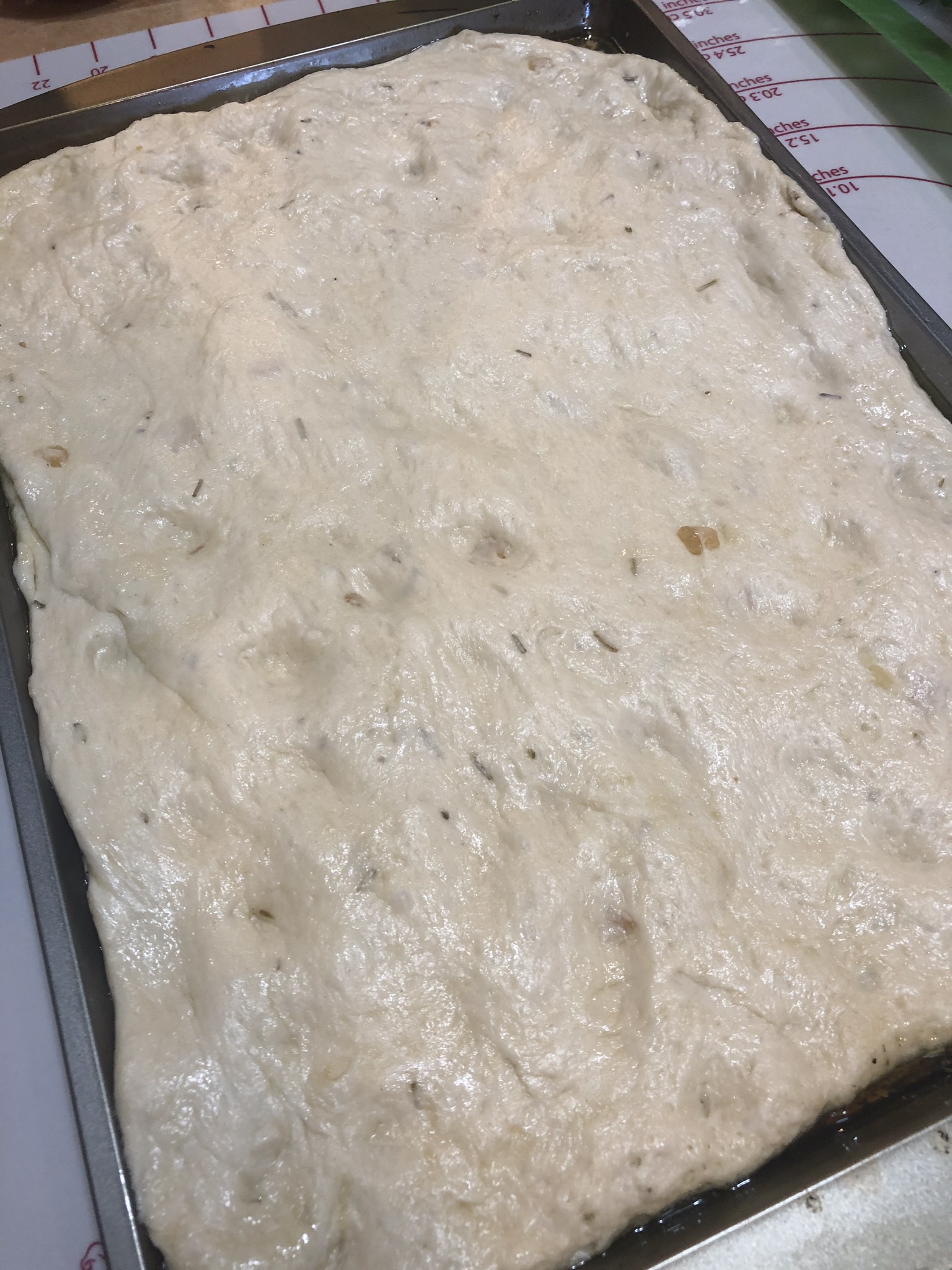
Spread 2 T of the garlic and herb oil in a 9×13 baking sheet.  Take the dough and press it down onto the baking sheet.  Use your fingers to dimple the dough and then drizzle 2 T of the garlic and herb oil on top of the dough.

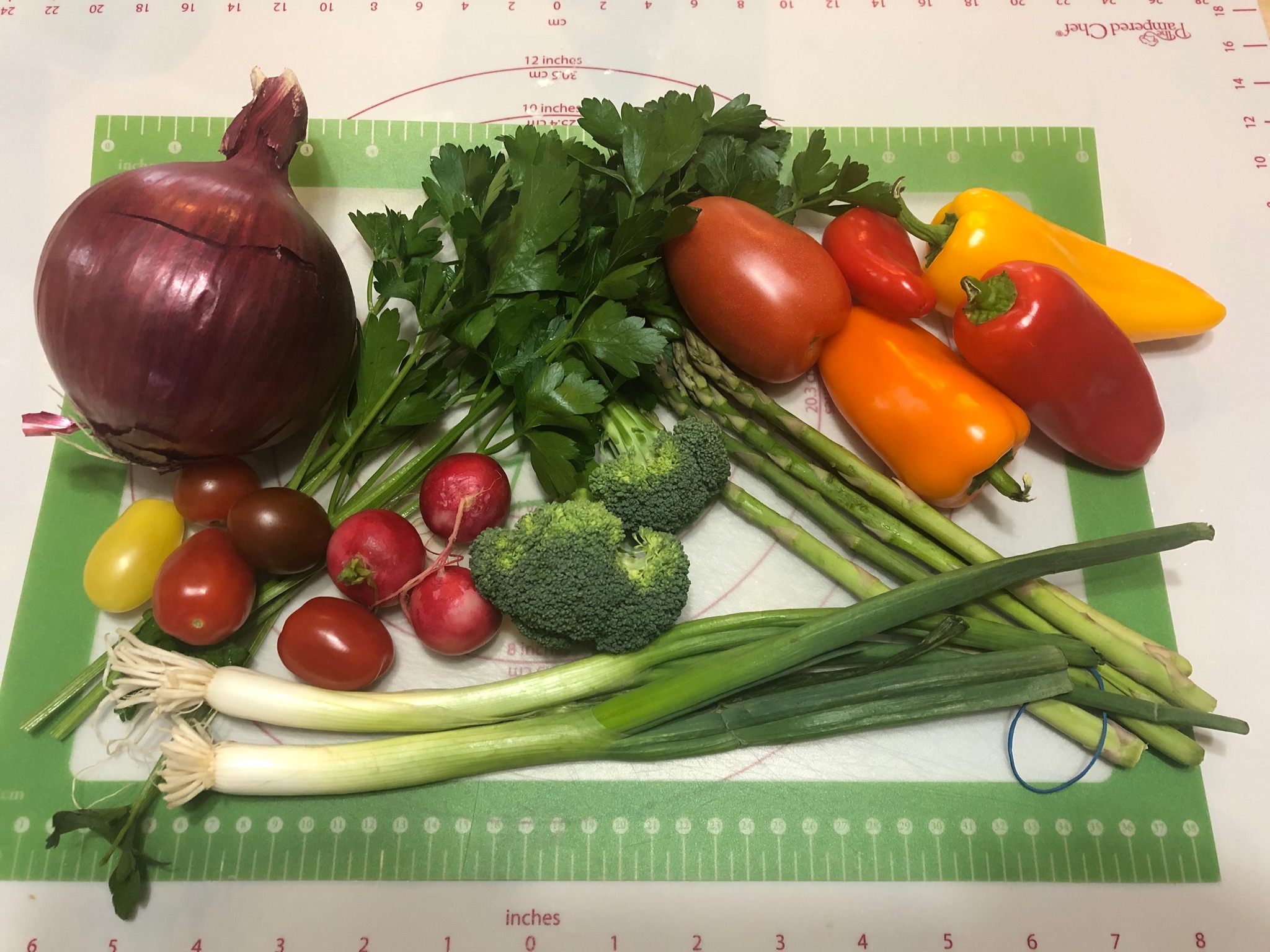
Let rise for about 20 minutes until slightly puffed.  When the 20 minutes starts we have the fun part!  Get out your flower making produce.

Use your imagination.  Anything goes.

Bake for about 15 minutes until golden brown.  Remove from the oven and cool on a wire rack.  As you can see, the bread looked a little prettier before it was baked.  But pretty cool nonetheless.

The house still smells wonderful from the herb and garlic infused oil and the bread was delicious. I used a partial clove of garlic in my rasping bowl, added a little olive oil, and we dipped the bread.  Had some for lunch and will be enjoying some tonight with eggplant Parmesan.


This beautiful rasping bowl was purchased from LaTulip Pottery and Tile Works in Garden, MI.  LaTulip Pottery is on facebook if you want to look them up.  I originally purchased a rasping bowl at a little gift shop in Munising, MI and subsequently ordered more for gifts directly from LaTulip.

NOTE:  If you’d like you can switch up the herbs, add more or less garlic.  I’m thinking that this recipe (minus the vegetable garden) would be very good with pizza toppings and cheese.  I’m not a fan of thick pizza crust but I think I might like it on the focaccia.

Pound Cake

Eating Well was not the source for the pound cake recipe, but it’s one of my favorite foodie magazines and it seemed like a perfect placemat for enjoying a piece of cake with ice cream.  I’m sure there are literally hundreds of pound cake recipes on the internet and in cookbooks.  Some call for sour cream, fruit juice and zest, extracts, even a shot or two of rum.  The one I made today is one of the very basic of recipes that consists of a pound of this, a pound of that.  According to the internets, pound cake apparently dates back to the early 18th century and originated in Europe.  A pound cake recipe was published in the first American cookbook, “American Cookery”, published in 1796.  In France the pound cake is called “quatre-quarts” which means four quarters.  In Mexico it’s called “panque’” with the most common variant being the addition of raisins or walnuts.  This recipe makes two loaf pans, two pounds each.  It’s a lot of cake, but it’s the perfect vehicle for berries and whipped cream or a scoop or two of ice cream.  It’s also a very simple cake to make and most of us have all of the ingredients on hand.

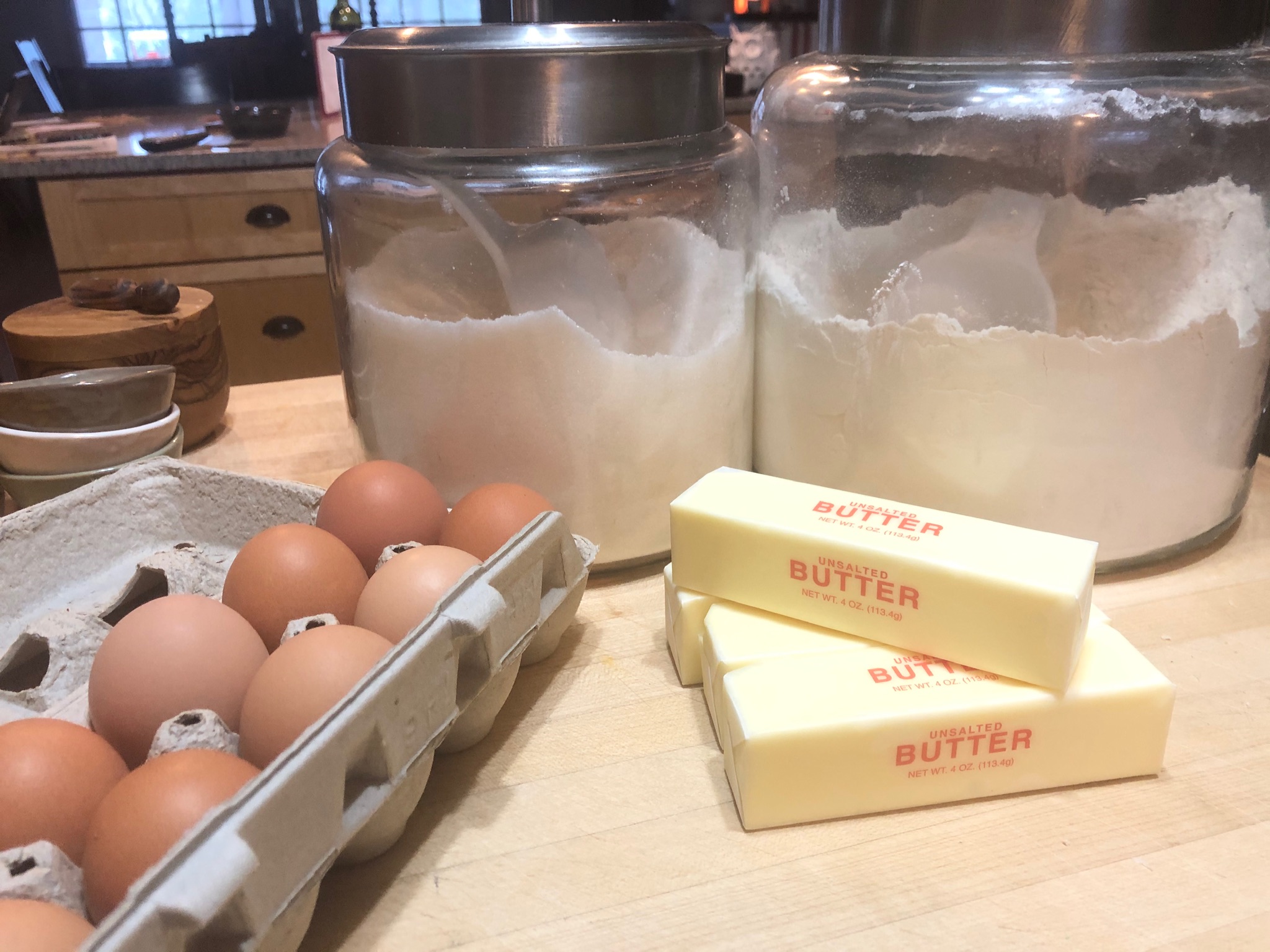
Ingredients:

1 pound of sugar (approximately 2 1/4 cups)

1 pound of butter (4 sticks at room temperature)

1 pound of flour (approximately 4 cups)

1 doz eggs

Preheat your oven to 325.  Grease two loaf pans and line with parchment paper.

Cream together the sugar and butter in a large bowl with an electric mixer until they are light and fluffy.  Beat in the eggs, one at a time.  With the mixer running, slowly add the flour and mix just until incorporated.

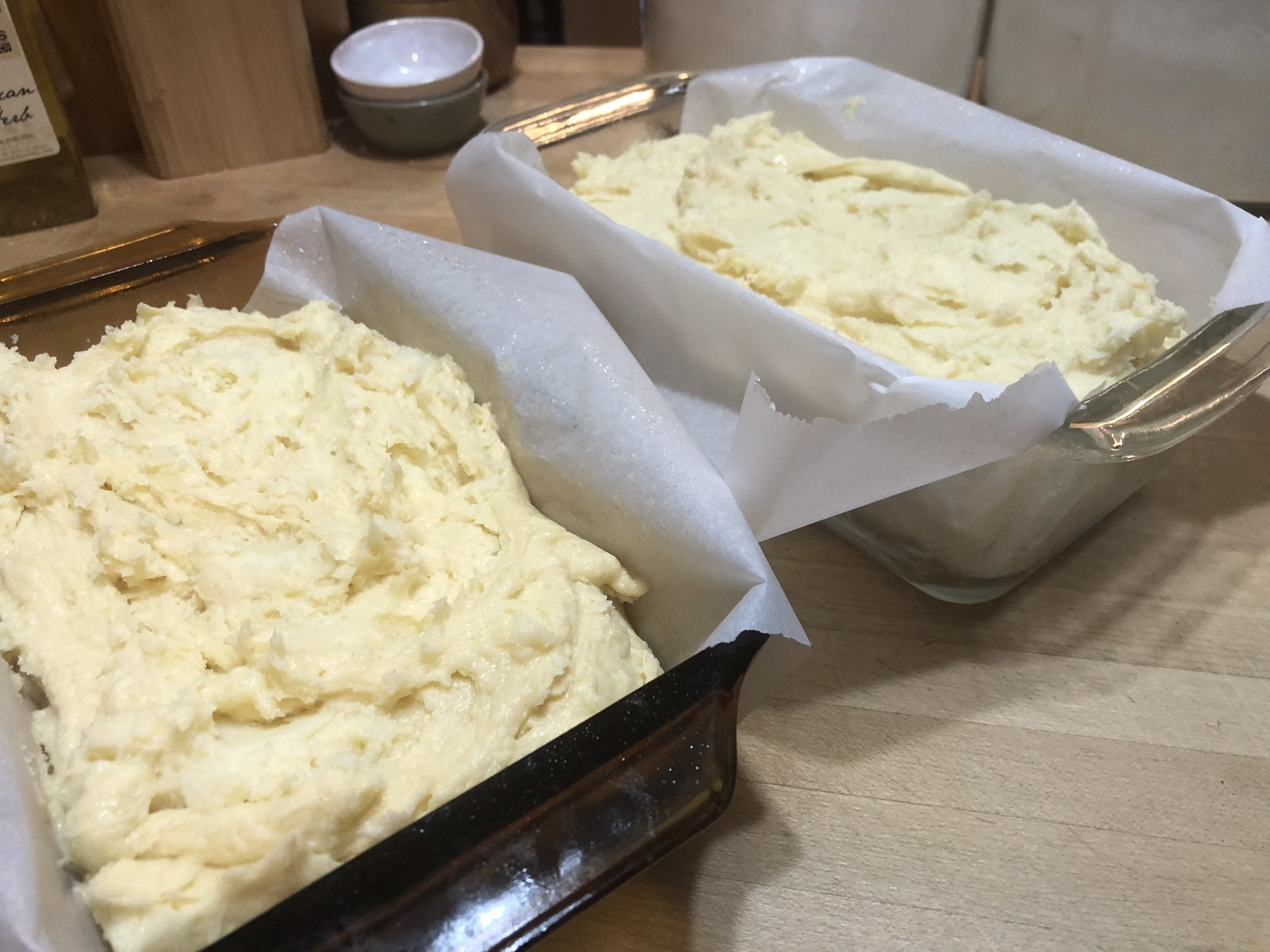
Divide the batter, as evenly as possible, into the two prepared loaf pans.

Bake until a toothpick or cake tester inserted into the center comes out clean, 60-70 minutes.  Remove from the oven and let cool for 10 minutes.  Loosen edges, remove cakes from the pans, peel off parchment, and allow to cool completely on wire racks.

Dust the cooled cake with powdered sugar or drizzle with a glaze.  I whisked together 2 cups of powdered sugar and 3-4 T of fresh squeezed lemon juice.  A little sweet, a little tart.

Slice and enjoy.

NOTE:  This cake freezes well.  I froze individual slices in zip lock bags.  While this time I did not add any flavorings, this recipe is excellent with some vanilla paste, or a little rum, or juiced citrus and zest.  Toasted nuts, raisins, dried cherries, or chocolate chips would also make great additions.  It’s pretty much a blank slate.


Empanadas


It occurred to me, as I was making the empanadas today, the last couple of weeks have been an ethnic diversity palooza in my kitchen.  I made a Moroccan chicken tagine with apricots and olives, Asian inspired sticky ginger sesame chicken meatballs, Mexican tostadas with my friend’s pickled pigs feet sauce, a Vietnamese shrimp spring roll bowl with sweet chili mango sauce, Italian chicken parmesan with linguine and marinara, Polish pierogis with polish sausage and cabbage, and Jewish penicillin, chicken soup with matzo balls.  It’s all been good.  A couple recipes were better than others.  But good just the same.  It makes cooking and mealtime much more interesting when you experiment and try new dishes.  A couple weeks ago I got new kitchen gadgets that made pierogis and empanadas more fun to make…a crimper and a roller that cuts the dough into perfectly sized discs to fit the crimper.  The gadgets are the real reason I was inspired to make the empanadas today.  I have a few packages of pierogis in my freezer.  Now I will have a few bags of empanadas in my freezer.  The recipe for the empanadas comes from America’s Test Kitchen, special collector’s edition, The Best Mexican Recipes.  There are a lot of great recipes in that magazine.

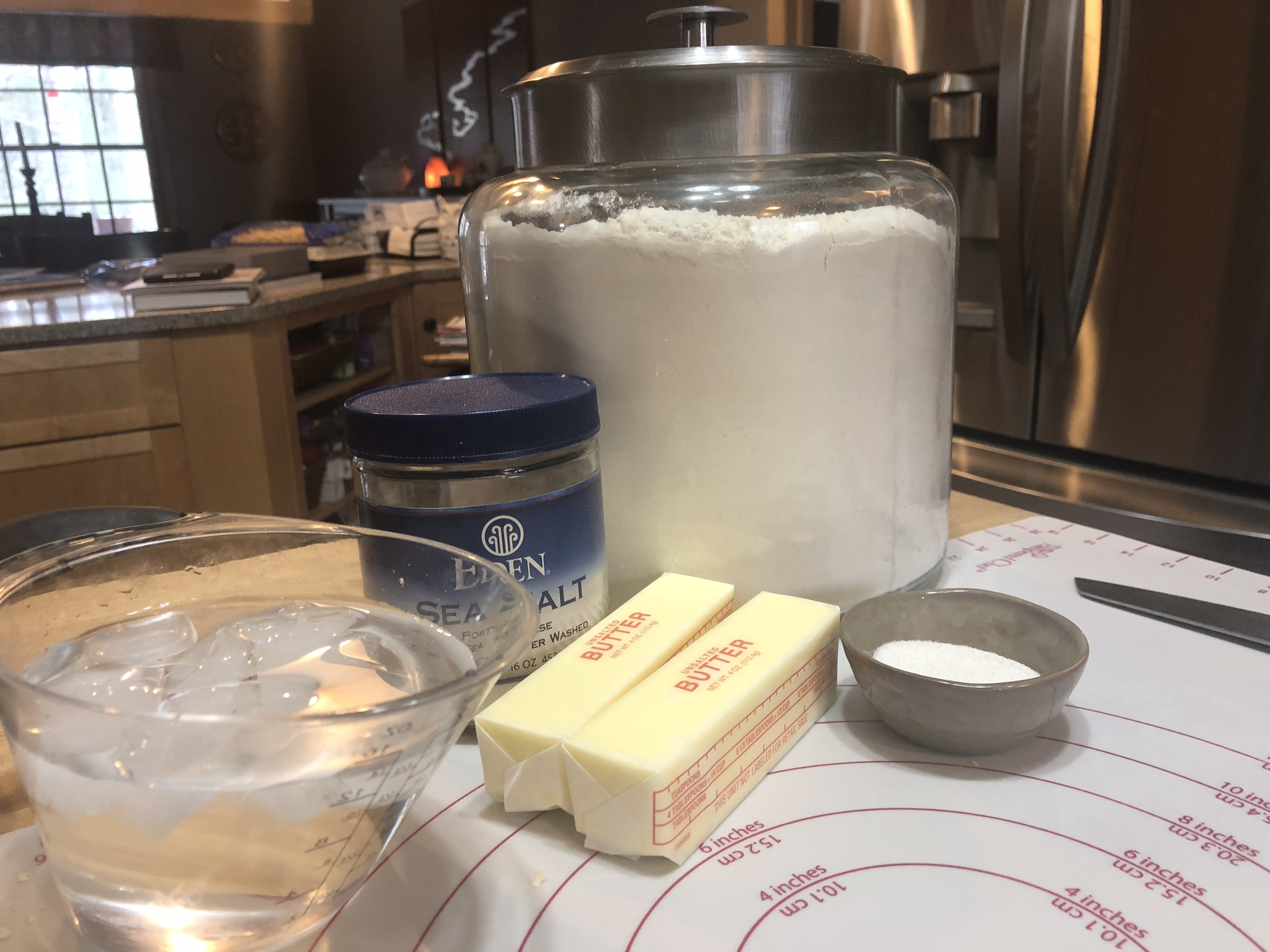
Dough ingredients:

3 3/4 cups AP flour (18 3/4 oz.)

1 T sugar

1 1/2 tsp salt

12 T unsalted, chilled butter cut into 1/2 inch pieces

1 1/4 cups ice water

2 T olive oil

Process the flour, sugar, and salt in a food processor until combined.  Scatter the butter in the processor over the flour mixture and pulse until the mixture resembles coarse cornmeal. Transfer the mixture to a large mixing bowl.  Add 1/4 cup of water at a time, stirring after each addition.  You may not need to use all of the water.  Once the dough sticks together, turn out onto a clean, dry work surface and gently press into a cohesive ball.  Divide the dough into two discs, wrap tightly in plastic wrap, and refrigerate for one hour.  Let the chilled dough sit out on the counter for a few minutes before rolling.

While the dough is chilling, prepare the filling.  I made a vegetarian filling with corn, peppers, and cheese.

Filling Ingredients:

2 T unsalted butter

1 poblano pepper, stemmed, seeded and chopped fine

3 whole canned mild green chilis chopped fine

3 green onions, whites minced and greens sliced thin

1 small mild orange pepper, stemmed, seeded and chopped fine

2 cloves of garlic minced

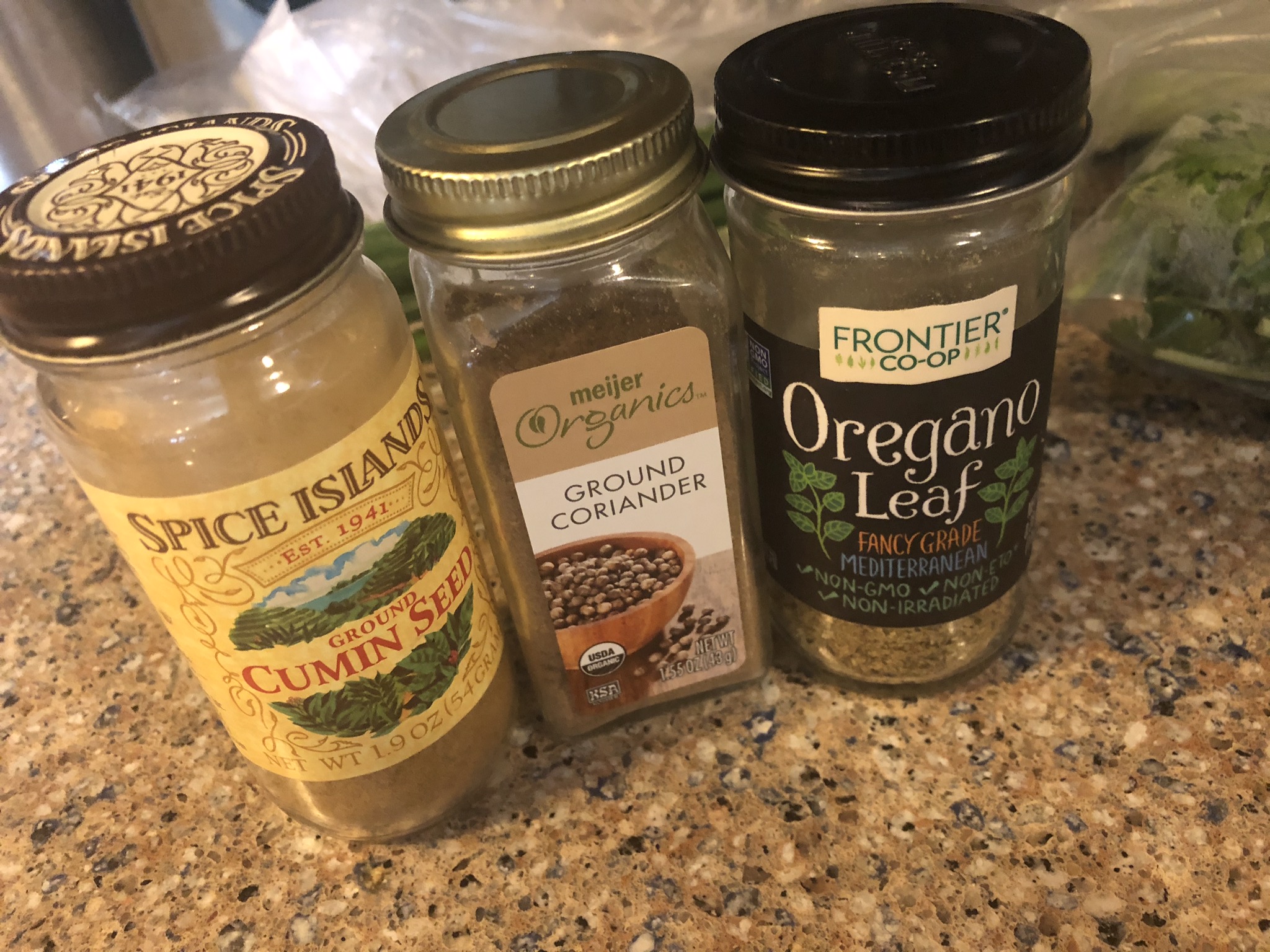
1/2 tsp dried oregano

1 tsp ground cumin

1 tsp ground coriander

salt and pepper

3/4 cup frozen corn thawed

1/2 cup fresh cilantro chopped

6 oz shredded Jack cheese

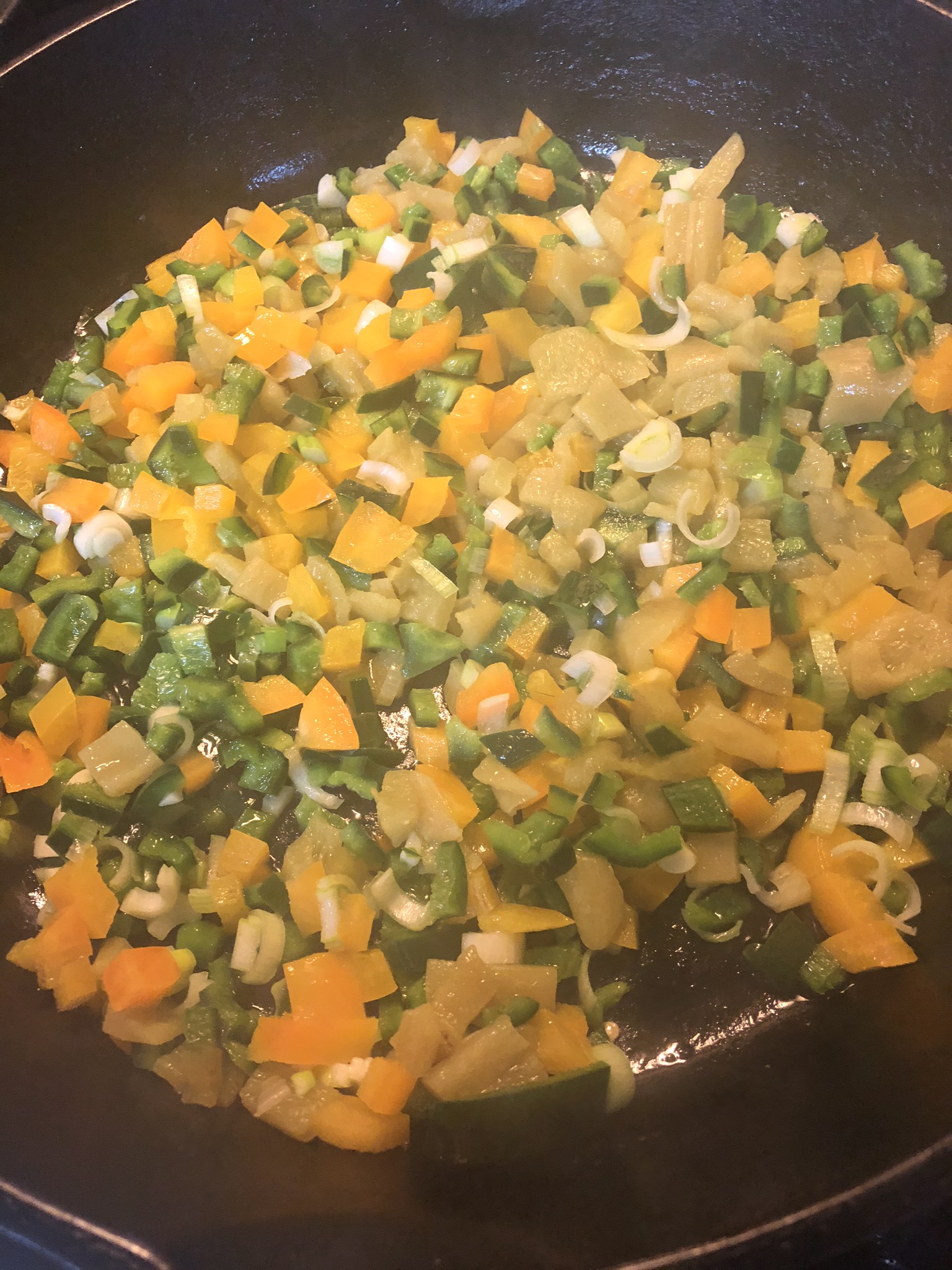
Melt the butter in a skillet over medium heat and cook the peppers and scallion whites until softened and lightly browned.

Stir in the garlic and the spices and cook another 30 seconds until fragrant.

Stir in the corn and remove from the heat.  Put the corn, pepper mixture in a bowl and refrigerate until completely cool.

While that’s chilling, slice the scallion greens, cilantro, and grate the Jack cheese.  Once cool, mix all of the ingredients together and now you’re ready to start rolling your dough.

Preheat the oven to 425 degrees.  Roll the dough on a lightly floured surface and cut discs with a biscuit cutter, a glass, or, if you’re fortunate enough to have one of these rollers, roll on.

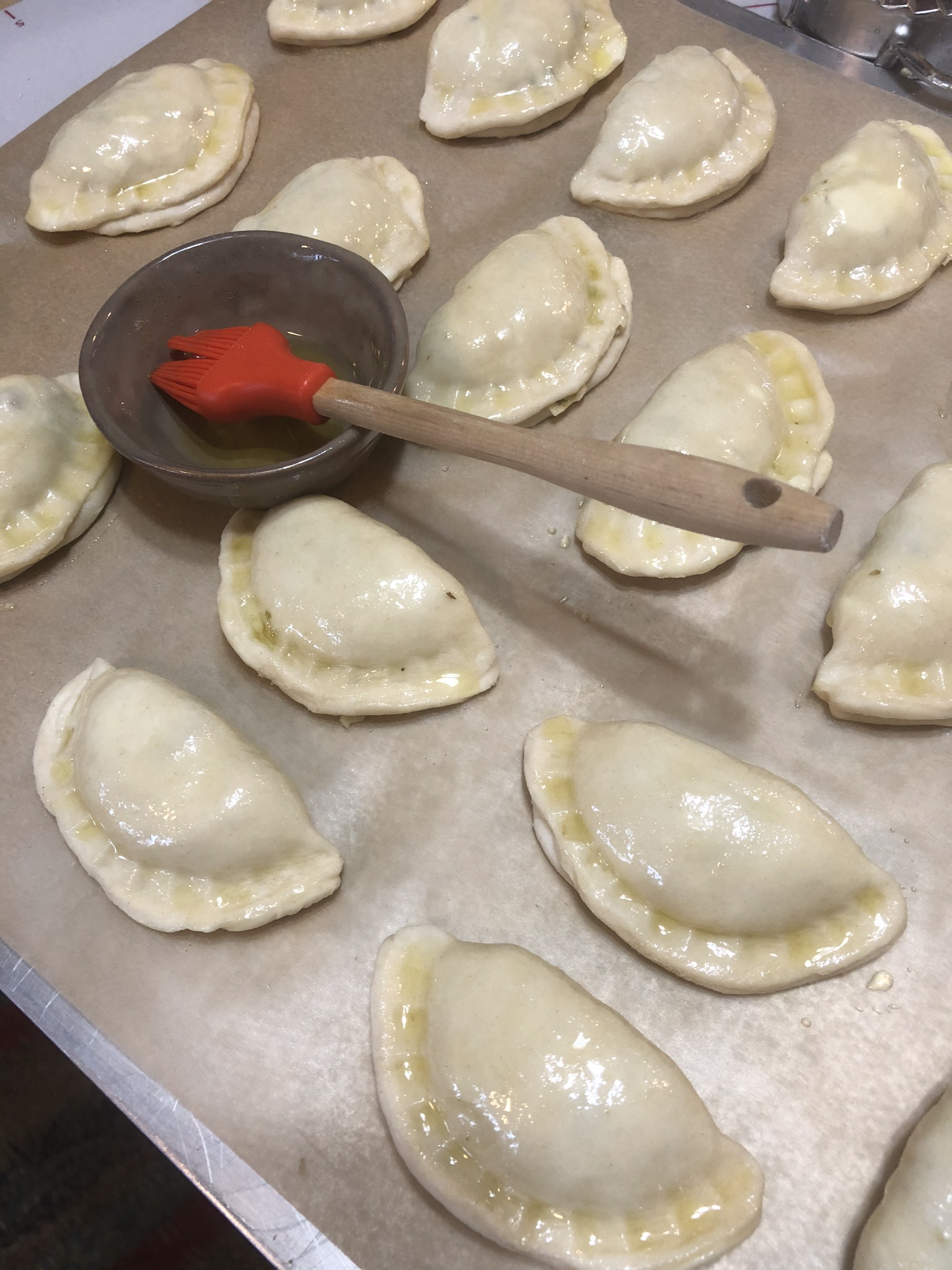
Fill each circle with 1 T of filling.  Brush the edges of the dough with water to help ensure a good seal.  Fold the dough over and crimp the edges with the tines of a fork.  Or, if you’re fortunate enough to have a crimper, crimp on.

Transfer the empanadas to a baking sheet lined with parchment paper.  Brush each with olive oil.

Bake for 20-30 minutes until golden brown.

Allow to cool and enjoy!

NOTE:  The filling options are endless.  There is a beef and cheese filling in the magazine and many, many more recipes on line.  The empanadas freeze well.  Put them in the freezer on a cookie sheet until frozen and then transfer them to zip lock freezer bags.  Bake them a few extra minutes if they’ve come out of the freezer.  Serve them as is or with salsa or Mexican crema.

Peanut Butter Fudge

One of my most requested recipes around the holidays is for peanut butter fudge.  Years ago I worked with someone who brought in peanut butter fudge that his wife made every Christmas.  It was excellent. But when I asked for the recipe he said it was a family secret and he would not share it.  After that I tried several different recipes for peanut butter fudge and finally stumbled on this one that I’ve been using for the last 20 years or more.  I have no idea where I found it, but it is every bit as good, if not better, than the “family recipe” my coworker refused to share.  The fudge pictured above is my version of Reese which is my daughter’s favorite.  A layer of peanut butter fudge and a layer of chocolate.  Of course I end up with two 9×13 pans of this, but I guess that’s not a bad thing.  And I’m all about sharing recipes!

Ingredients:

4 cups granulated sugar

1/2 cup butter

1 cup evaporated milk

1 T white vinegar

1 T light corn syrup

dash of salt

12 oz creamy peanut butter

13 oz jar marshmallow creme

1 tsp vanilla

Line a 9×13 pan with aluminum foil, allowing a generous overhang on each side, and lightly butter the foil and the pan.  This makes the fudge easy to lift out and cut.

Combine the sugar, butter, milk, vinegar, corn syrup and salt in a deep heavy kettle like a Dutch oven.  Stirring constantly cook over medium high heat until your candy thermometer reads 236 degrees.  Remove from the heat and stir in the peanut butter and marshmallow cream until completely incorporated.  Stir in the vanilla.

Pour into your prepared pan and allow it to cool completely.

This fudge is a perfect addition to our Christmas cookie trays.

NOTE:  I’ve never made this with chunky peanut butter and I’ve never added peanuts, but either of those modifications might be good.  If you want to make our Reese version the chocolate fudge recipe I use is also on my blog.  For some reason I only make this a Christmas but I’m thinking fudge is good any time of year.  My good friend and cookie baking partner gives a whole pan to her sister who cuts it up and freezes it.  When she is craving some peanut butter goodness she takes a piece or two out of the freezer.