Winter Vegetable Gratin

In my constant search for new things to cook, I found this recipe online at Kroger.com. I was attracted by the photo which looked just beautiful. It’s the perfect time of the year for preparing true comfort foods, and gratins are certainly one of those dishes. This is also a great example of how to take essentially healthy, simple vegetables and turn them into something rich and decadent. I had more than my normal mess in the kitchen while I was preparing this. All the peeling and slicing, the many separate bowls, and my hands in the cream and cheese tossing the vegetables. The end result was worth the mess and my kitchen smelled absolutely wonderful as it was cooking. I served this as a side with a pork loin, but this would be a perfect dish to serve as a vegetarian entree.

Ingredients:

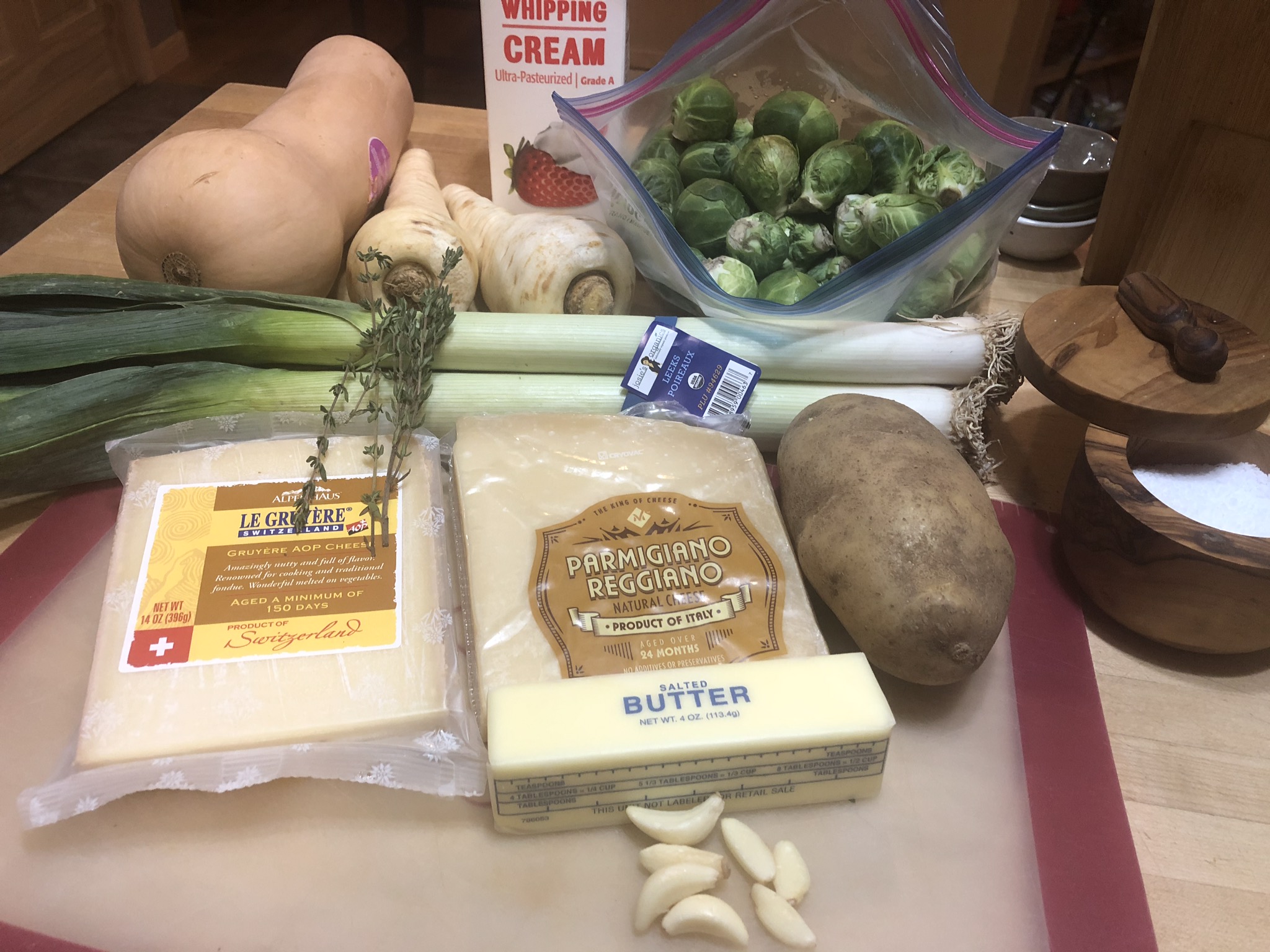
1 pound of parsnips peeled

1 pound of butternut squash (neck only) peeled

1 pound of Yukon gold potatoes scrubbed (I only had russets)

1/2 pound Brussels sprouts stemmed

2 1/2 cups of heavy cream

6 oz of finely grated parmesan cheese

4 tsp minced fresh thyme leaves

1 tsp kosher salt, plus more to taste

1 tsp fresh ground black pepper, plus more to taste

1 T butter

2 cloves of garlic (I used more)

1 large leek, white part only, finely chopped

3 oz gruyere cheese, finely grated

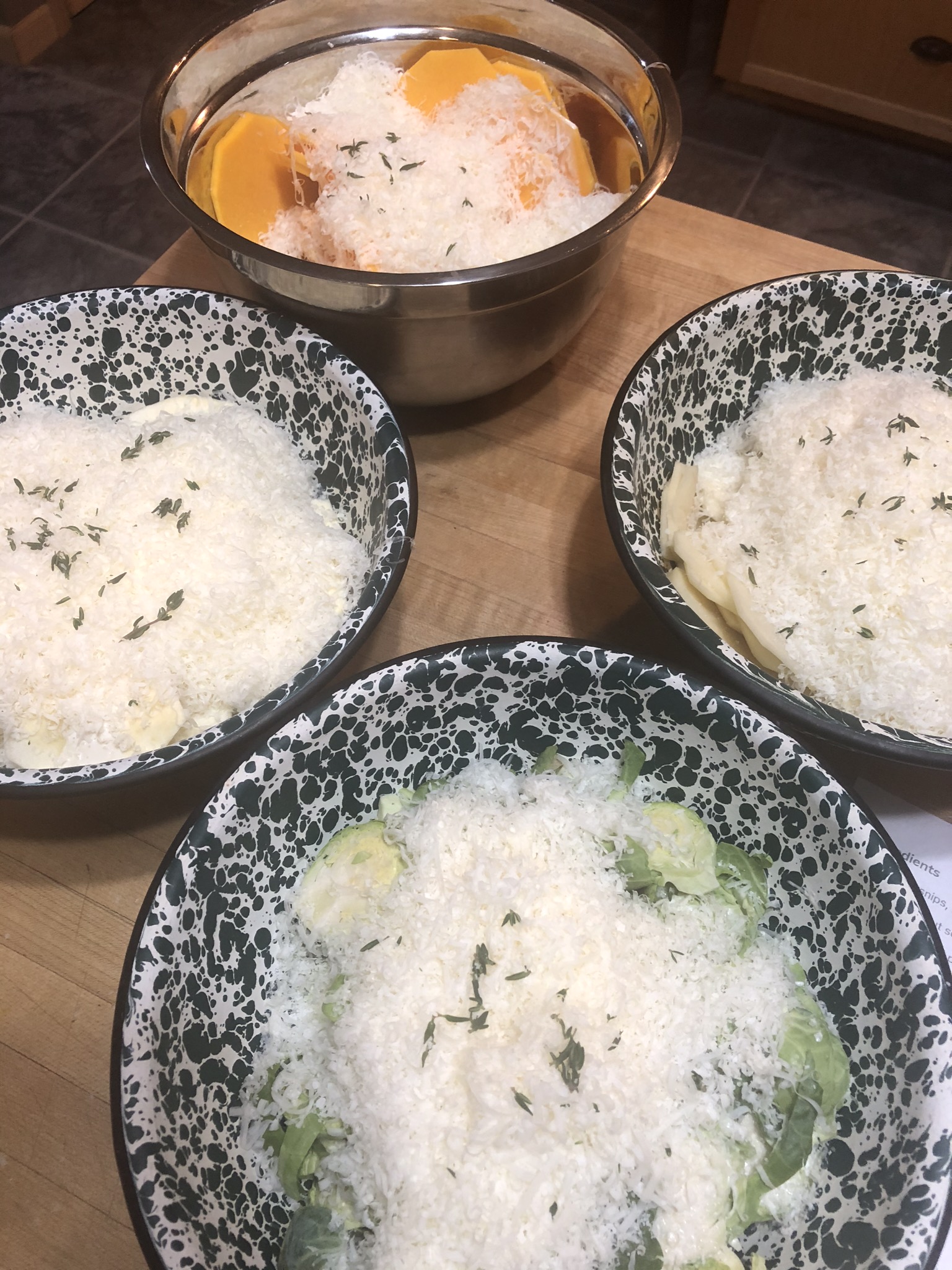
Preheat your oven to 400 degrees. Using the butter, generously grease a 9×13 baking dish. A mandolin is very helpful for making this dish. Thinly slice the parsnips, squash, potatoes and Brussel sprouts. Put each vegetable in a separate bowl.

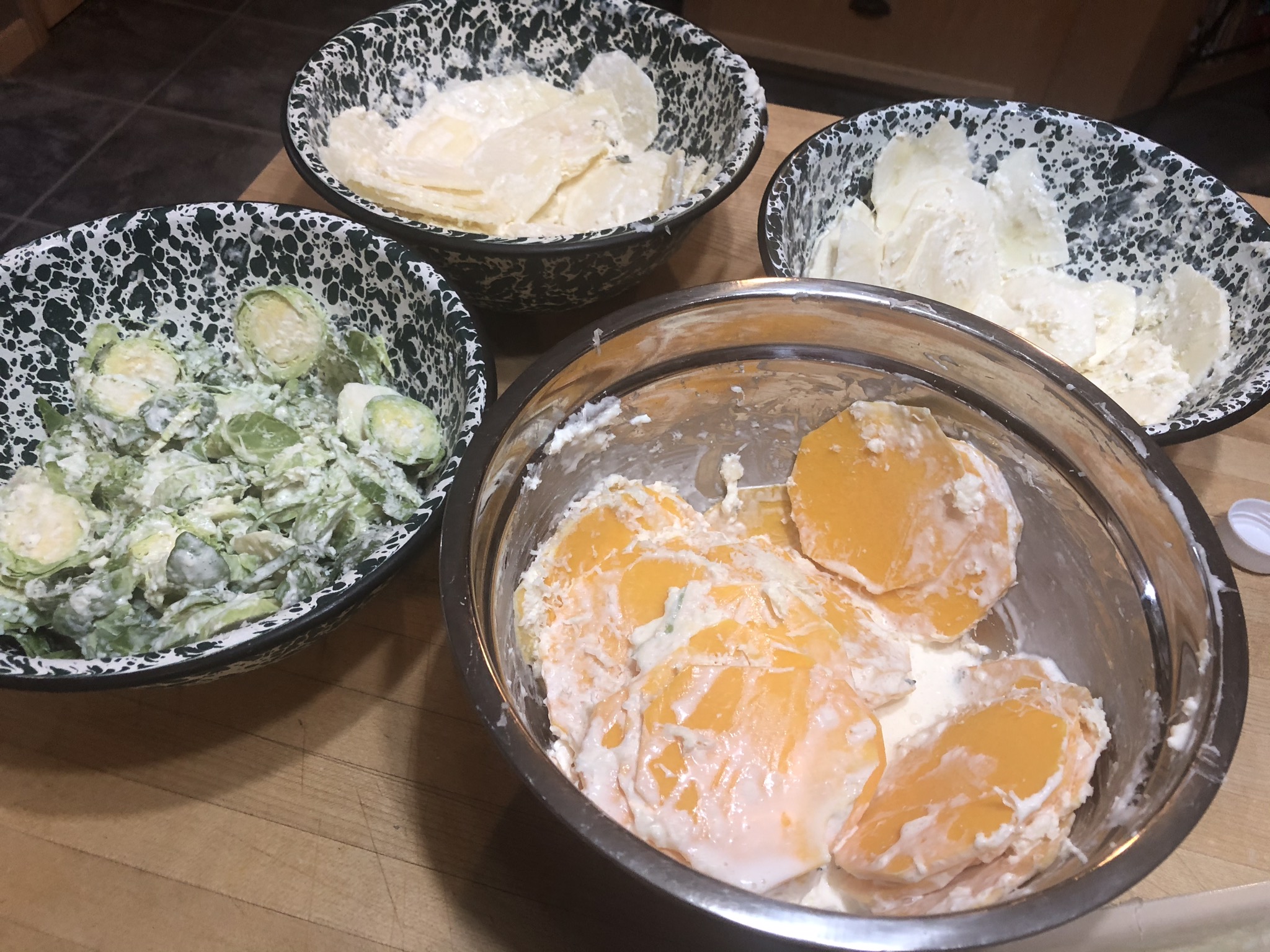
Add one half cup of cream, 1 oz of shredded parmesan, 1 tsp thyme, 1/2 tsp salt and pepper to each bowl.

Toss until the vegetables are all coated.

In your prepared baking dish, pour the remaining 1/2 cup of cream. Add in your chopped leeks and garlic along with one oz parmesan cheese and stir until evenly distributed.

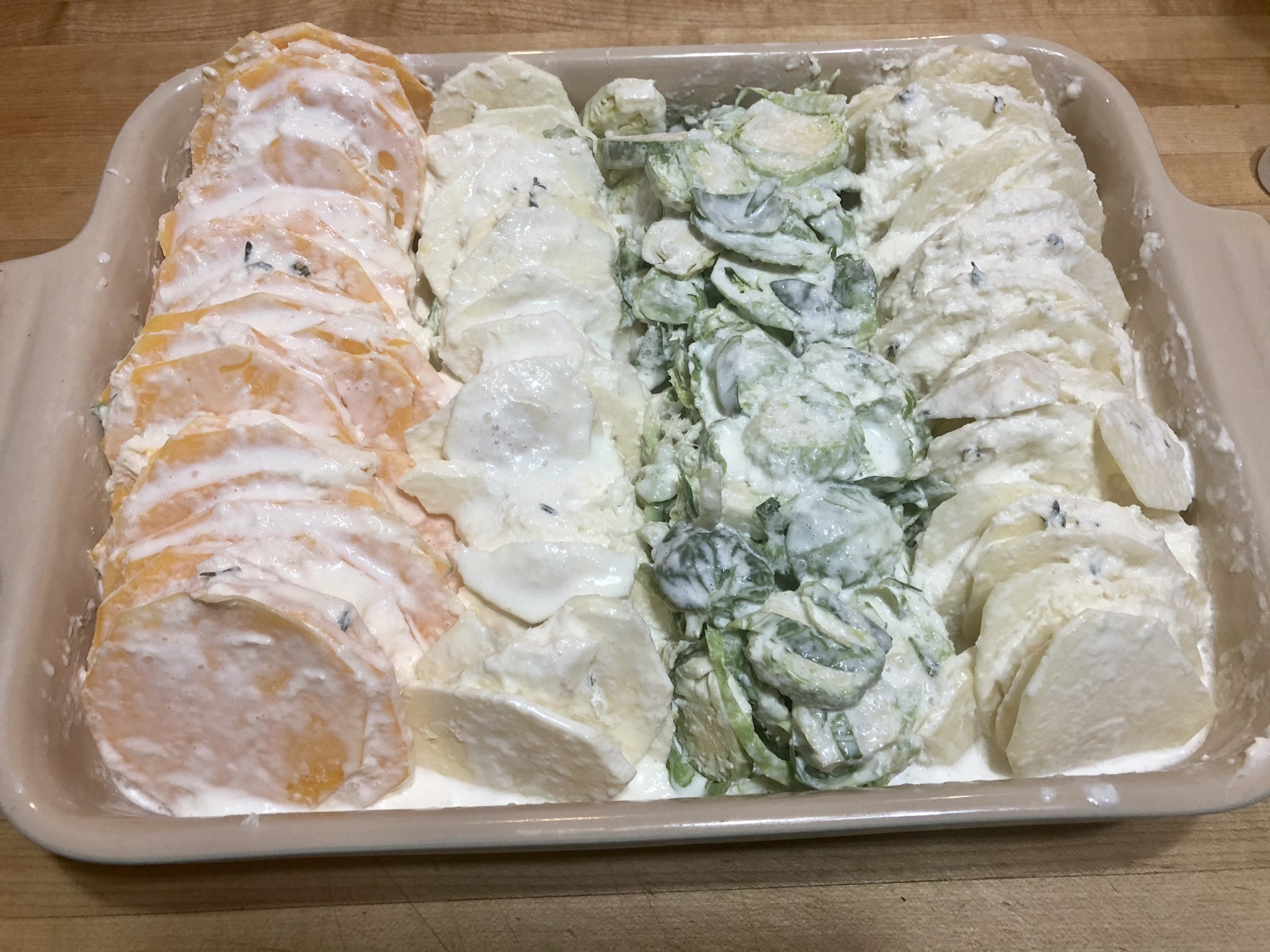
Now it’s time to arrange your sliced vegetables, alternating rows. Continue until the dish is full. Pour any remaining cream and cheese from the bowls over the vegetables. Sprinkle with salt and pepper and remaining one oz of parmesan cheese.

Cover the baking dish with foil and bake for 25 minutes. Remove the foil and continue baking for 20-25 minutes or until vegetables are tender and sauce is thickened. Remove the casserole from the oven and sprinkle with the gruyere cheese. Turn your oven on to broil. Broil for 3-5 minutes until browned and bubbling. Remove from the oven and allow the gratin to sit for 5-10 minutes before serving.

This was seriously so good.

NOTE: Feel free to change up the vegetables. Rutabaga, sweet potato, turnips, cabbage. Just be sure that they are equal thickness and cook up at the same rate. You can also change up the cheeses. I actually used equal parts of shredded parmesan and shredded asiago.

Roasted Vegetable and Cheese Crepes

Since we are all pretty much exclusively eating at home, every day is a challenge to think of something different to prepare for dinner. Just one more challenge wrought by this pandemic. A couple nights ago I made a big pot of tomato bisque. Since there are only two of us, this soup recipe results in a lot of leftovers. Some went in the freezer, some were shared with a friend, and I used some for the sauce on these crepes. One of the great things about these crepes is you can use almost any kind of vegetables you have on hand and whatever kinds of cheeses you have on hand. It’s also a perfect vegetarian meal that is very flavorful and satisfying. I have a favorite crepe batter recipe that I use for savory crepes. And I will share the cheese concoction.

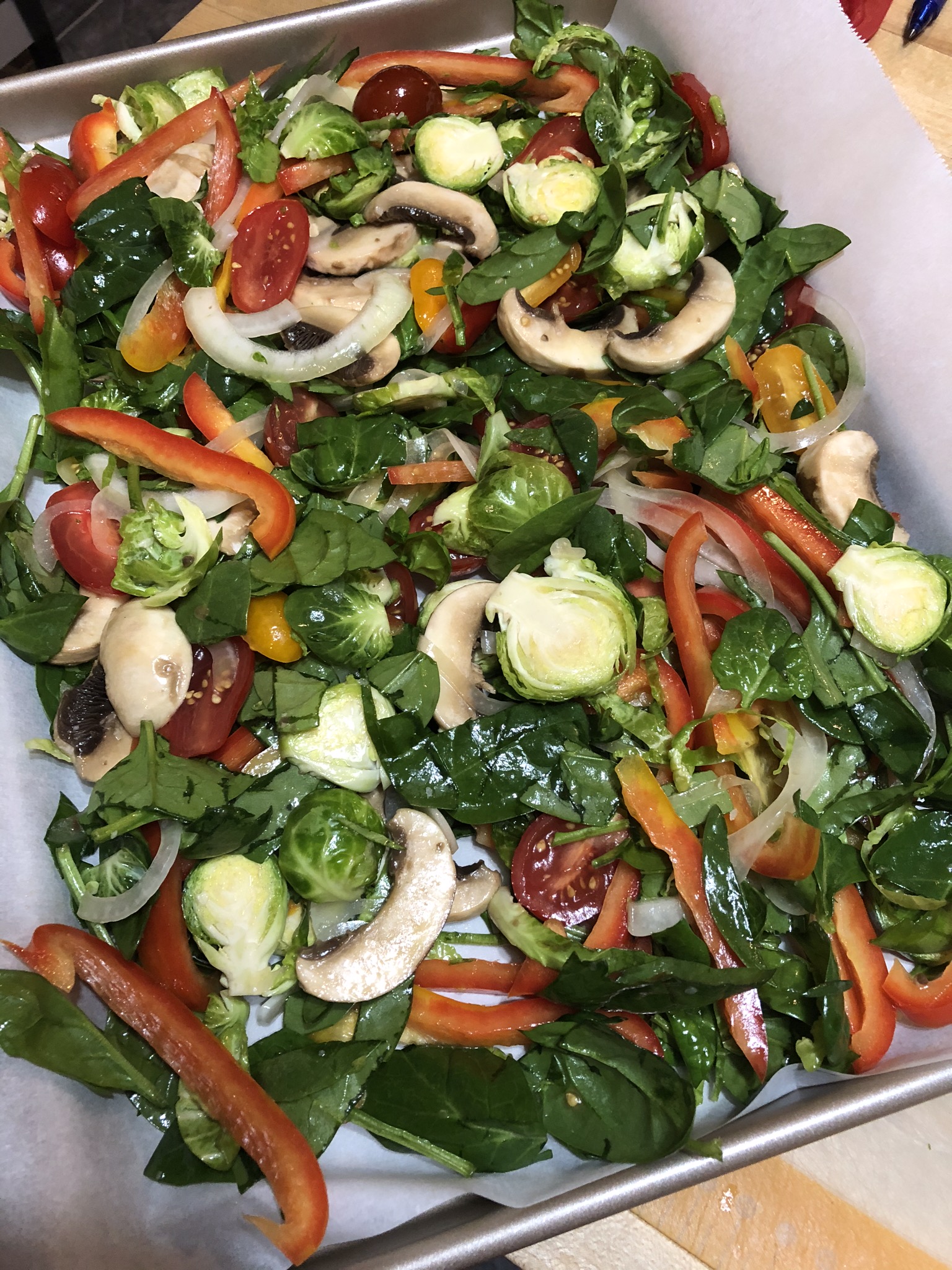
Vegetables first. Preheat your oven to 375 degrees and prepare your vegetables. I used Brussels sprouts, sweet peppers, onion, mushrooms, baby heirloom tomatoes and spinach. In a large bowl, toss the vegetables with a little olive oil and season with salt and pepper. Line a jelly roll pan with parchment and spread the vegetables out. Roast in the oven until veggies are tender, approximately 30-40 minutes, depending on the vegetable combination you use. Remove from the oven and allow them to cool before putting your crepes together.
Crepe Batter Ingredients:

1 cup AP flour

3 eggs

1 1/2 cups milk

Dash of salt and pepper

3 T melted butter plus more for frying the crepes

Whisk together the flour, 1/2 cup of milk, and eggs. Whisk in the rest of the milk and salt and pepper. Refrigerate the batter for at least 30 minutes. Just prior to frying up the crepes whisk in 3 T of melted butter. Heat a small skillet over medium high heat and brush with melted butter. Pour in 1/4 cup of batter and swirl to cover the entire surface.

Flip the crepe to cook the other side.

I slide mine onto a platter and separate with sheets of wax paper. Repeat this process until you’ve used all of the batter. This recipe makes about 12 crepes.

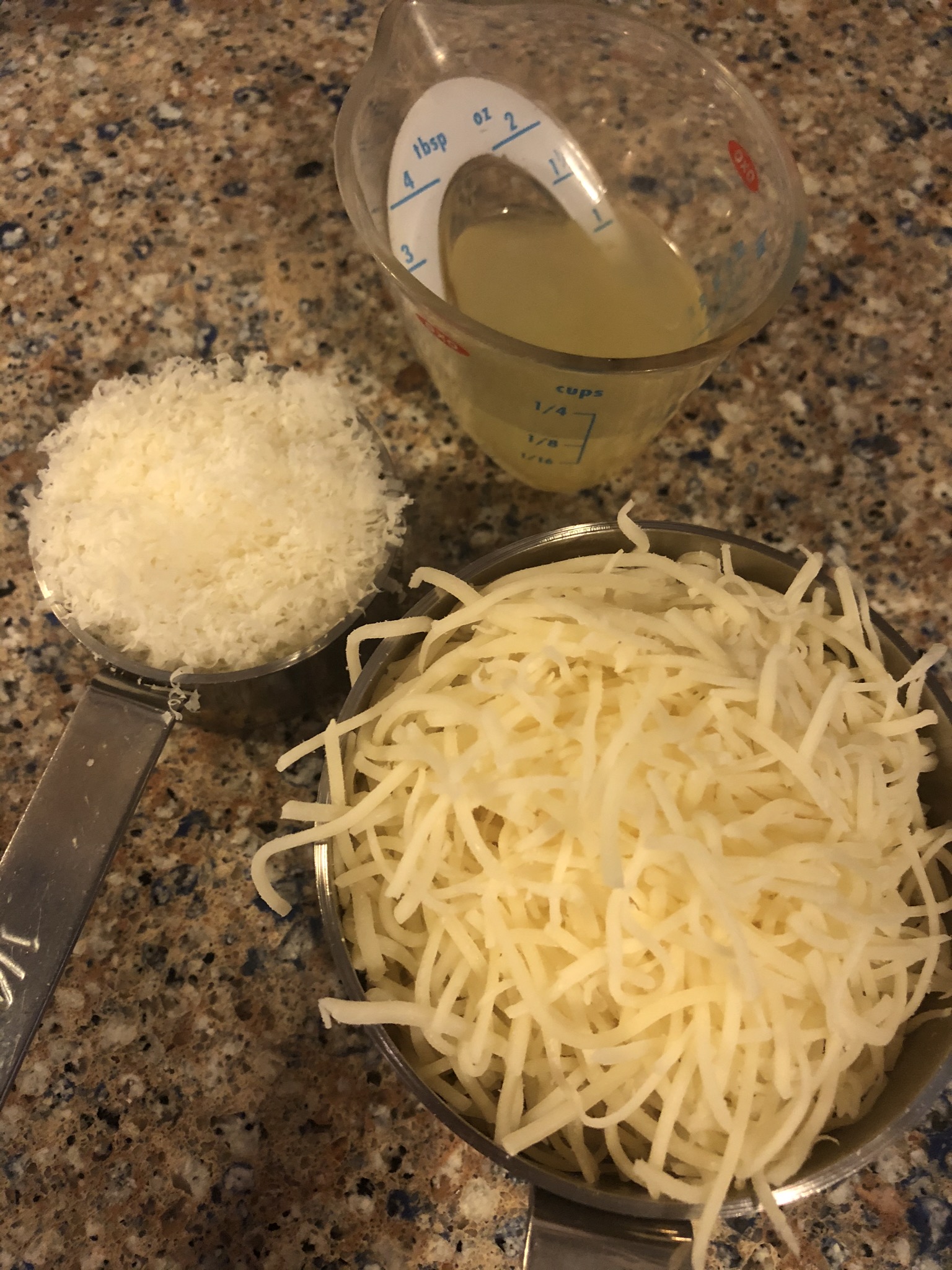
Now you can mix your cheeses of choice.

Cheese Combination:

1/2 cup mascarpone cheese

1/2 cup ricotta cheese

1/2 cup shredded parmesan cheese

1/2 cup shredded gruyere cheese

1/2 tsp salt

Fresh basil

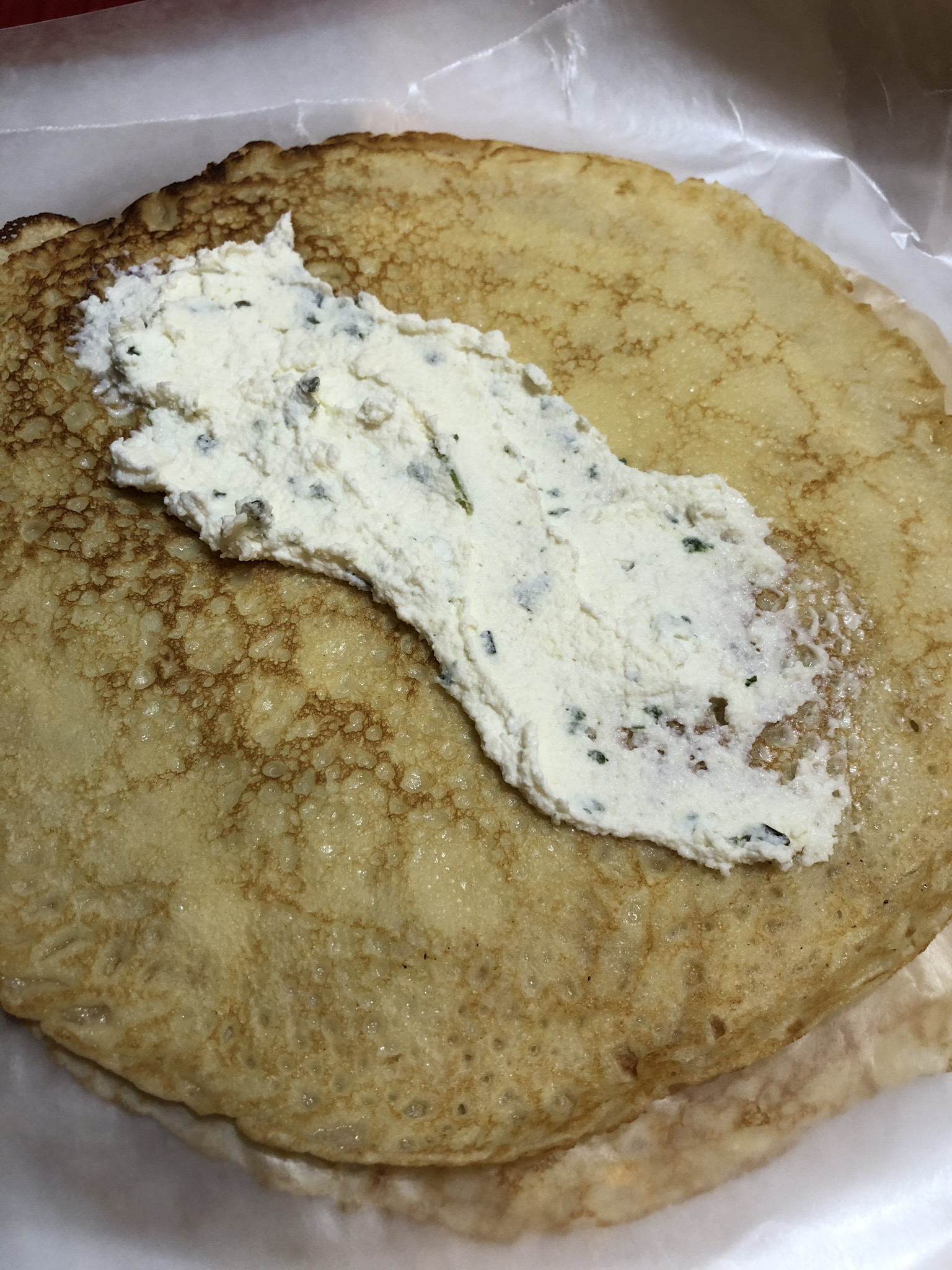
Whip together to get a nice, smooth consistency for spreading. Now you’re ready to assemble your crepes. Preheat the oven to 350 and line the pan you used to roast the vegetables with a fresh piece of parchment paper. Working with one crepe at a time, give it a good smear of cheese down the center.

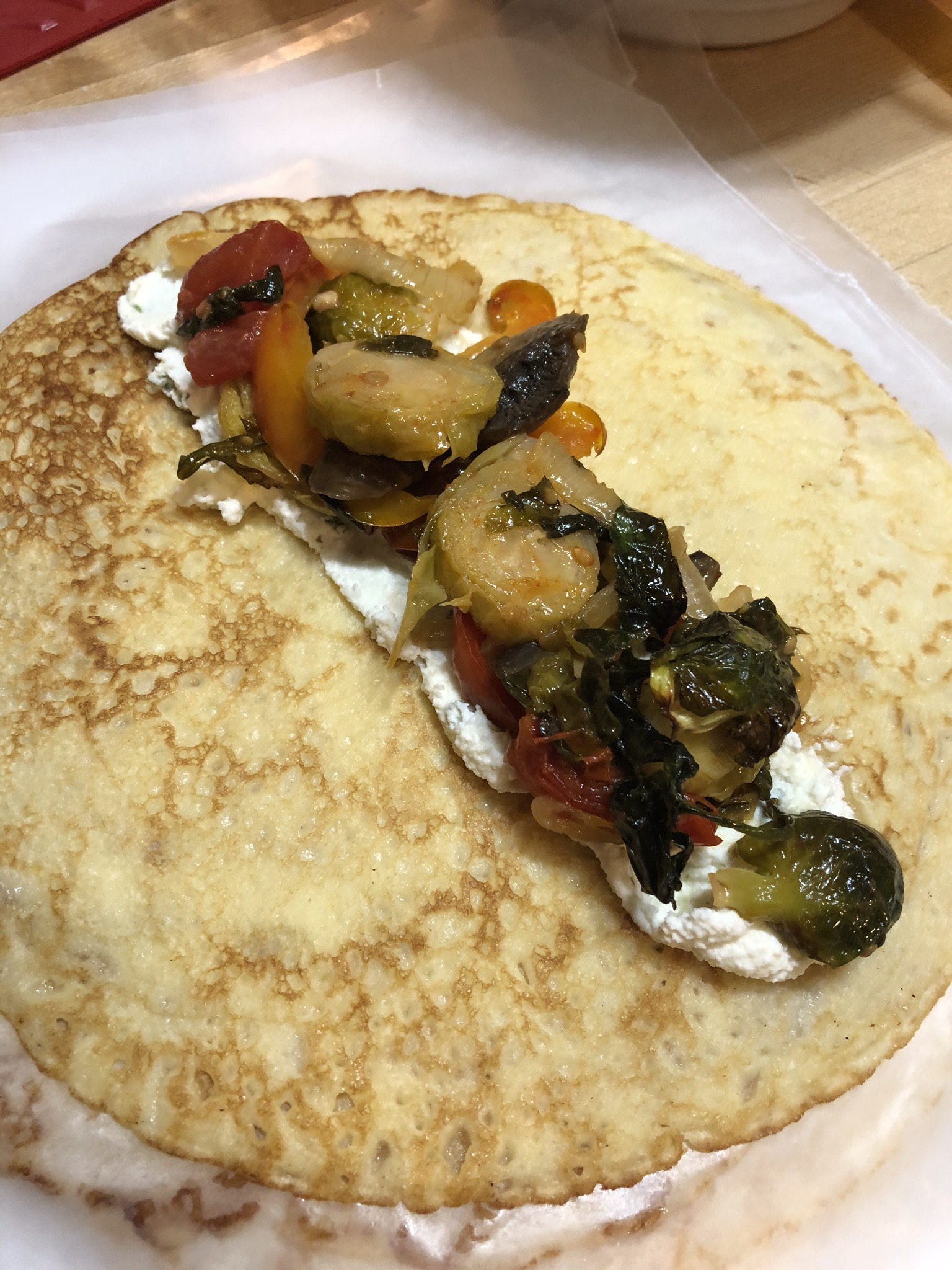
Add the grilled veggies on top of the cheese.

Roll the crepe and transfer to the baking sheet. Continue until you have used all of the cheese and veggies. Sprinkle a little additional shredded cheese on top and bake for about 20 minutes.

Serve as is or with a sauce of your choosing. The tomato bisque is perfect.

Soup one day. Sauce the next.

NOTE:. While any combination of cheeses will work it’s helpful to have a creamy cheese like goat cheese, cream cheese, cottage cheese, mascarpone, or ricotta to get a spreadable consistency.

A hollandaise, Alfredo, or simple marinara would be great sauces as well.

Oatmeal Raisin Bars

This is a recipe I’ve had for years, and I have no idea where it came from. If you love oatmeal raisin cookies you will love these bars. They are SO good! You can even convince yourself that they’re the perfect morning coffee accompaniment because they contain oats (high in fiber and good for your cholesterol) and raisins (good for strong and healthy bones and relieve constipation).

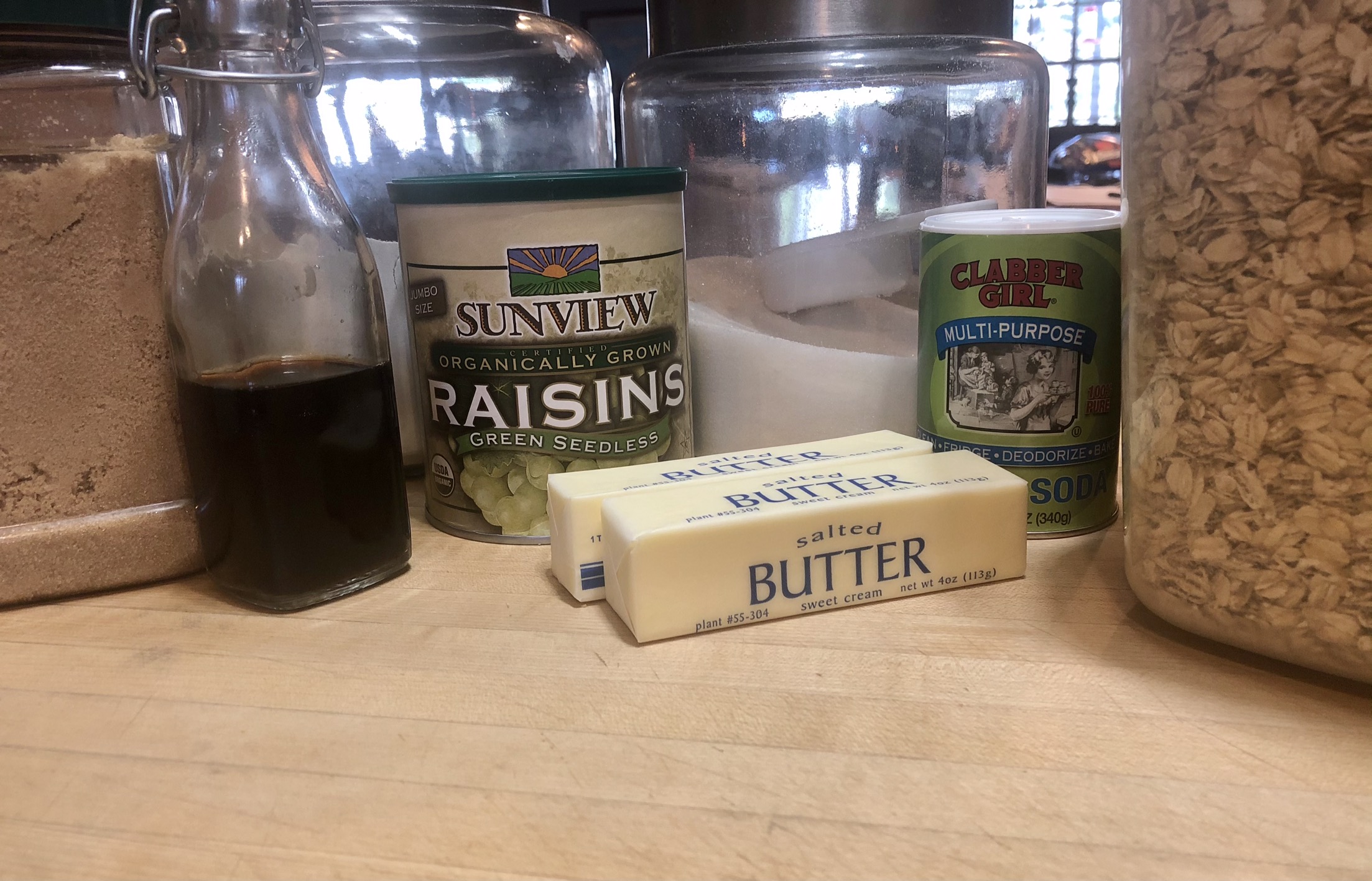
Filling Ingredients:

1 1/2 cup of raisins

1 1/2 cup of sugar

3 T AP flour

1 1/2 cup of water

Crust Ingredients:

2 cups AP flour

2 cups oatmeal

1 cup of melted butter

1 cup of brown sugar

1 tsp vanilla

1 tsp baking soda

Start by making your filling. In a heavy saucepan whisk together the sugar and the flour. Add the raisins and water and cook over medium high heat until the mixture comes to a boil, stirring occasionally. Continue to simmer until the mixture thickens.

Remove from the heat and allow the filling to cool.

Preheat the oven to 350 degrees and begin making the crust. In a large mixing bowl combine the flour, oats, brown sugar, and baking soda.

Add the melted butter and vanilla and stir until the ingredients are all combined.

Line a 9×13 pan with parchment paper, leaving an overhang on either side. The parchment paper allows the bars to easily be lifted from the pan making cutting and cleanup much easier. Spread 2/3 of the oatmeal mixture in the pan and press to form the base.

Pour the filling over the base.

Top with the remaining oat mixture.

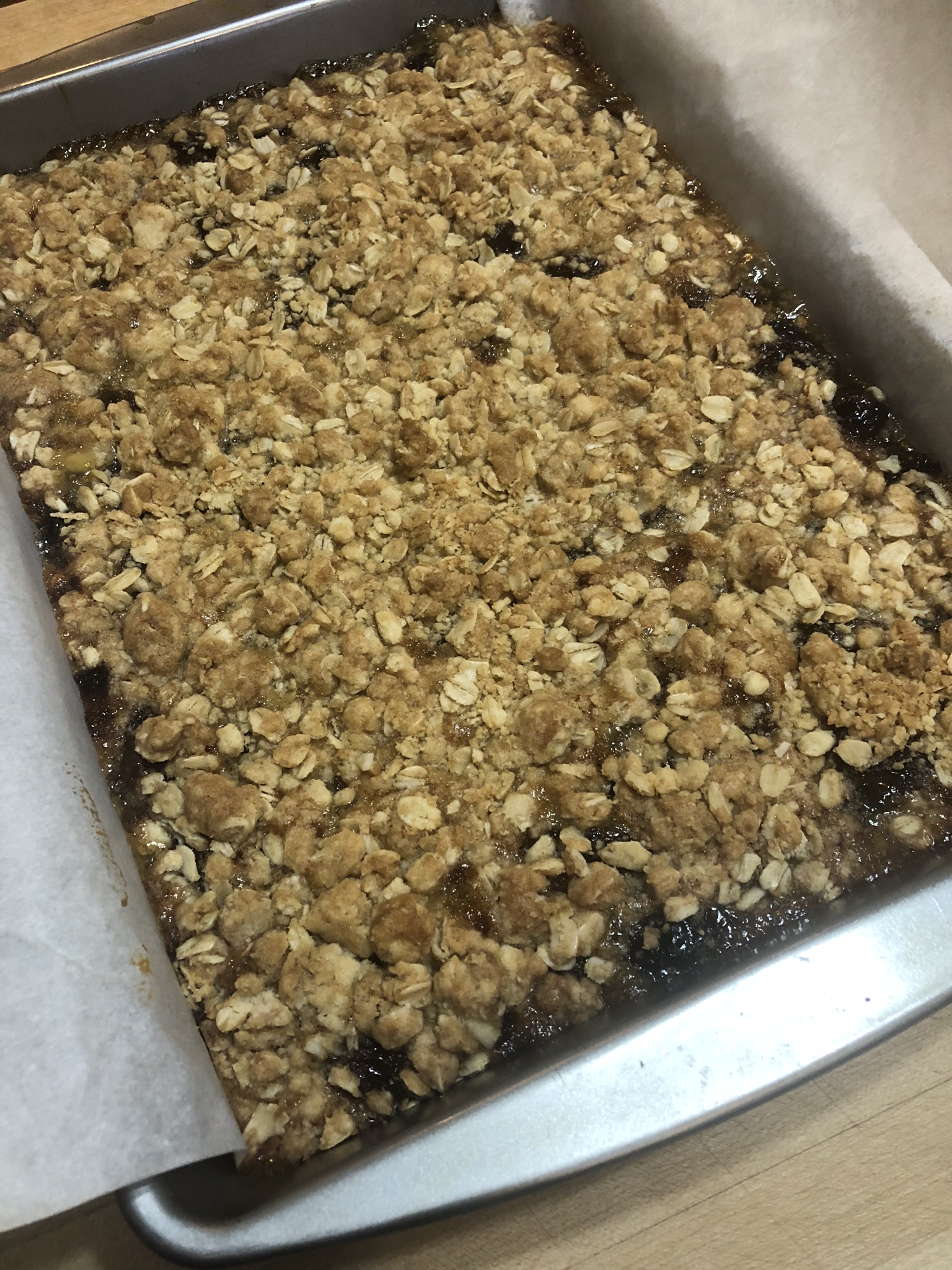
Bake for 35 minutes until the top is golden brown. Remove and allow to cool completely before cutting into bars.

Once it has cooled completely, using the parchment overhang, lift from the pan, cut into bars, and enjoy.

NOTE: I have made this with dates before, substituting 1 1/2 cups of chopped dates for the raisins. And, while I’ve never tried this before, dried cherries might also be a great substitute for the raisins.

French Baguettes

When you love to cook and bake, and you get a new piece of equipment, you need to use it as soon as it arrives. I just received my Emile Henry Baguette baker. It’s just beautiful. A bright burgundy color.

The baker came with a little instruction booklet and a few recipes. When this pandemic first began last March my friend Jane and my daughter and son-in-law were in a bread making frenzie. A bit of competition as well. We shared bread pictures with each other. Jane and I never won the most beautiful loaf competition but we sure had fun trying. A few times a week we were making loaves of bread. When yeast was hard to find we made sour dough. And we bought equipment for that. A lame (an implement that holds a razor blade and is used to make the deep slashes in the bread dough), a bread cloche, and proofing baskets. We even ordered a 50 pound bag of King Arthur flour and a 25 pound bag of stone ground rye flour. We all took a time out over the Summer months but Fall is here and Winter will be soon. And we will be, once again, sheltering at home and baking bread. The baguettes are the simplest bread of all. My instruction/recipe book had a recipe for baguettes stuffed with caramelized onion and goat cheese and topped with a litttle rosemary, cheddar cheese, and honey. That was the first recipe I tried.

Ingredients:

1 large onion peeled and chopped

4 T olive oil

9 oz (2 cups) of AP flour

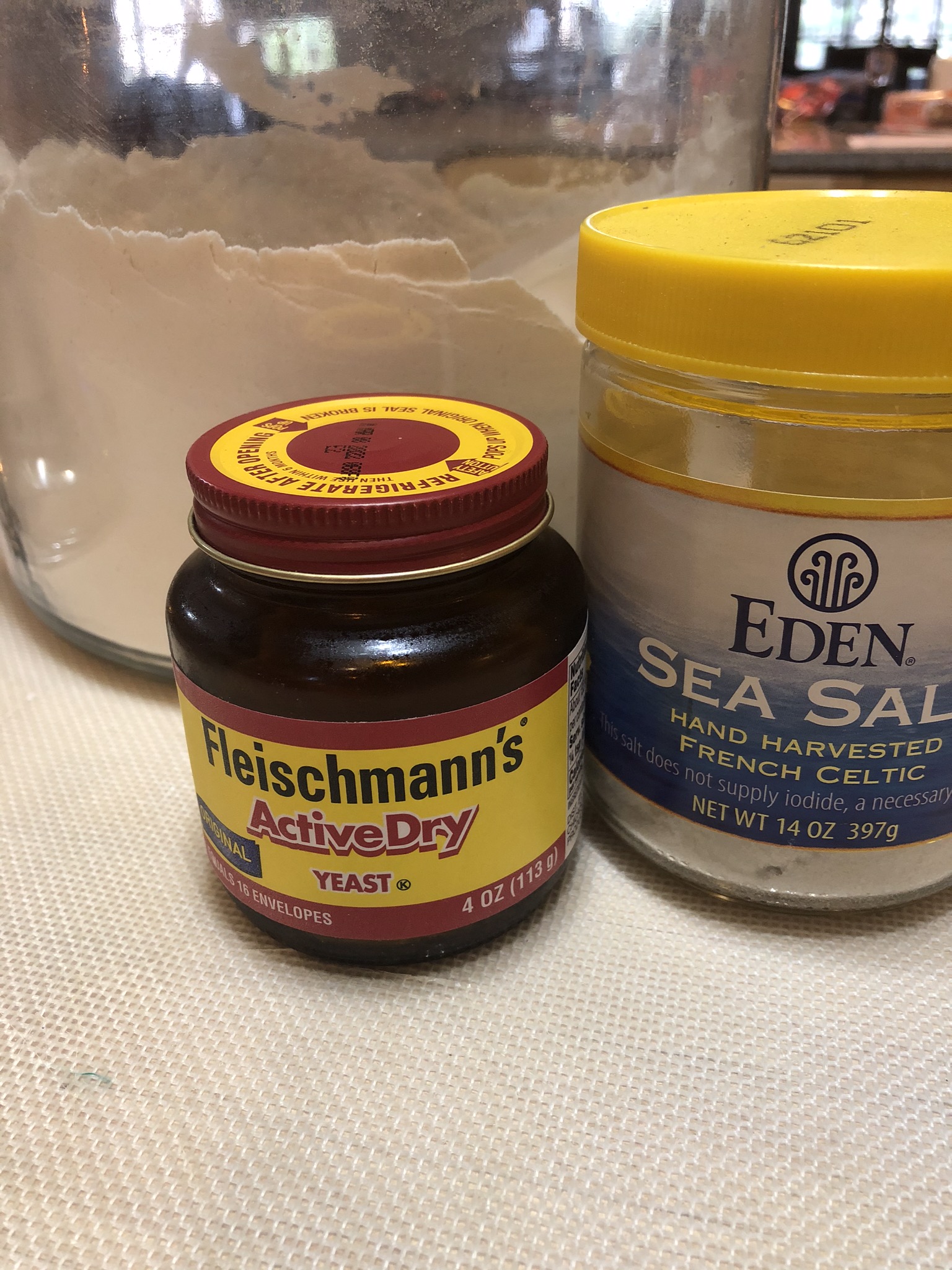
1 tsp fine sea salt

1 tsp active dry yeast

5 oz warm water, 100 degrees F

7 oz fresh goat cheese crumbled

1 tsp rosemary (I used fresh)

1 oz grated cheddar cheese

3 T honey

Heat 2 T of the olive oil in a heavy skillet and cook the onion over medium heat until it is tender and golden, stirring occasionally. My onions were small so I used two of them. Set aside to cool.

Combine the flour, salt, and yeast in a mixing bowl. One of the things that I’ve learned during all of this bread making is to weigh my flour. Whisk the dry ingredients together and stir in 5 oz of warm water and the other 2 T of olive oil.

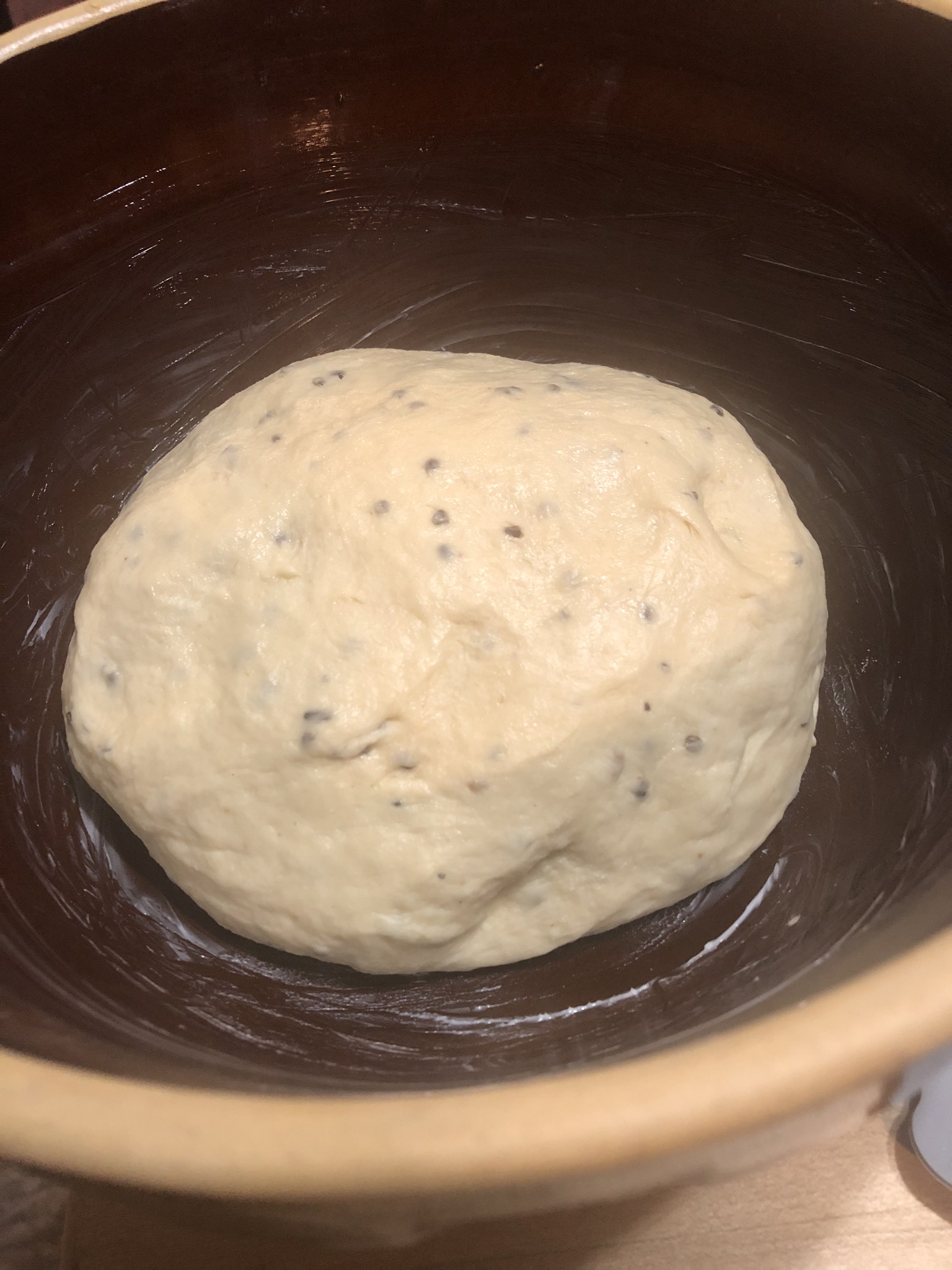
Using a wooden spoon combine the ingredients, turn them out onto a clean surface, and knead for about 5 minutes until the dough is smooth and elastic. Form the dough into a ball, cover with a damp cloth, and allow to rise for about 30 minutes at room temperature away from drafts.

Once you’ve allowed the dough to rise, knead it to remove any air bubbles and divide it into 3 equal pieces. Flatten each piece into a rectangle about the size of your hand and, using a rolling pin, roll it out into about a 13”x4” rectangle. Spread a third of the caramelized onions and sprinkle some goat cheese onto the dough.

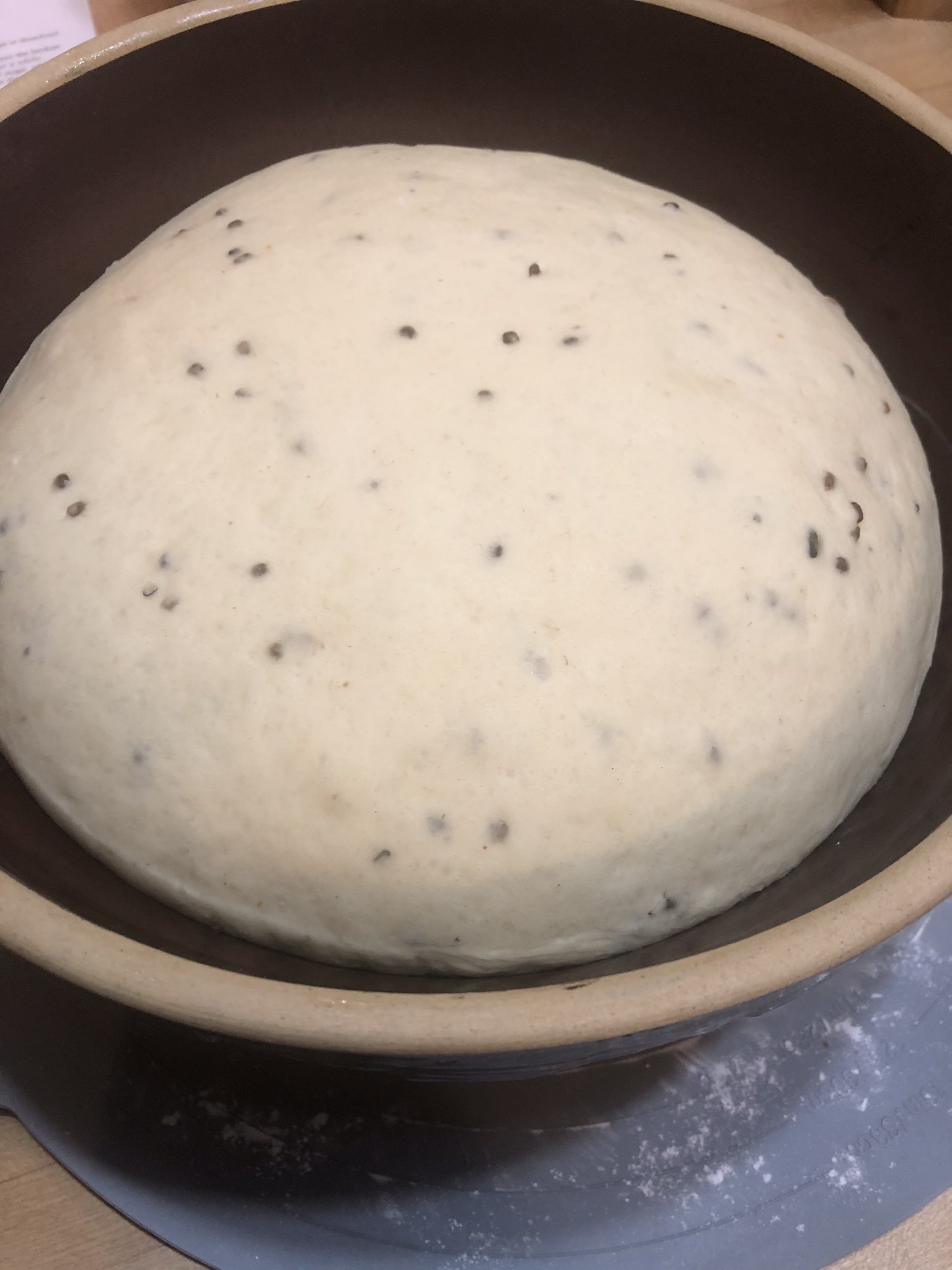
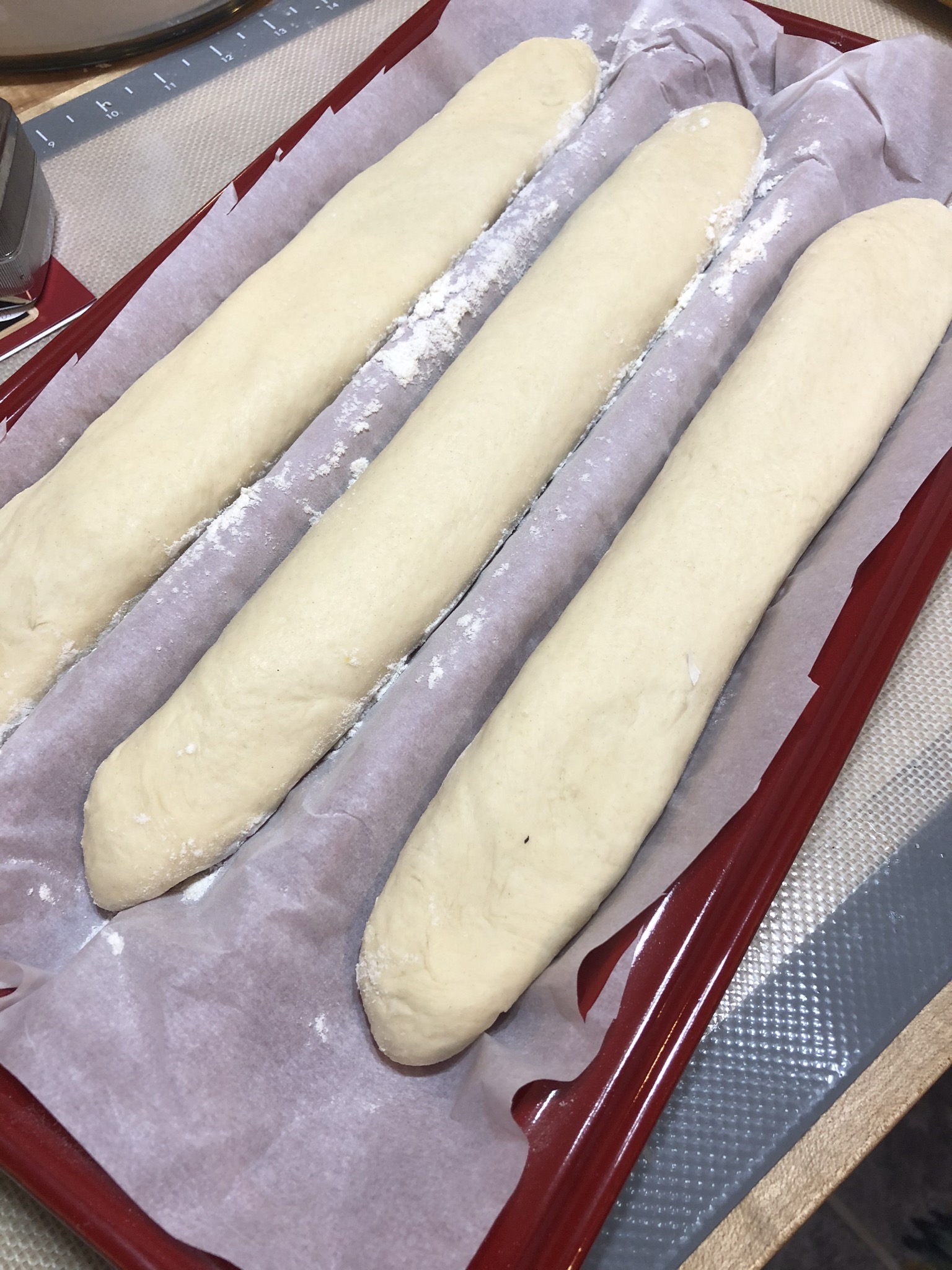
Fold one side over to cover two thirds of the dough and then fold the other side over to form a cylinder. Put the dough into the generously floured bread baker, seam side down. Repeat two more times. Cover with the lid and allow to rise for 20 minutes. While the bread is rising preheat your oven to 475 degrees.

After the second rise, brush the loaves with a little water and score the dough in several places deep enough to reach the onions. Sprinkle the loaves with the chopped rosemary and the cheddar cheese.

Cover the pan with the lid and bake for 25 minutes. Remove the lid and let the loaves brown for 2-4 more minutes. Remove from the oven and pour honey into the cuts in the loaves. Allow them to cool in the pan.

Slice and serve. We enjoyed a piece with our evening cocktail while it was still warm from the oven.

NOTE. These loaves could actually be stuffed with any variety of things. Different kinds of cheeses, olives (another suggestion in the recipe book), herbs, or crispy bacon bits. If you don’t have a baguette baker I think these would bake up nicely on a baking stone with a piece of foil tented over the loaves.

I made another batch of just plain baguettes today. I’ll combine some herbs and olive oil for dipping and we will enjoy these with our dinner tonight.

Chicken and Wild Rice

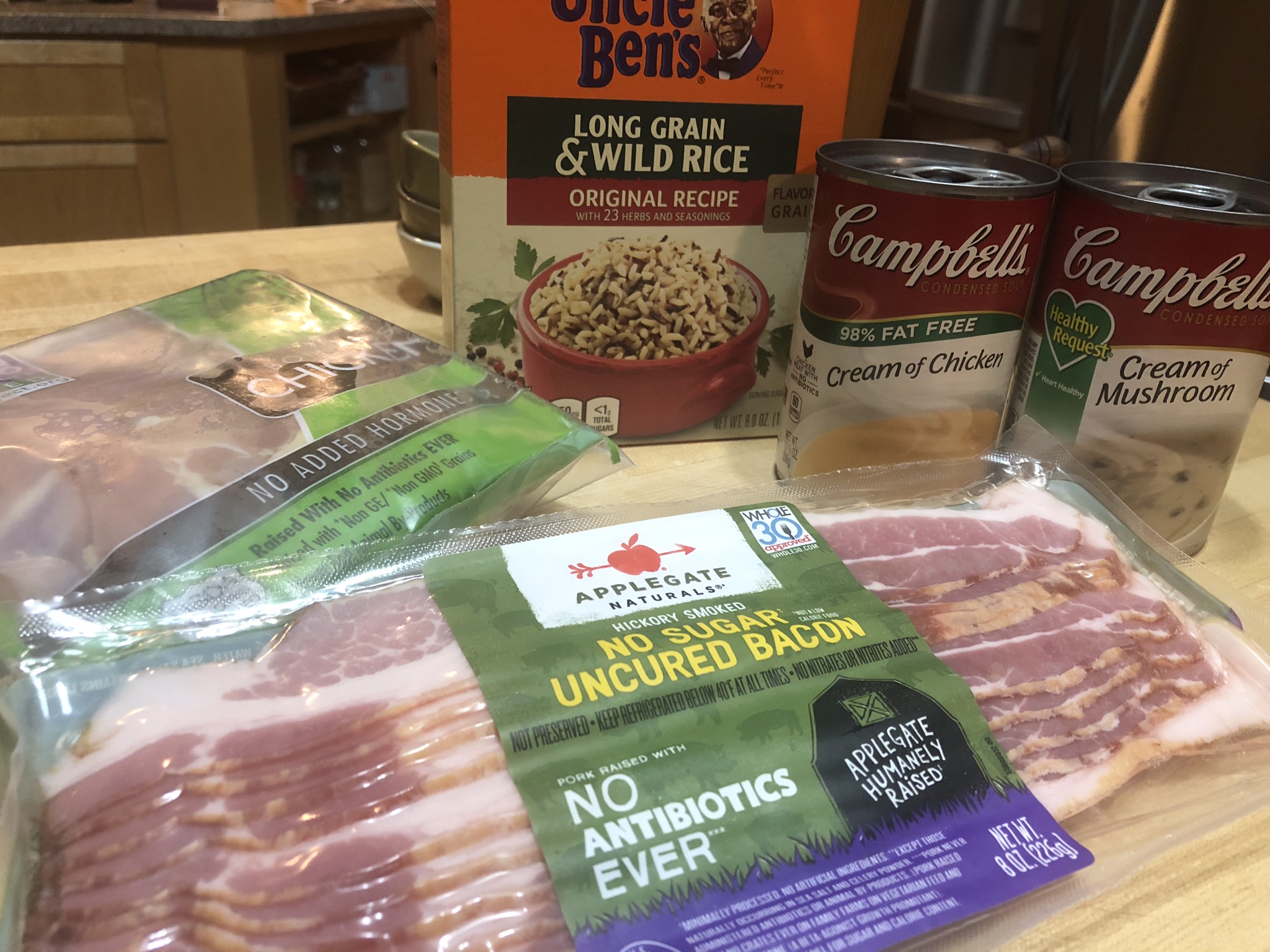
Last week when I was grocery shopping at Aldi I saw boxes of Uncle Ben’s Long Grain and Wild Rice on an end cap. I was reminded of a chicken and rice dish I made years and years ago and I picked up two boxes of the rice and a can each of cream of chicken soup and cream of mushroom soup. I rarely buy canned soups anymore tending to make more recipes from scratch. Probably because I have more time now and because I love to experiment with new recipes. But we all have old favorite recipes that we’ve hung onto for years and many use creamed soups. If you look on line you’ll find hundreds, if not thousands, of recipes with cream soups. I did a little research and found out that a chemist for Campbell’s Soup invented condensed soup in 1897. Campbells began producing cream of mushroom soup in 1934. That surprised me a little. I thought it was more recent than that. When my mother passed and my dad was cooking for himself I gave him my mom’s recipe for crockpot roast beef. A chuck roast, an envelop of dried French Onion soup and a can of cream of mushroom soup cooked on low all day. He loved it. The meat was tender and you had a nice gravy. A perfect example of what a creamed soup can do.

This recipe is similar in that it requires only four ingredients and in 90 minutes you have dinner. These are the ultimate comfort food recipes.

Ingredients:

8 oz of bacon

1 package of Uncle Ben’s Long Grain and Wild Rice

4 chicken breasts (or leg and thigh pieces if you prefer)

1 can cream of mushroom soup

1 can cream of chicken soup

Preheat your oven to 350. Line a 9×13 casserole dish with bacon.

Sprinkle the rice and the seasoning packet over the bacon.

Whisk together the two cans of soup along with a half of can of water and pour half of the soup mixture over the rice.

Add the chicken and cover with the second half of the soup mixture.

Cover the pan with foil and bake for 1 hour. Remove the foil and bake for an additional 30 minutes. While the casserole continues to bake prepare a vegetable and/or a salad to serve with the chicken and rice.

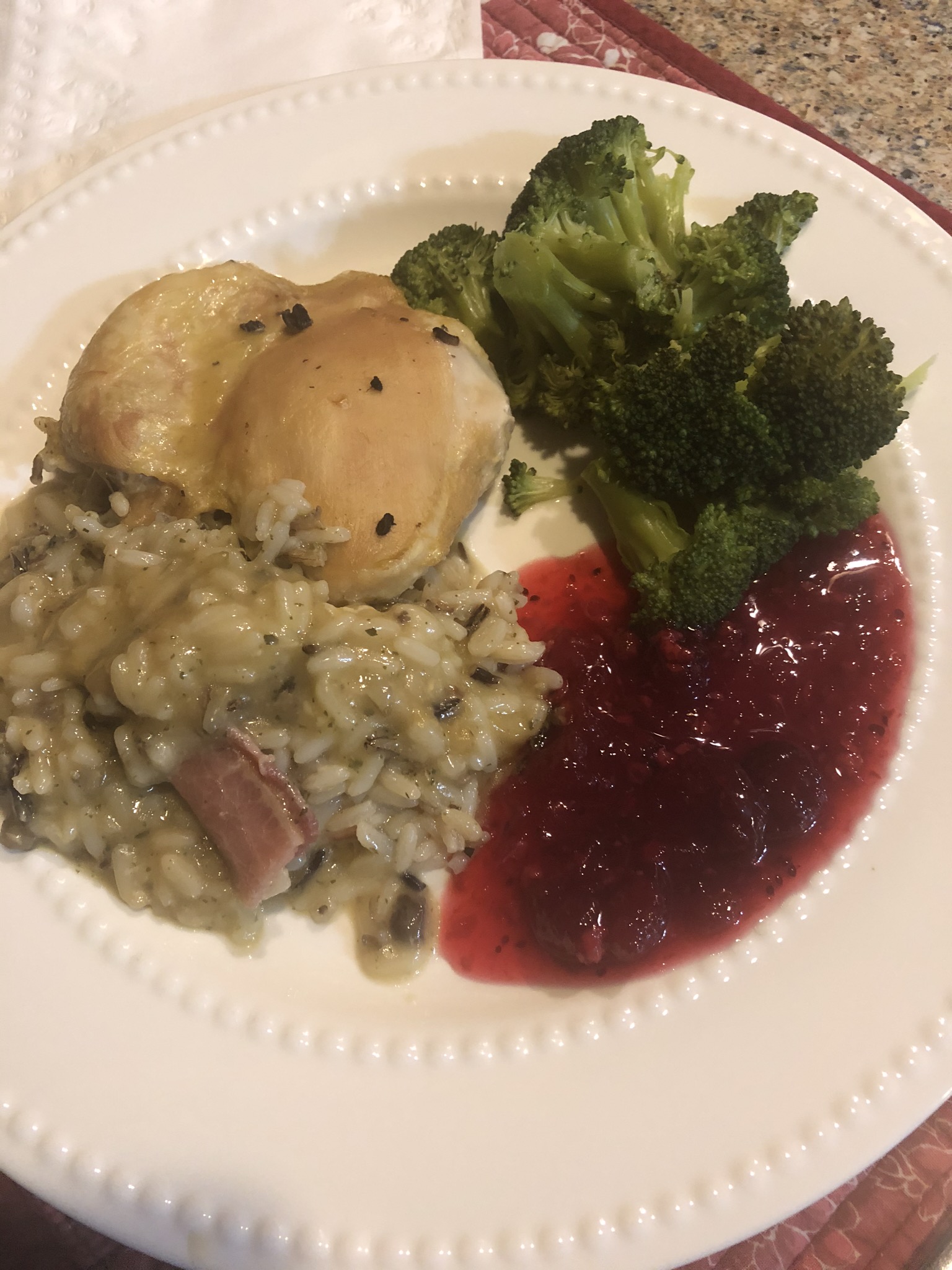
Plate and enjoy.

I served ours with broccoli and cranberry sauce. Because, if it’s chicken or turkey, there has to be cranberry sauce.

NOTE: I used boneless, skinless chicken but the original recipe called for bone in, skin on pieces of chicken. Use whatever chicken parts your prefer and whatever you have on hand. Almost any vegetable would be a good side dish including squash, green beans, or asparagus. I’ve never tried it, but this recipe might also work well with pork chops.

You may be inspired to get out some of your old tried and true recipes that call for creamed soups as we are all staying home during this pandemic. You’ll find them to be great comfort foods, especially during the winter months.

Pasties

I grew up in Michigan’s Upper Peninsula where pasties are a staple. Once you cross the Mackinaw Bridge from the lower to the upper you start to see signs for restaurants and little shops featuring pasties. In 1968, then Governor George Romney, designated May 24 National Pasty Day in Michigan. The pasty first arrived in Michigan’s Upper Peninsula in the 1840s when tin miners from Cornwall immigrated to help develop the mines. The pasty is a complete and hearty meal in itself and can be eaten without plates and cutlery, making it a perfect supper for miners. If the pasty was no longer warm they would heat them by putting them on a shovel and holding the shovel over a heat lamp candle.

The pasties I grew up with are made of ground beef, potatoes, rutabaga, carrots, and onion and seasoned only with salt and pepper. The vegetables are all diced rather than sliced. The vegetables and meat are wrapped in a crust. A pot pie without a pot. If you’re a Yooper, you use catsup on your pasty. If you request gravy you’ll quickly be identified as a tourist. In mi-August of each year there is a pasty festival in Calumet complete with a beer tent and lots of pasty vendors offering samples. The Finns consider pasties as part of their ethnic cuisine and you will see them featured at Michigan’s Finnish Festivals.

The largest pasty on record was made in 2010 and weighed in at 1,900 pounds. I’m not sure now they rolled that crust out or where they found an oven large enough to bake it! As I started working on my pasties yesterday I had come across a recipe that I had saved for an unusual crust. I was a little skeptical but I thought I’d give it a try and I was very happy that I did. The dough came together easily and was great to work with. The recipe for the crust and the filling make a dozen pasties so keep that in mind.

Crust Ingredients:

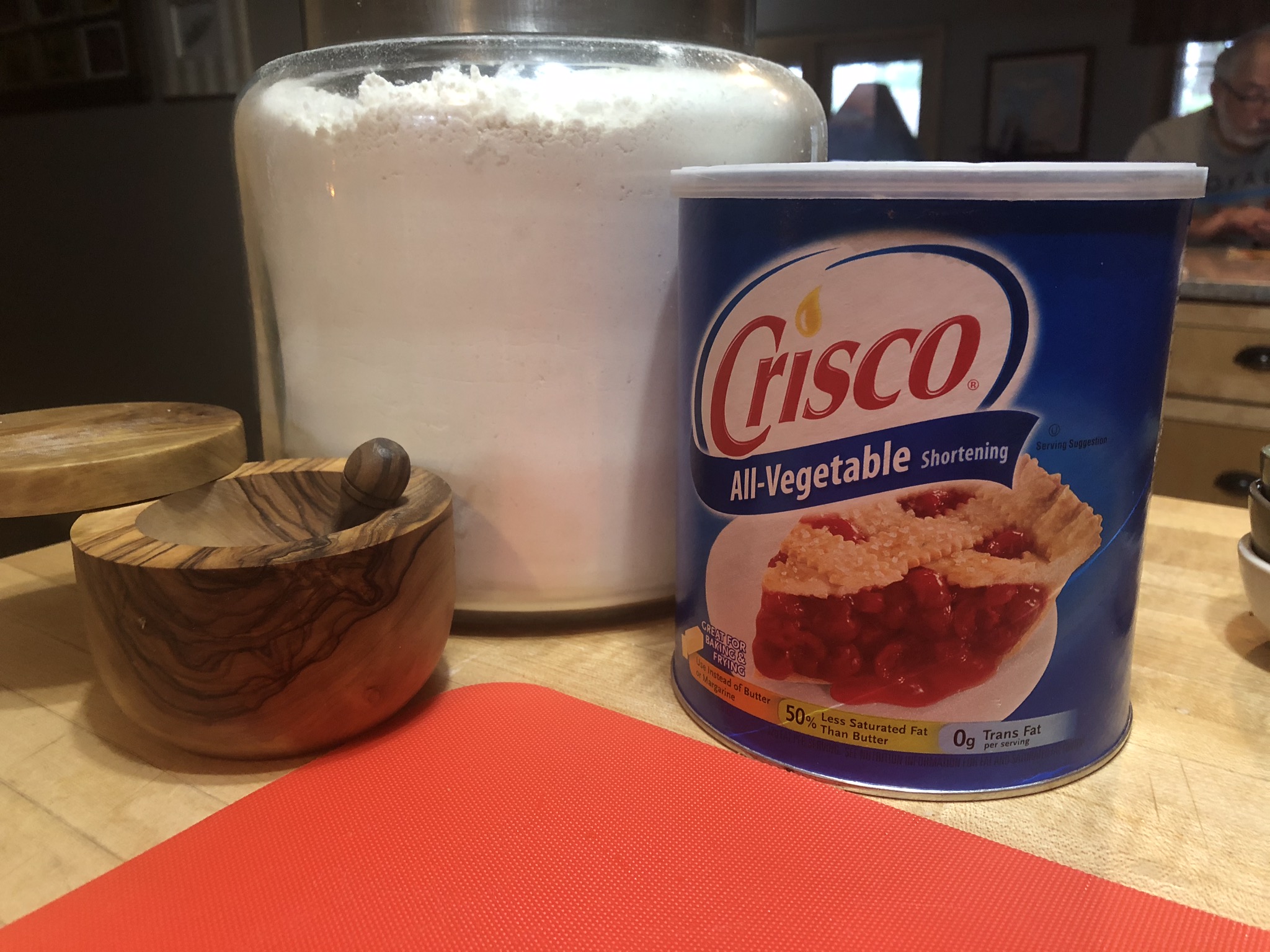
2 cups of shortening

2 cups of boiling water

6 cups of AP flour

1 T salt

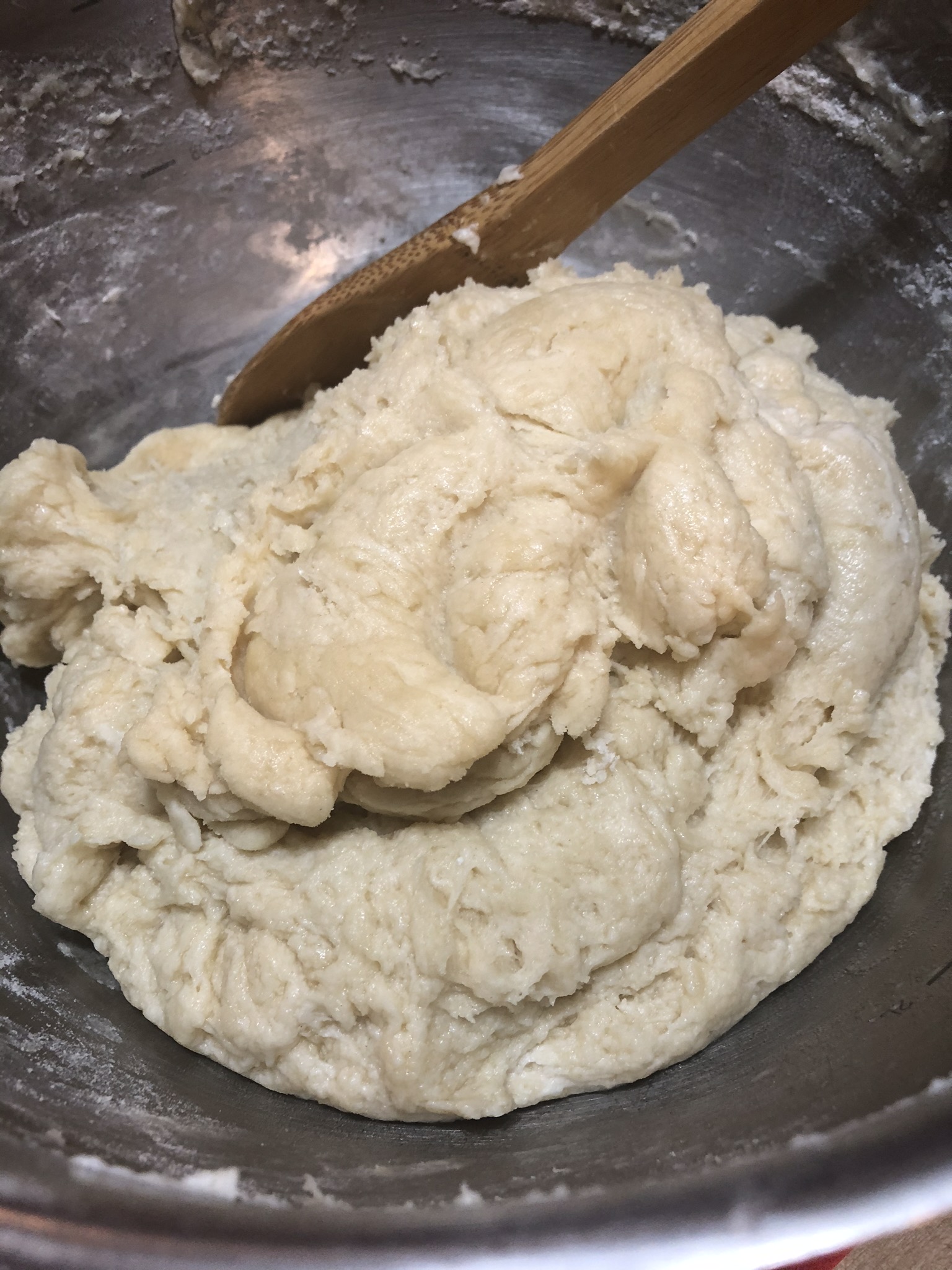
Measure out the shortening into a large mixing bowl and add the boiling water.

Whisk together until all of the shortening is melted.

Stir in the flour and salt with a wooden spoon until you have a smooth, soft dough.

Turn the dough out onto a plate, cover with Saran Wrap, and refrigerate. Now you’re ready to start chopping your vegetables.

Filling Ingredients:

2 pounds of ground beef

1 pound of ground pork

9 cups of diced potatoes

3 cups of diced rutabaga

2 cups of diced carrots

4 cups of diced onion

Salt and Pepper

Peel the veggies and cut them into a very small dice, taking care to keep them fairly similar in size so they cook evenly. Combine all of the veggies in a large stainless steel bowl.

Add the ground meat, season well with salt and fresh ground pepper, and get your hands in there and mix all of the ingredients well. This will help to keep your ratio of meat and vegetables similar in each pasty.

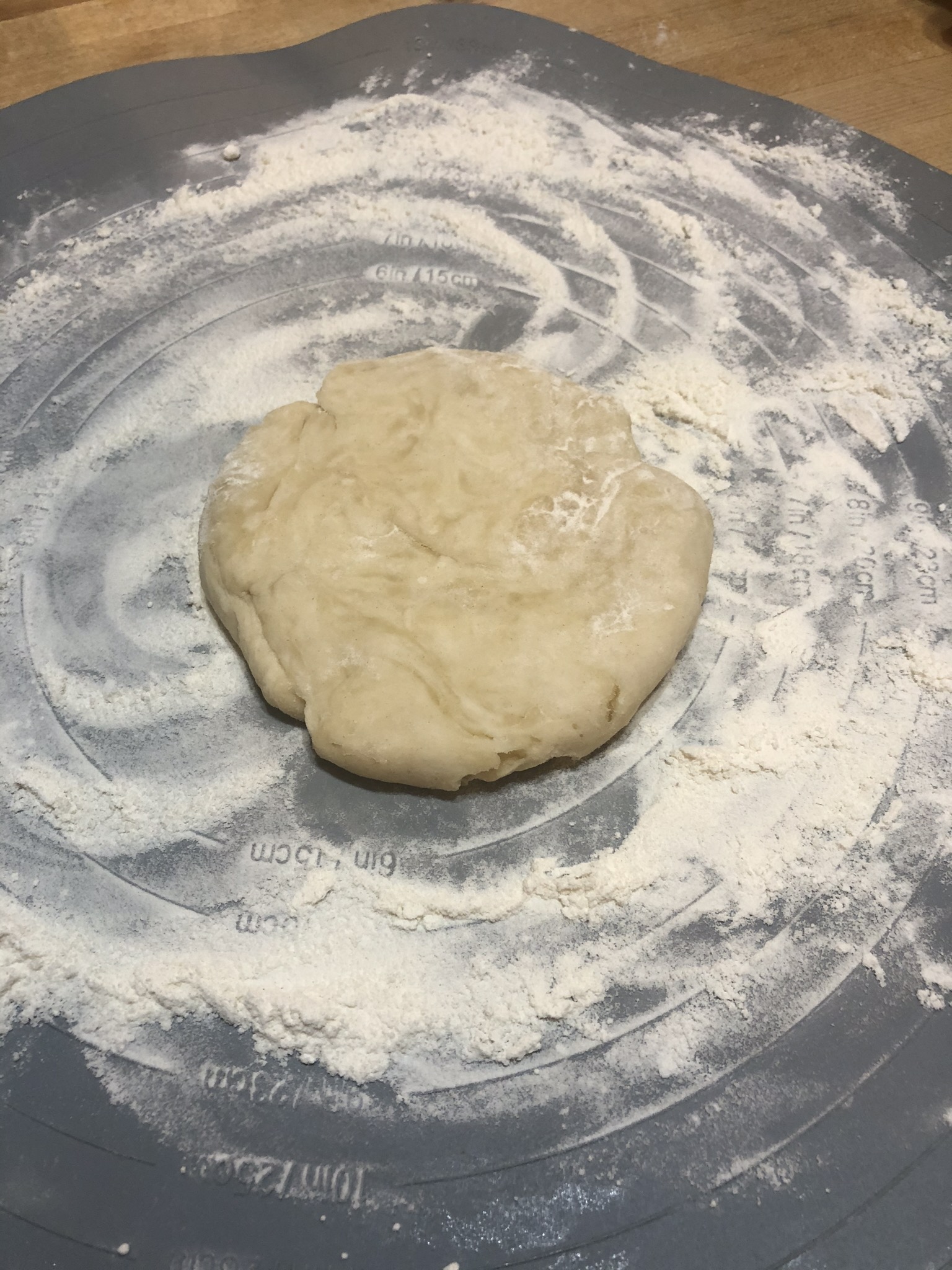
Now you’re ready to take your dough out of the refrigerator and start rolling out the crusts. Divide the dough into a dozen even pieces. If you’re leery about eyeballing it weigh the dough on a food scale and do your math. Take one of the dough balls and, on a generously floured surface, roll it out into an 8 inch circle.

Once you’ve rolled out the dough put a cup and a half of the filling onto the dough.

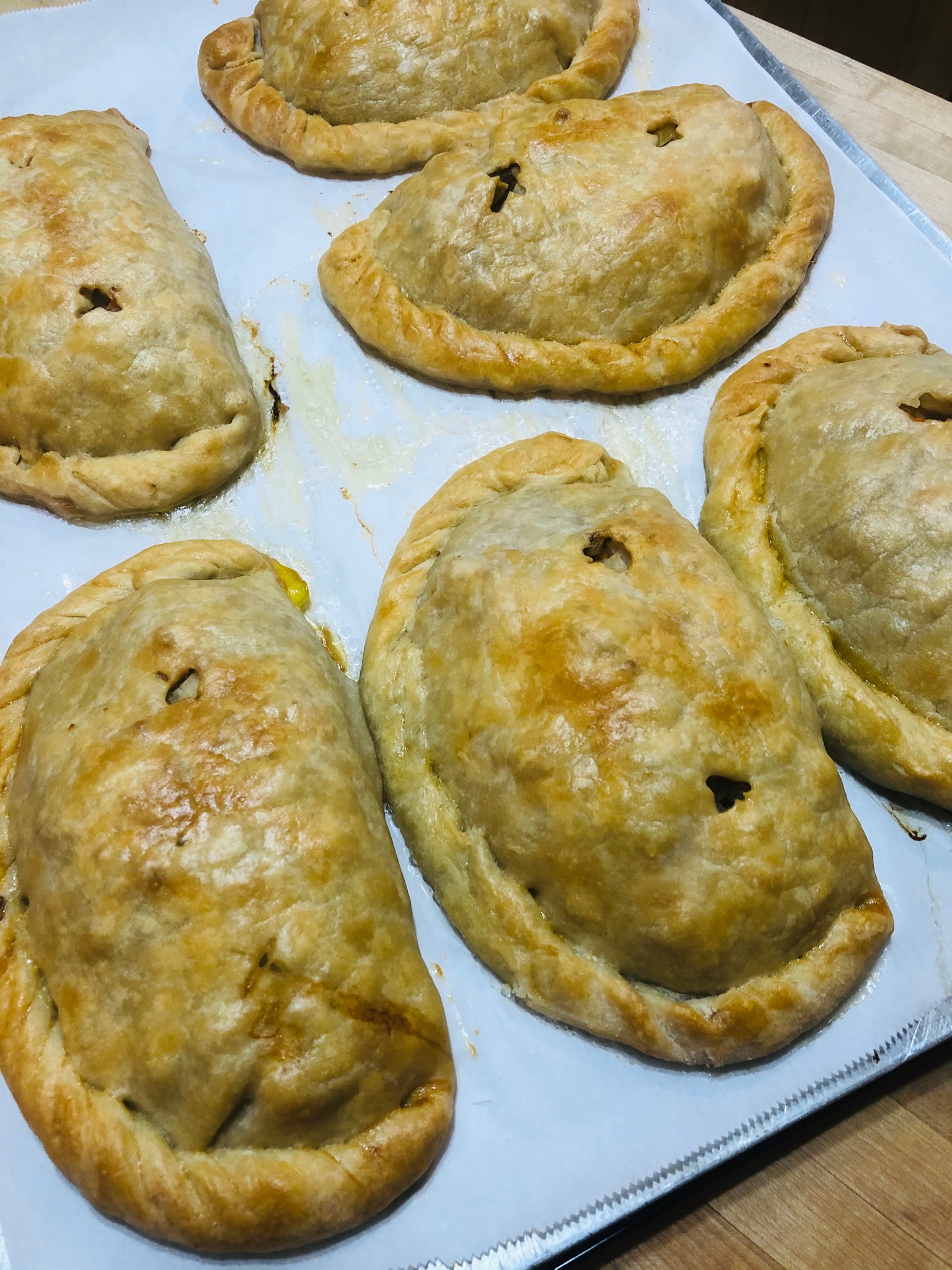
With your fingers or a pastry brush moisten the edges of your dough for a good seal. Fold the dough over and crimp the edges. Cut a hole or two on top to vent the pasty while baking and transfer to a parchment lined baking sheet.

Once you have a sheet full of pasties bake them in an oven preheated to 350 degrees for 60 minutes.

Serve them piping hot or, if you’re going to freeze them, allow them to cool completely and wrap them in aluminum foil. Enjoy!

When I would make something for my Dad, like a pair of mittens or homemade cinnamon rolls, he would pay me the highest compliment by saying, “This is just like store bought.” Last night when my husband ate his pasty he said, “These are better than the ones we get from the store in the UP”. So I guess I’ve moved up in the compliment department because the ones we get at the store in the UP are pretty darn good!

NOTE: I use Brooks Tangy Catsup exclusively and it’s really good on pasties. You’re welcome to use gravy if you don’t mind being mistaken for a tourist.

Pasties freeze very well and are great to pull out for a meal when you’re short on time.

As always, a recipe is just a guide. Make whatever adjustments you’d like based on your personal preferences in terms of seasoning, vegetable proportions, and type of meat.

White Acorn Squash

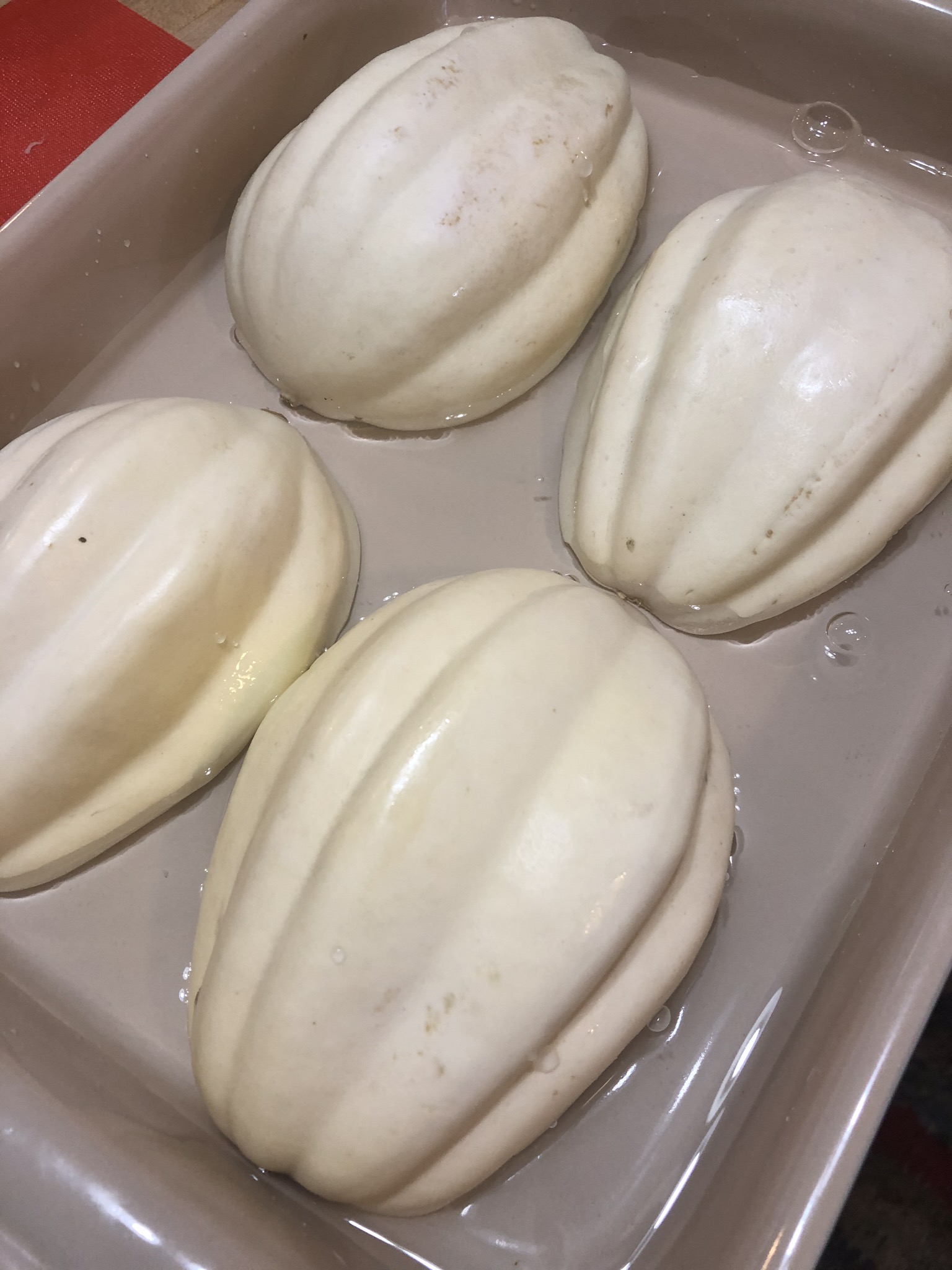
My friend and I stopped at a farm market and saw these interesting white acorn squash. I’ve never had them the clerk said, but they say they taste just like mashed potatoes. Always game to try something new I bought two of them. My husband doesn’t really care for squash, so I thought, if it tastes like mashed potatoes, he’ll like it. I cut them in half, removed the seeds, and baked them in a casserole dish with an inch or so of water until they were tender. I scooped the squash out of the shell and it was tender and creamy.

Then I tasted it. It tasted like nothing. It actually tasted worse than nothing. Potatoes taste like potatoes. This tasted like nothing. So I texted my daughter and one of her friends for recommendations on what to do with this squash to give it some taste. My daughter suggested stuffing it with wild rice and sausage which would have been good except I was serving it with a pork loin. Her friend John suggested butter and sage. I googled white acorn squash and they suggested apple, honey, robust cheeses, bacon, or fresh herbs. Obviously things that actually have flavor. I decided to caramelize onion in butter and sage.

The onions were sweet and melt in your mouth tasty. I stirred those in to the squash along with some fresh grated parmesan cheese. And more butter. It still did not taste good! I should have just served onions caramelized in sage butter with parmesan cheese as a side.

Lesson learned. I will never buy white acorn squash again. If I want something that tastes like potatoes, I’ll buy potatoes. But if you still want to try white acorn squash, don’t say I didn’t warn you.

Cheesy Cabbage Gratin

One of the food magazines that I subscribe to is Cuisine at Home. It’s a magazine that has consistently good recipes, easy to follow instructions, and great pictures. The latest issue is full of “comfort foods.” We love cabbage and the September/October issue has several cabbage recipes including a chocolate cake with cabbage and this cheesy cabbage gratin. I haven’t tried the chocolate cake with cabbage but I’ve made this gratin recipe twice since this magazine came in the mail. The first time I made it we had it with polish sausage. Most recently we made it a vegetarian meal with sliced tomatoes and corn on the cob.

There is red, white and green cabbage. Cabbage is closely related to broccoli, cauliflower, and Brussels sprouts. Generally a head of cabbage is between one to two pounds. The perfect size for this recipe. I have a crock full of shredded cabbage right now that is working it’s way to sauerkraut. Each of the heads of cabbage I shredded for the kraut weighed between ten and twelve pounds. In the heat of summer cabbages can grow quite large…the largest recorded weighed in at a little over 138 pounds. You could make a lot of cabbage gratin with that!! Cabbage is a good source of dietary fiber and Vitamin K and C. It is economical and there are countless ways to prepare cabbage…stewing, frying, braising, pickling, fermenting. There are lots of great soup recipes that call for cabbage. If you like cabbage and bacon and cheese you will thoroughly enjoy this dish regardless of what you serve up on the side.

Ingredients:

1 head of green cabbage

2 T olive oil

Salt and pepper

6 strips of bacon diced

1 cup sliced leeks

1 T minced garlic

1 T AP flour

1 3/4 cups heavy cream

1/2 cup chicken broth

1 cup shredded gruyere cheese

1/4 cup shredded parmesan cheese

2 T lemon juice

2 T chopped fresh thyme

Ingredients for the Topping

1 T olive oil

3/4 cups fresh bread crumbs

1/2 cup shredded gruyere

1/4 cup grated parmesan

1 tsp minced lemon zest

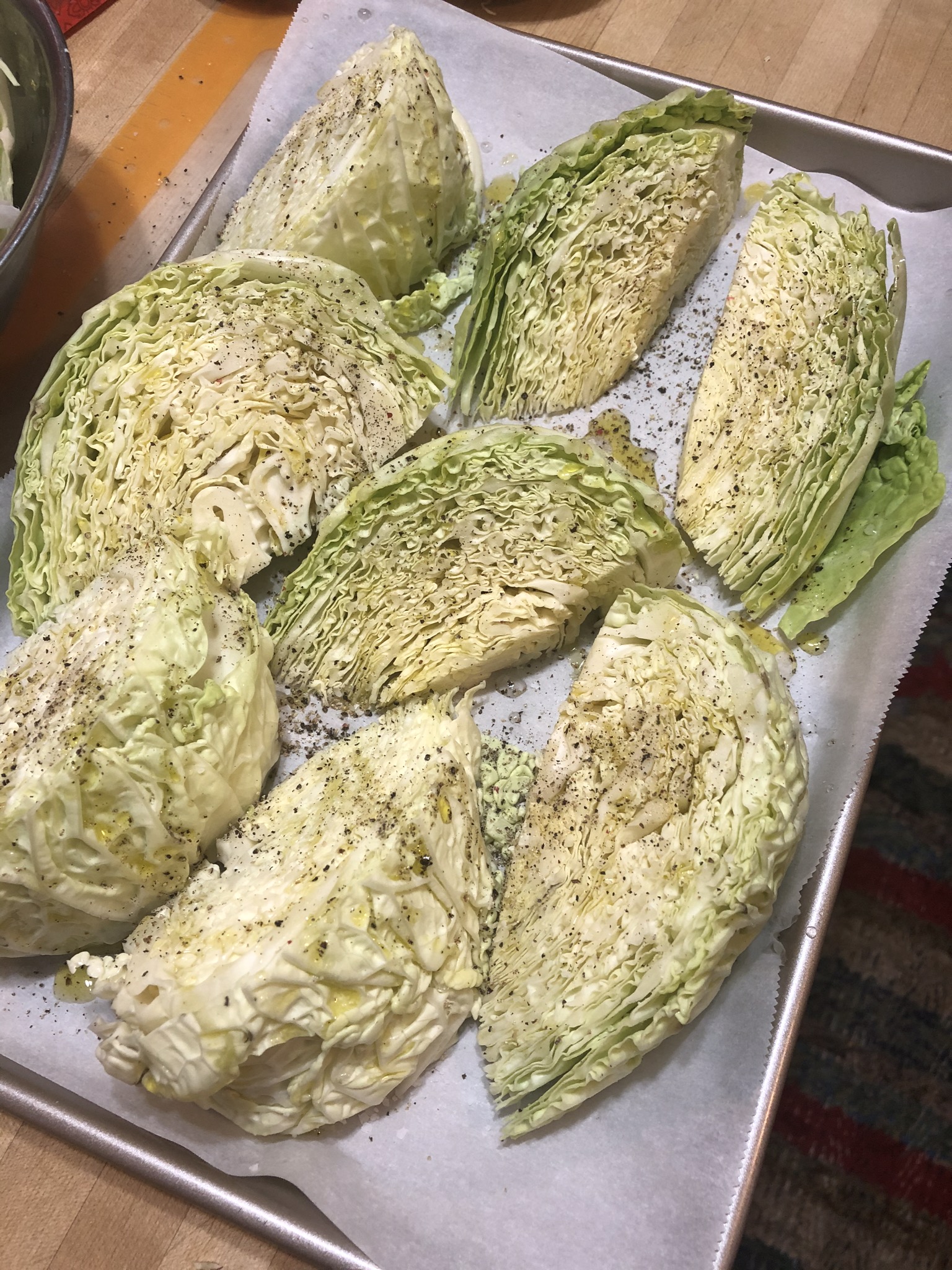
Preheat your oven to 375 degrees. Line a rimmed baking sheet with parchment paper or foil. Peel off the tough outer layers of cabbage and cut the cabbage into eight wedges. The instructions recommended leaving the core intact to help the wedges hold together while roasting. I removed the core before roasting and had no problem. Place the wedges on the baking sheet, drizzle with the oil and season with salt and pepper.

Roast for 40-45 minutes until the cabbage is tender and the edges are golden.

While your cabbage is roasting cook your diced bacon in a heavy skillet over medium heat until the bacon is crisp. Remove the bacon to a plate lined with paper towel.

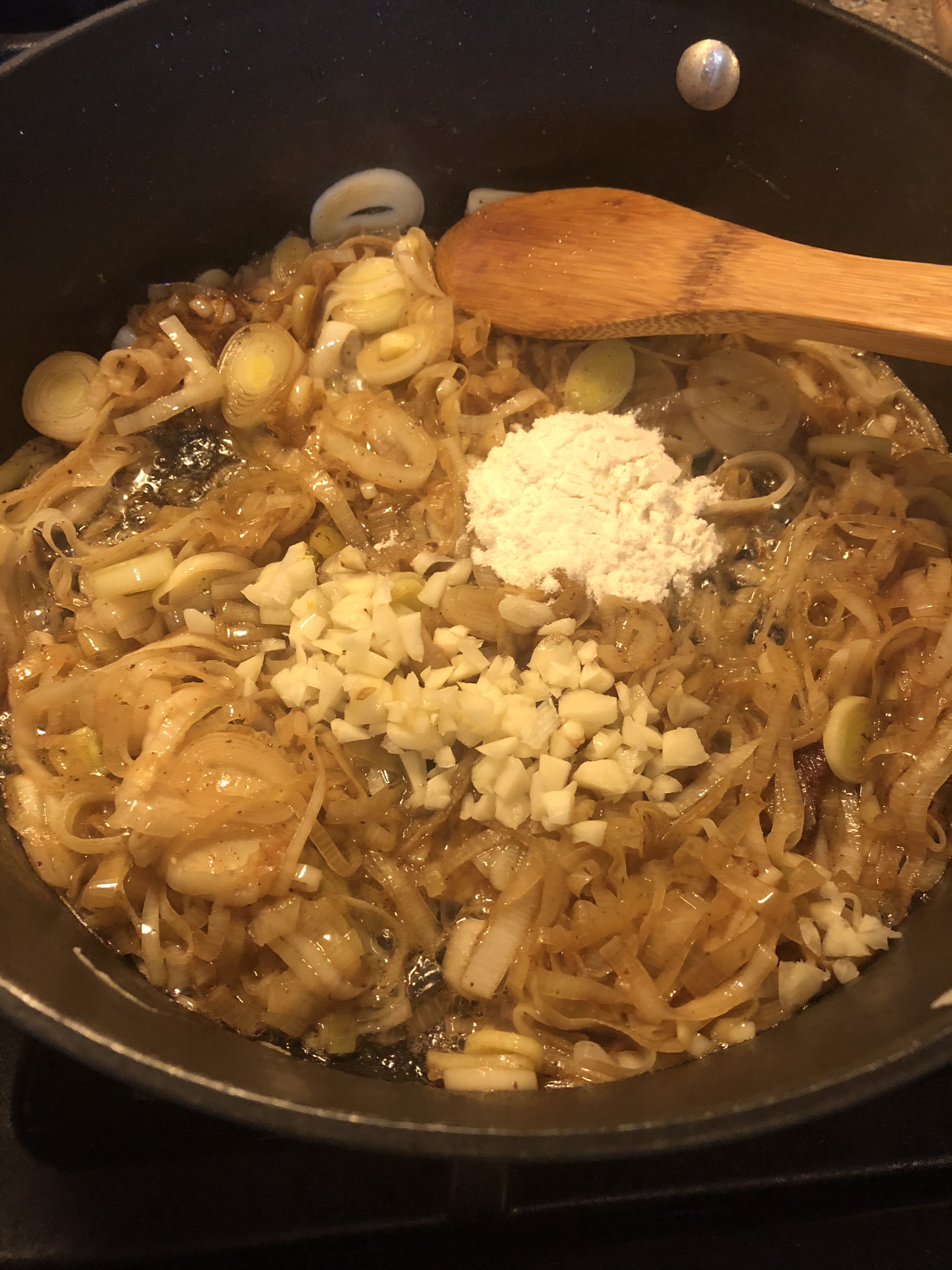
Add the leeks to the skillet with the bacon drippings and cook over medium heat until they are softened. Stir in the garlic and the flour and cook, stirring constantly, for one minute.

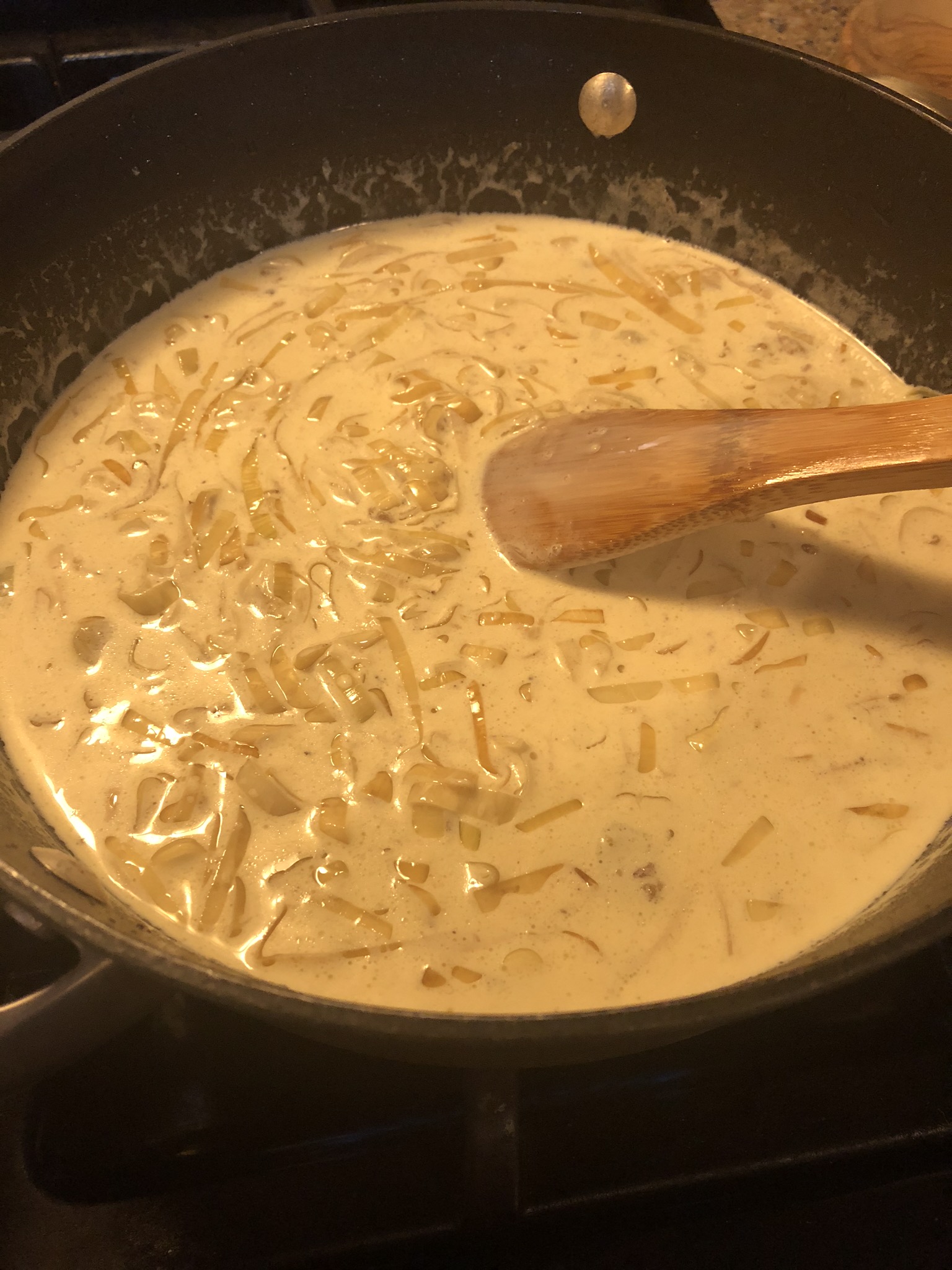
Stir in the cream and broth and bring to a simmer. Cook until the mixture begins to thicken, 6-8 minutes.

Off heat, stir in the bacon, gruyere, parmesan and lemon juice.

Set the cheese sauce aside and prepare the bread crumb topping. Heat 1 T olive oil in a skillet over medium heat. Cook the bread crumbs until they begin to toast up and transfer them to a bowl to cool for about 5 minutes.

Once the bread crumbs have cooled, stir in the cheeses and lemon zest.

Now you’re ready to assemble the gratin. Spray a 9×13 baking dish with nonstick spray. Arrange the cabbage in the dish, cut side down. Pour the cheese sauce over the cabbage wedges and sprinkle with the bread crumb topping.

Bake uncovered for 20-25 minutes until bubbly and the crumb topping has browned.

Serve hot as side dish to pork loin, chops or sausage or as the main dish. Maybe even as a Thanksgiving side dish. Enjoy!

NOTE: I save crusts and odds and ends of stale bread In the refrigerator, grind them in my food processor and freeze them in zip lock bags. The bread doesn’t go to waste and they’re perfect for recipes like this one.

Apple Fritter Bread

A couple days ago my friend Patti brought me a bag of Wolf River apples.  I had never heard of Wolf River apples.  No one else I asked had heard of them.  I’ve made a lot of pies, apple crisps, and apple sauce over the years, been to numerous orchards, and I’ve never met a Wolf River apple.  So I went where all curious people go…the internet.  Apparently Wolf River apples are one of the stars of an orchard in Northport Michigan.  People are said to travel from Detroit, Chicago, and even oversees to taste the long forgotten apple varieties at the Northport orchard including the Wolf River.  These apples are use mainly for cooking and are notable for their large size.  They are not the best eating apple, but they keep their shape when cooked and need very little additional sugar.

I learned something new.  And perhaps you did too.  Now that  I had the apples I wanted to use them for something, and  the next morning I spotted a recipe on FB for Amish Apple Fritter Bread.  I doubled the recipe and made two loaves so don’t be confused by my photos.  The bread is excellent!  The recipe comes from Fadma Akir’s Homecooking Page so I must give credit where credit is due.  The recipe is for a single loaf.

Ingredients:

1/3 cup brown sugar

1/2 tsp cinnamon

1/2 cup butter at room temperature

2/3 cup sugar

2 eggs

2 tsp vanilla

1 1/2 cups AP flour

2 tsp baking powder

1/4 tsp salt

1/2 cup milk

1 1/2 cups peeled and diced apple (tossed with a little sugar and cinnamon to coat)

Preheat the oven to 350 degrees.

Line a loaf pan with parchment paper and spray with Pam.  Peel and dice the apples and toss with just enough sugar and cinnamon to coat.

Measure out the brown sugar and cinnamon and set aside.

In a medium size bowl cream together the butter and sugar until smooth.  Beat in the eggs and vanilla.  (Remember, there are 4 eggs in the picture because I doubled the recipe.)

Whisk together the flour, baking powder and salt.  Stir into the butter and egg mixture.  Stir in the milk.

Spread half of the batter in the prepared loaf pan.

Top with half of the apples, gently pressing them into the batter.

Repeat with the second half of the batter and apples.  Sprinkle the brown sugar and cinnamon mixture on the top.

Bake for 60-70 minutes until a cake tester comes out clean.  Remove from the oven and cool for 30 minutes on a wire rack.  Mix the glaze while the bread is cooling.

Glaze Ingredients:

1/2 cup powdered sugar

1/2 T room temperature butter

2 T milk

1 tsp vanilla

Whisk together.  Once the bread has cooled for 30 minutes drizzle with the glaze.

NOTE:  I used 2 cups of apples per loaf.

The bread is very moist and kind of a cross between a quick bread and a coffee cake.  I used the Wolf River Apples but I think any good baking apple like Braeburn, Jonathan, Cortland or Northern Spy would work well in this recipe.

Chicago Style Giardiniera

This is still the Finnish Dish, but this is definitely not a Finnish recipe.  Giardiniera means “from the garden” in Italian.  It is a very common condiment in Chicago, thanks to the communities of Italian immigrants that made it popular.  Pickling and marinating is a good way of preserving produce.  In Italy, Giardiniera is considered an appetizer, and the vegetables are cut in bite size chunks.  I have made that style before and just stored it in jars in the refrigerator.  The olive oil solidifies in the fridge so you need to take it out and allow it to come to room temperature before serving.  Chicago style requires a fine dice on the vegetables and the Giardiniera is used as a topping on pizza, salads, sausages, brats, nachos, sub sandwiches and the famous Chicago style Italian beef sandwich. The version I made today would most certainly be considered the “hot” version.  The Serrano peppers are what kicks up the heat level.  I did use half Serranos and half jalapeños, and I seeded the jalapeños, so my heat level should be a little lower than if I’d followed the recipe exactly and used all Serranos.  According to the internet, in excess of a million pounds of Giardiniera are sold in Chicago annually.

The recipe I used was one my friend John shared with me.  He had just made a batch and that inspired me to do the same.    Some of the recipes I read used a different ratio of spices and vegetables but in the end they were all pretty similar.  If you want to use your Giardiniera as an appetizer vs a topping you could follow the same recipe and cut the vegetables in larger, bite size pieces.

Day One Ingredients:

1 pound Serrano peppers sliced in quarter inch thick rounds

1 pound jalapeños seeded and diced small

1 pound sweet red peppers seeded and diced small

1 pound cauliflower chopped into small pieces

1/2 pound white onion diced small

1/2 pound carrots peeled and diced small

1/2 pound celery diced small

1 cup of salt

Now it’s time to chop, chop, chop.  And remember to wear gloves when you’re working with the Serrano and jalapeño peppers.  Get out a large glass or stainless steel bowl to put the diced vegetables in.  I weighed all of the veggies as I chopped them.

Now that you’re done with the hot stuff you can take your gloves off.

White onion.

Carrots.

Sweet red bell pepper.

Cauliflower.

Combine all of the vegetables in your bowl and add the salt.  Stir well to mix.  Cover with Saran Wrap and refrigerate overnight.

The colors are beautiful!

Day Two Ingredients:

12 oz of sliced green olives with pimentos

1 cup of reserved liquid from the olives

2 T minced garlic

2 tsp cracked black pepper

3 T dried oregano

5 cups white wine vinegar

3 1/2 cups grape seed oil

Get your canning jars ready.  If you’re using pint jars expect to fill between 10 and 12 jars.  I used jelly jars (1 cup) and finished with 24 jars.  Wash your jars well and keep them in a 200 degree oven, on a sheet pan lined with a towel, until you are ready to use them.  Fill your water bath and turn the burner on because Day 2 is much faster than Day 1.

Pull your vegetable mixture from the refrigerator and drain off as much liquid as possible.  I used a plate to push down on the vegetables while I poured off the liquid.  Now, more chopping.  Reserve 1 cup of liquid from the jarred olives and slice the olives.

Add the olives, olive brine and all of the remaining ingredients to the chopped vegetable mix.  Stir well to combine.  Now you’re ready to bottle your Giardiniera and process the jars.

Based on the advice John gave me, fill the jars just to where the rim begins.  You don’t want the jars leaking oil while they are in the water bath.  Be sure to wipe the rim of the jar well before putting the lid on and screwing it in place.  Process your jars in the water bath for 20 minutes.   Remove your jars to a towel or rack and allow them to cool down for at least 12 hours before storing them. Check all of the jars to make sure that they have sealed properly.  If you have a jar that did not seal put it in the refrigerator.

NOTE;  Like I mentioned earlier, if you want to use the Giardiniera for an appetizer, cut the vegetables into bite size pieces.  If you want to make a much milder version scale the hot peppers WAY back and add more sweet peppers, cauliflower and carrots.  You can leave the olives whole.

I have a beef brisket in my freezer.  I think I’ll cook up that brisket and try to replicate a Chicago style Italian beef sandwich.