This is a recipe I’ve had for years, and I have no idea where it came from. If you love oatmeal raisin cookies you will love these bars. They are SO good! You can even convince yourself that they’re the perfect morning coffee accompaniment because they contain oats (high in fiber and good for your cholesterol) and raisins (good for strong and healthy bones and relieve constipation).
Filling Ingredients:
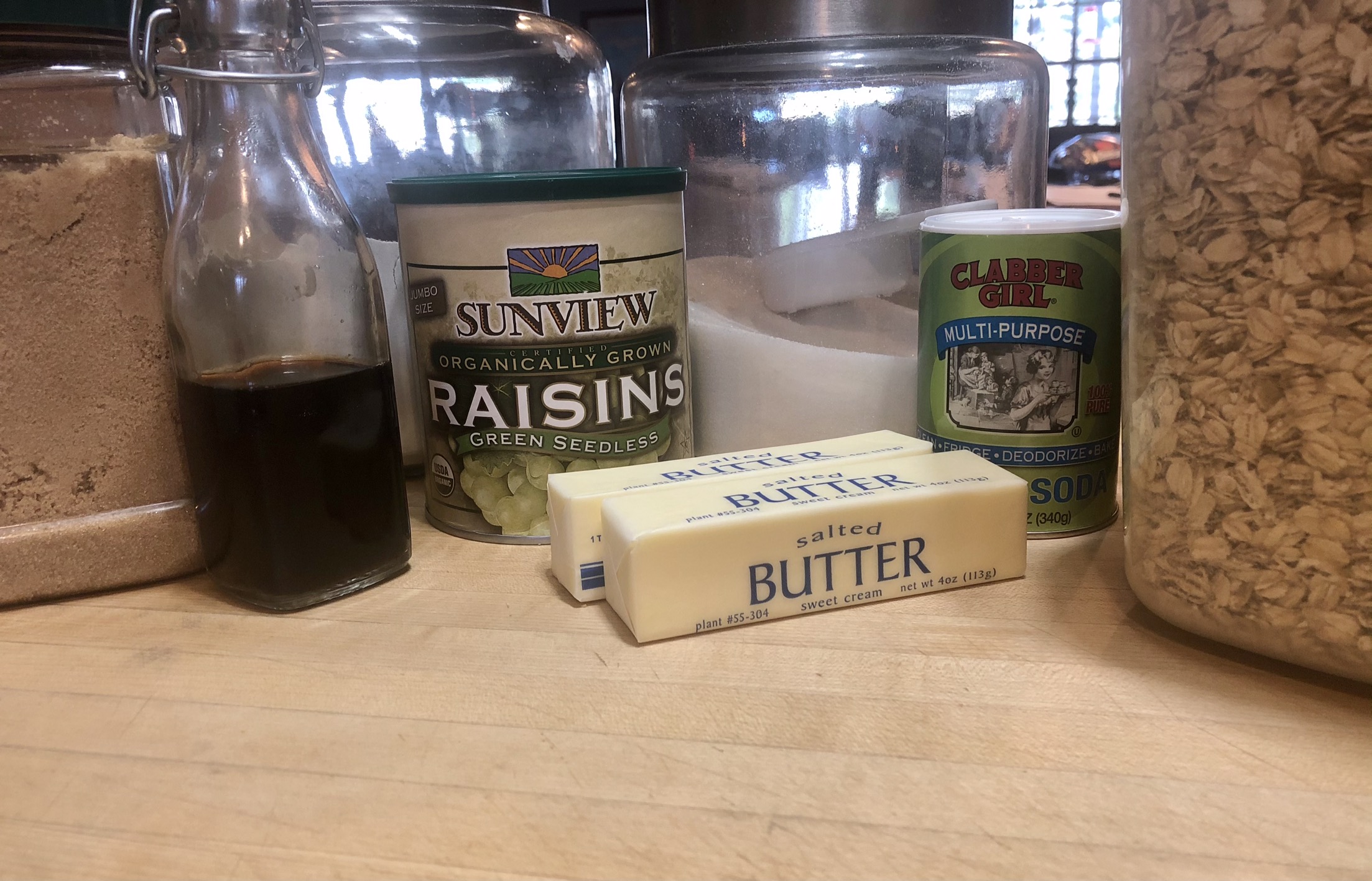
1 1/2 cup of raisins
1 1/2 cup of sugar
3 T AP flour
1 1/2 cup of water
Crust Ingredients:
2 cups AP flour
2 cups oatmeal
1 cup of melted butter
1 cup of brown sugar
1 tsp vanilla
1 tsp baking soda
Start by making your filling. In a heavy saucepan whisk together the sugar and the flour. Add the raisins and water and cook over medium high heat until the mixture comes to a boil, stirring occasionally. Continue to simmer until the mixture thickens.
Remove from the heat and allow the filling to cool.
Preheat the oven to 350 degrees and begin making the crust. In a large mixing bowl combine the flour, oats, brown sugar, and baking soda.
Add the melted butter and vanilla and stir until the ingredients are all combined.
Line a 9×13 pan with parchment paper, leaving an overhang on either side. The parchment paper allows the bars to easily be lifted from the pan making cutting and cleanup much easier. Spread 2/3 of the oatmeal mixture in the pan and press to form the base.
Pour the filling over the base.
Top with the remaining oat mixture.
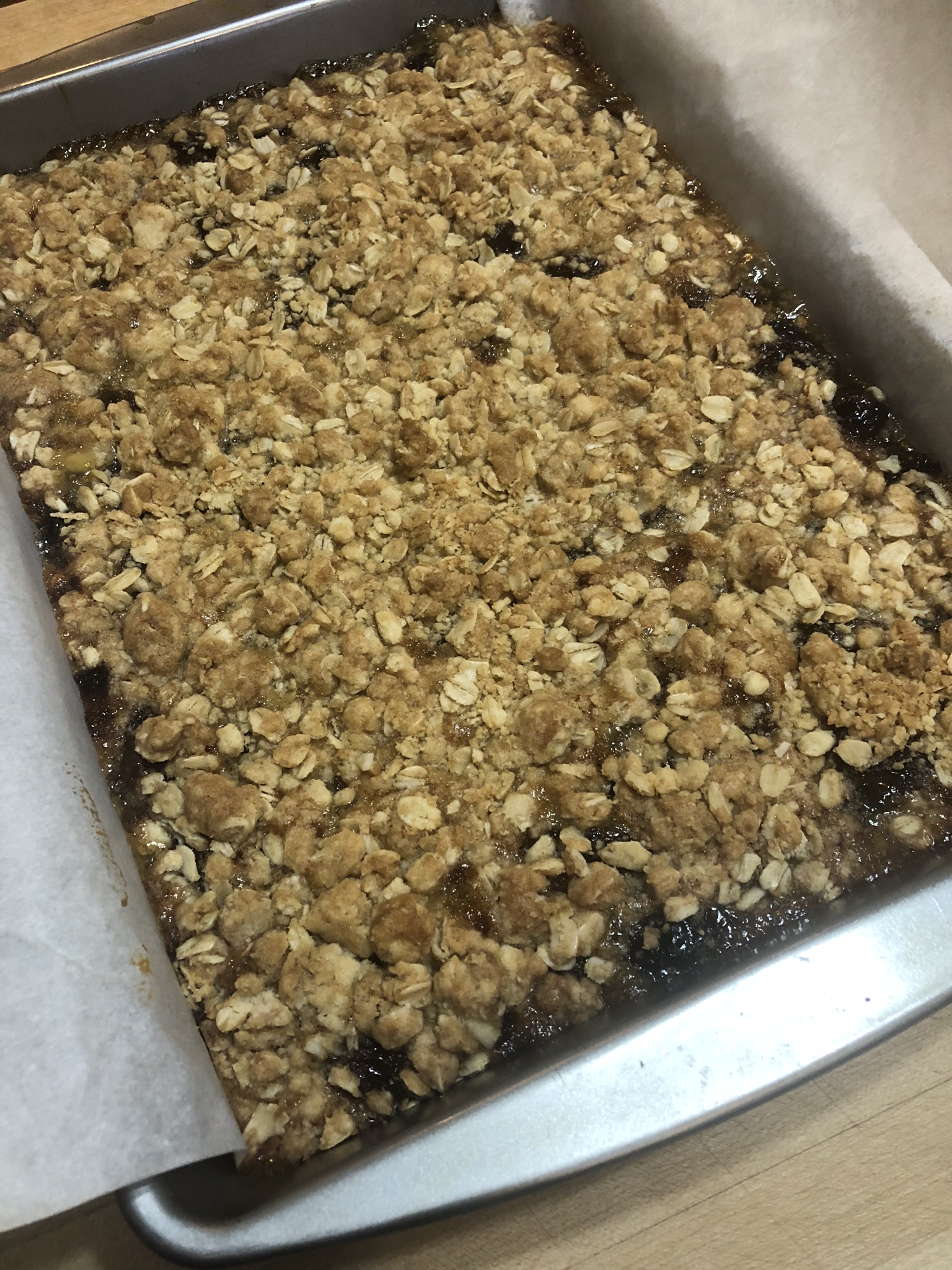
Bake for 35 minutes until the top is golden brown. Remove and allow to cool completely before cutting into bars.
Once it has cooled completely, using the parchment overhang, lift from the pan, cut into bars, and enjoy.
NOTE: I have made this with dates before, substituting 1 1/2 cups of chopped dates for the raisins. And, while I’ve never tried this before, dried cherries might also be a great substitute for the raisins.
When you love to cook and bake, and you get a new piece of equipment, you need to use it as soon as it arrives. I just received my Emile Henry Baguette baker. It’s just beautiful. A bright burgundy color.
The baker came with a little instruction booklet and a few recipes. When this pandemic first began last March my friend Jane and my daughter and son-in-law were in a bread making frenzie. A bit of competition as well. We shared bread pictures with each other. Jane and I never won the most beautiful loaf competition but we sure had fun trying. A few times a week we were making loaves of bread. When yeast was hard to find we made sour dough. And we bought equipment for that. A lame (an implement that holds a razor blade and is used to make the deep slashes in the bread dough), a bread cloche, and proofing baskets. We even ordered a 50 pound bag of King Arthur flour and a 25 pound bag of stone ground rye flour. We all took a time out over the Summer months but Fall is here and Winter will be soon. And we will be, once again, sheltering at home and baking bread. The baguettes are the simplest bread of all. My instruction/recipe book had a recipe for baguettes stuffed with caramelized onion and goat cheese and topped with a litttle rosemary, cheddar cheese, and honey. That was the first recipe I tried.
Ingredients:
1 large onion peeled and chopped
4 T olive oil
9 oz (2 cups) of AP flour
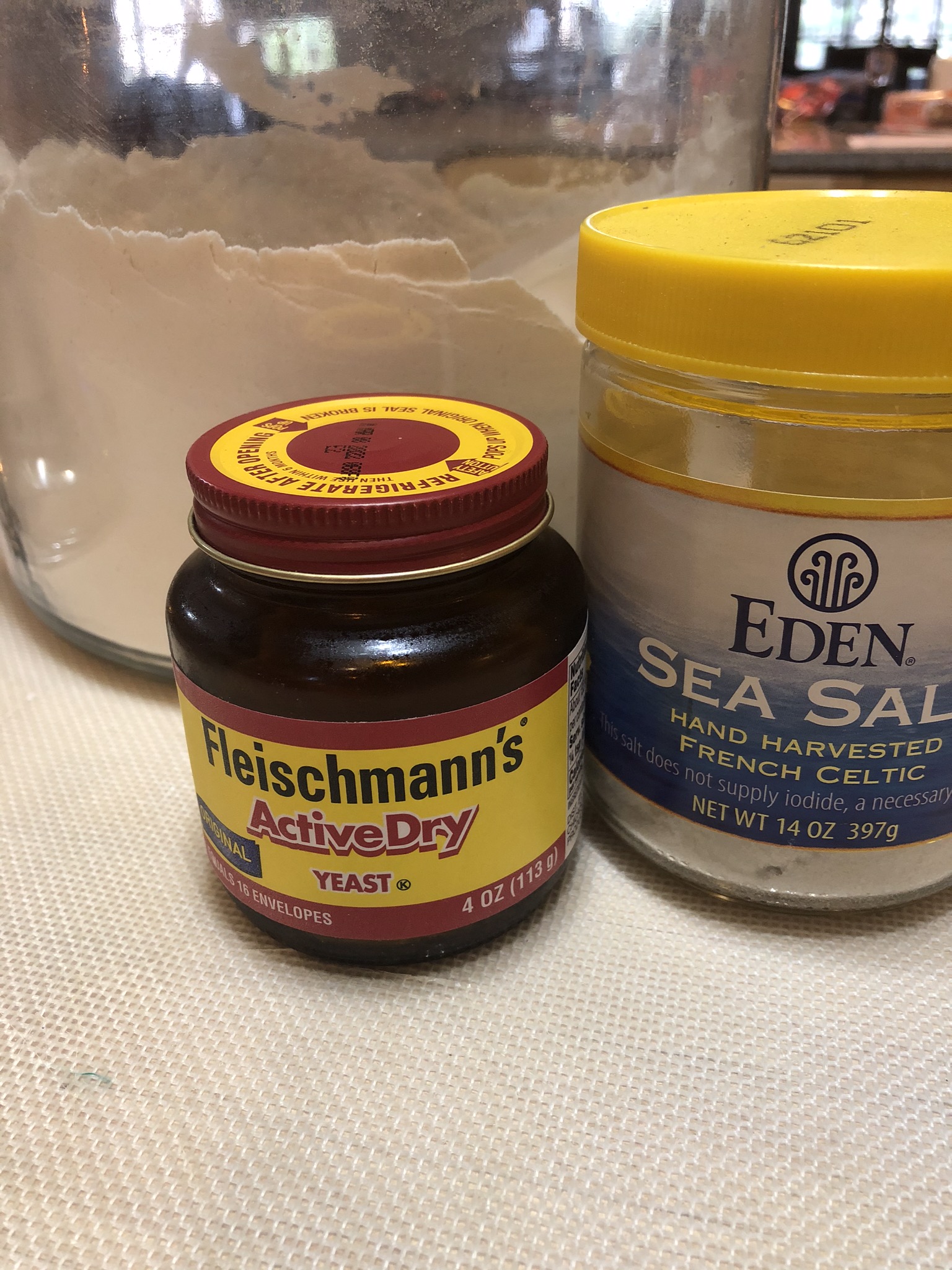
1 tsp fine sea salt
1 tsp active dry yeast
5 oz warm water, 100 degrees F
7 oz fresh goat cheese crumbled
1 tsp rosemary (I used fresh)
1 oz grated cheddar cheese
3 T honey
Heat 2 T of the olive oil in a heavy skillet and cook the onion over medium heat until it is tender and golden, stirring occasionally. My onions were small so I used two of them. Set aside to cool.
Combine the flour, salt, and yeast in a mixing bowl. One of the things that I’ve learned during all of this bread making is to weigh my flour. Whisk the dry ingredients together and stir in 5 oz of warm water and the other 2 T of olive oil.
Using a wooden spoon combine the ingredients, turn them out onto a clean surface, and knead for about 5 minutes until the dough is smooth and elastic. Form the dough into a ball, cover with a damp cloth, and allow to rise for about 30 minutes at room temperature away from drafts.
Once you’ve allowed the dough to rise, knead it to remove any air bubbles and divide it into 3 equal pieces. Flatten each piece into a rectangle about the size of your hand and, using a rolling pin, roll it out into about a 13”x4” rectangle. Spread a third of the caramelized onions and sprinkle some goat cheese onto the dough.
Fold one side over to cover two thirds of the dough and then fold the other side over to form a cylinder. Put the dough into the generously floured bread baker, seam side down. Repeat two more times. Cover with the lid and allow to rise for 20 minutes. While the bread is rising preheat your oven to 475 degrees.
After the second rise, brush the loaves with a little water and score the dough in several places deep enough to reach the onions. Sprinkle the loaves with the chopped rosemary and the cheddar cheese.
Cover the pan with the lid and bake for 25 minutes. Remove the lid and let the loaves brown for 2-4 more minutes. Remove from the oven and pour honey into the cuts in the loaves. Allow them to cool in the pan.
Slice and serve. We enjoyed a piece with our evening cocktail while it was still warm from the oven.
NOTE. These loaves could actually be stuffed with any variety of things. Different kinds of cheeses, olives (another suggestion in the recipe book), herbs, or crispy bacon bits. If you don’t have a baguette baker I think these would bake up nicely on a baking stone with a piece of foil tented over the loaves.
I made another batch of just plain baguettes today. I’ll combine some herbs and olive oil for dipping and we will enjoy these with our dinner tonight.
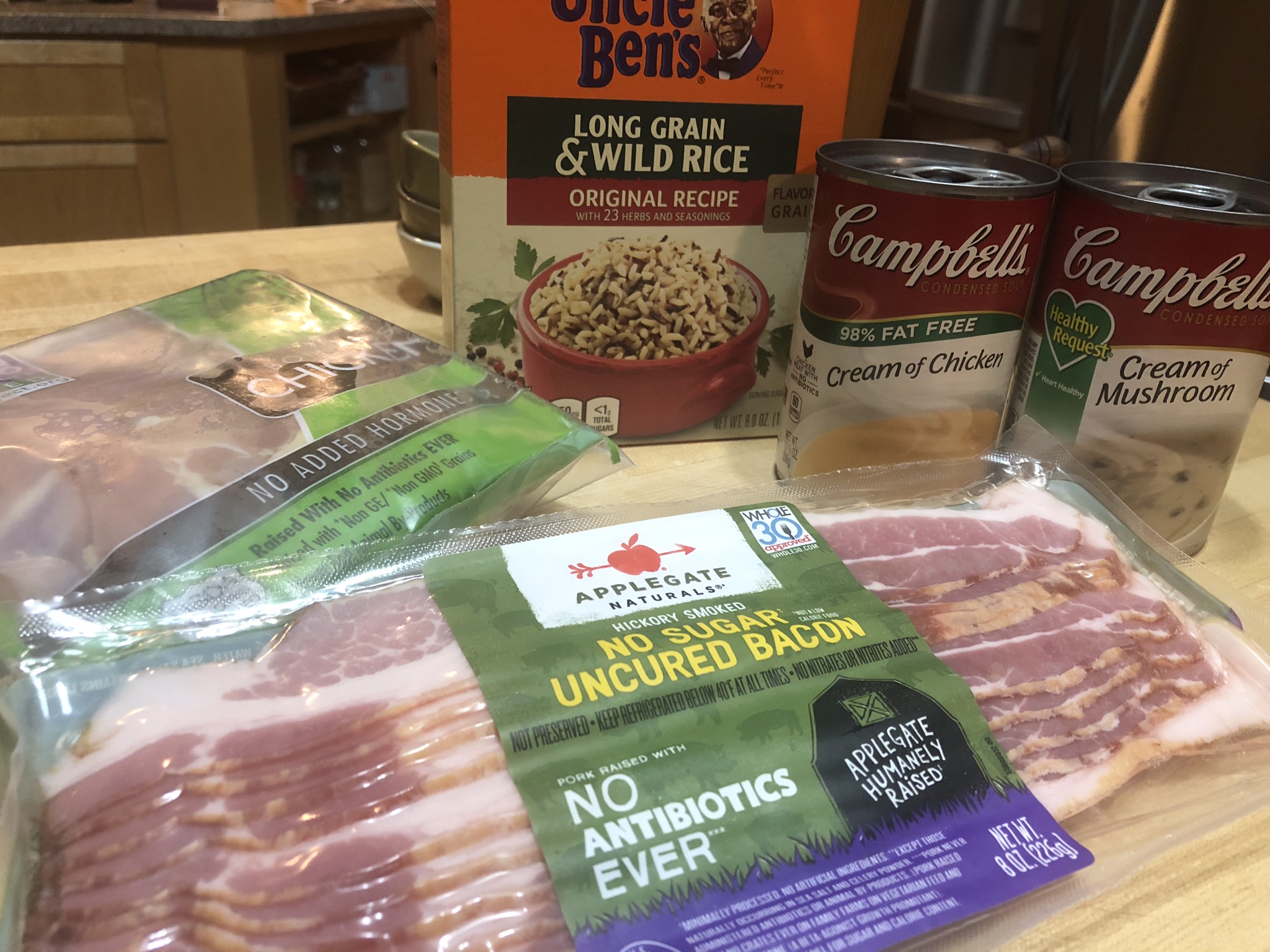
Last week when I was grocery shopping at Aldi I saw boxes of Uncle Ben’s Long Grain and Wild Rice on an end cap. I was reminded of a chicken and rice dish I made years and years ago and I picked up two boxes of the rice and a can each of cream of chicken soup and cream of mushroom soup. I rarely buy canned soups anymore tending to make more recipes from scratch. Probably because I have more time now and because I love to experiment with new recipes. But we all have old favorite recipes that we’ve hung onto for years and many use creamed soups. If you look on line you’ll find hundreds, if not thousands, of recipes with cream soups. I did a little research and found out that a chemist for Campbell’s Soup invented condensed soup in 1897. Campbells began producing cream of mushroom soup in 1934. That surprised me a little. I thought it was more recent than that. When my mother passed and my dad was cooking for himself I gave him my mom’s recipe for crockpot roast beef. A chuck roast, an envelop of dried French Onion soup and a can of cream of mushroom soup cooked on low all day. He loved it. The meat was tender and you had a nice gravy. A perfect example of what a creamed soup can do.
This recipe is similar in that it requires only four ingredients and in 90 minutes you have dinner. These are the ultimate comfort food recipes.
Ingredients:
8 oz of bacon
1 package of Uncle Ben’s Long Grain and Wild Rice
4 chicken breasts (or leg and thigh pieces if you prefer)
1 can cream of mushroom soup
1 can cream of chicken soup
Preheat your oven to 350. Line a 9×13 casserole dish with bacon.
Sprinkle the rice and the seasoning packet over the bacon.
Whisk together the two cans of soup along with a half of can of water and pour half of the soup mixture over the rice.
Add the chicken and cover with the second half of the soup mixture.
Cover the pan with foil and bake for 1 hour. Remove the foil and bake for an additional 30 minutes. While the casserole continues to bake prepare a vegetable and/or a salad to serve with the chicken and rice.
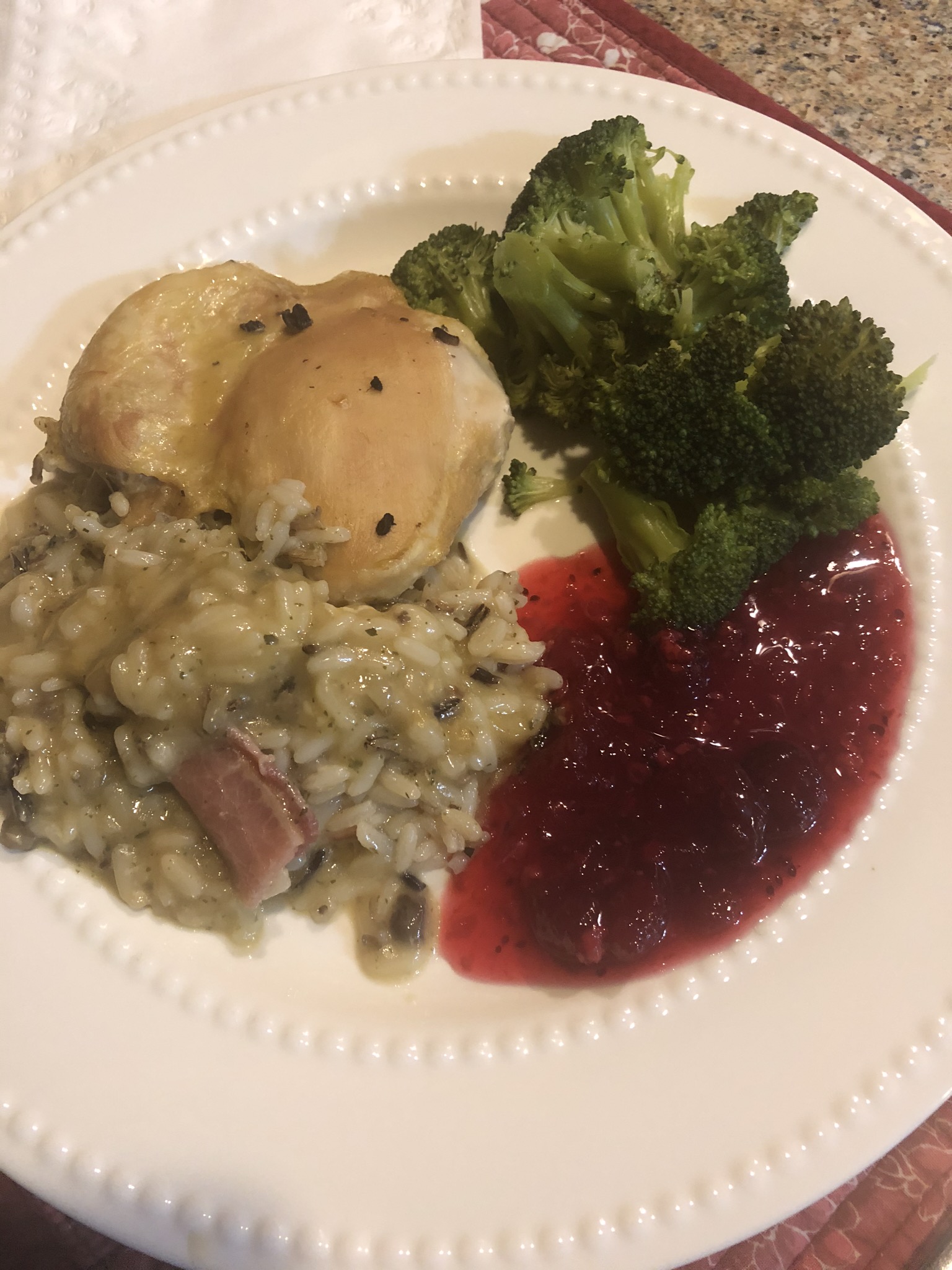
Plate and enjoy.
I served ours with broccoli and cranberry sauce. Because, if it’s chicken or turkey, there has to be cranberry sauce.
NOTE: I used boneless, skinless chicken but the original recipe called for bone in, skin on pieces of chicken. Use whatever chicken parts your prefer and whatever you have on hand. Almost any vegetable would be a good side dish including squash, green beans, or asparagus. I’ve never tried it, but this recipe might also work well with pork chops.
You may be inspired to get out some of your old tried and true recipes that call for creamed soups as we are all staying home during this pandemic. You’ll find them to be great comfort foods, especially during the winter months.
I grew up in Michigan’s Upper Peninsula where pasties are a staple. Once you cross the Mackinaw Bridge from the lower to the upper you start to see signs for restaurants and little shops featuring pasties. In 1968, then Governor George Romney, designated May 24 National Pasty Day in Michigan. The pasty first arrived in Michigan’s Upper Peninsula in the 1840s when tin miners from Cornwall immigrated to help develop the mines. The pasty is a complete and hearty meal in itself and can be eaten without plates and cutlery, making it a perfect supper for miners. If the pasty was no longer warm they would heat them by putting them on a shovel and holding the shovel over a heat lamp candle.
The pasties I grew up with are made of ground beef, potatoes, rutabaga, carrots, and onion and seasoned only with salt and pepper. The vegetables are all diced rather than sliced. The vegetables and meat are wrapped in a crust. A pot pie without a pot. If you’re a Yooper, you use catsup on your pasty. If you request gravy you’ll quickly be identified as a tourist. In mi-August of each year there is a pasty festival in Calumet complete with a beer tent and lots of pasty vendors offering samples. The Finns consider pasties as part of their ethnic cuisine and you will see them featured at Michigan’s Finnish Festivals.
The largest pasty on record was made in 2010 and weighed in at 1,900 pounds. I’m not sure now they rolled that crust out or where they found an oven large enough to bake it! As I started working on my pasties yesterday I had come across a recipe that I had saved for an unusual crust. I was a little skeptical but I thought I’d give it a try and I was very happy that I did. The dough came together easily and was great to work with. The recipe for the crust and the filling make a dozen pasties so keep that in mind.
Crust Ingredients:
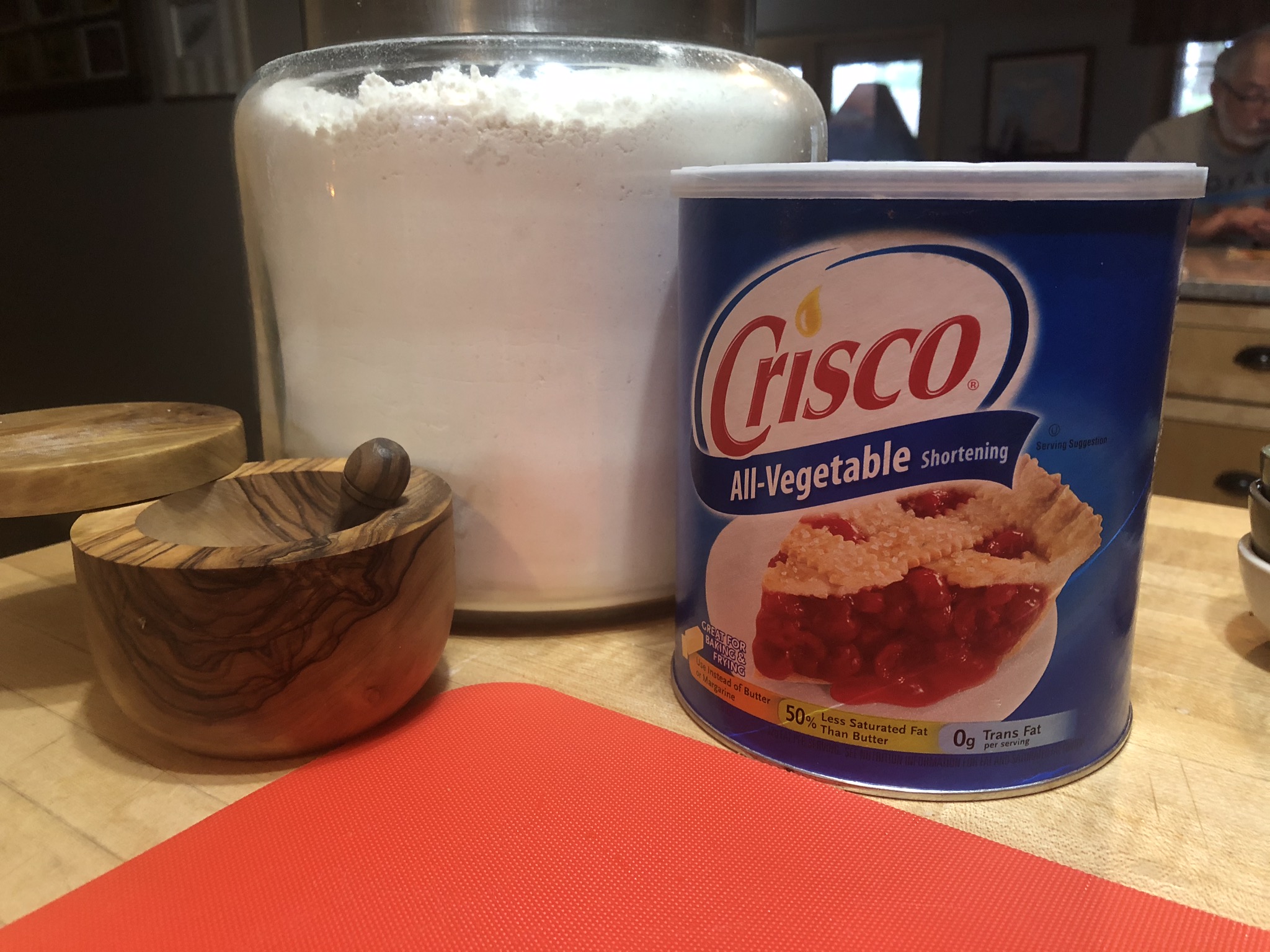
2 cups of shortening
2 cups of boiling water
6 cups of AP flour
1 T salt
Measure out the shortening into a large mixing bowl and add the boiling water.
Whisk together until all of the shortening is melted.
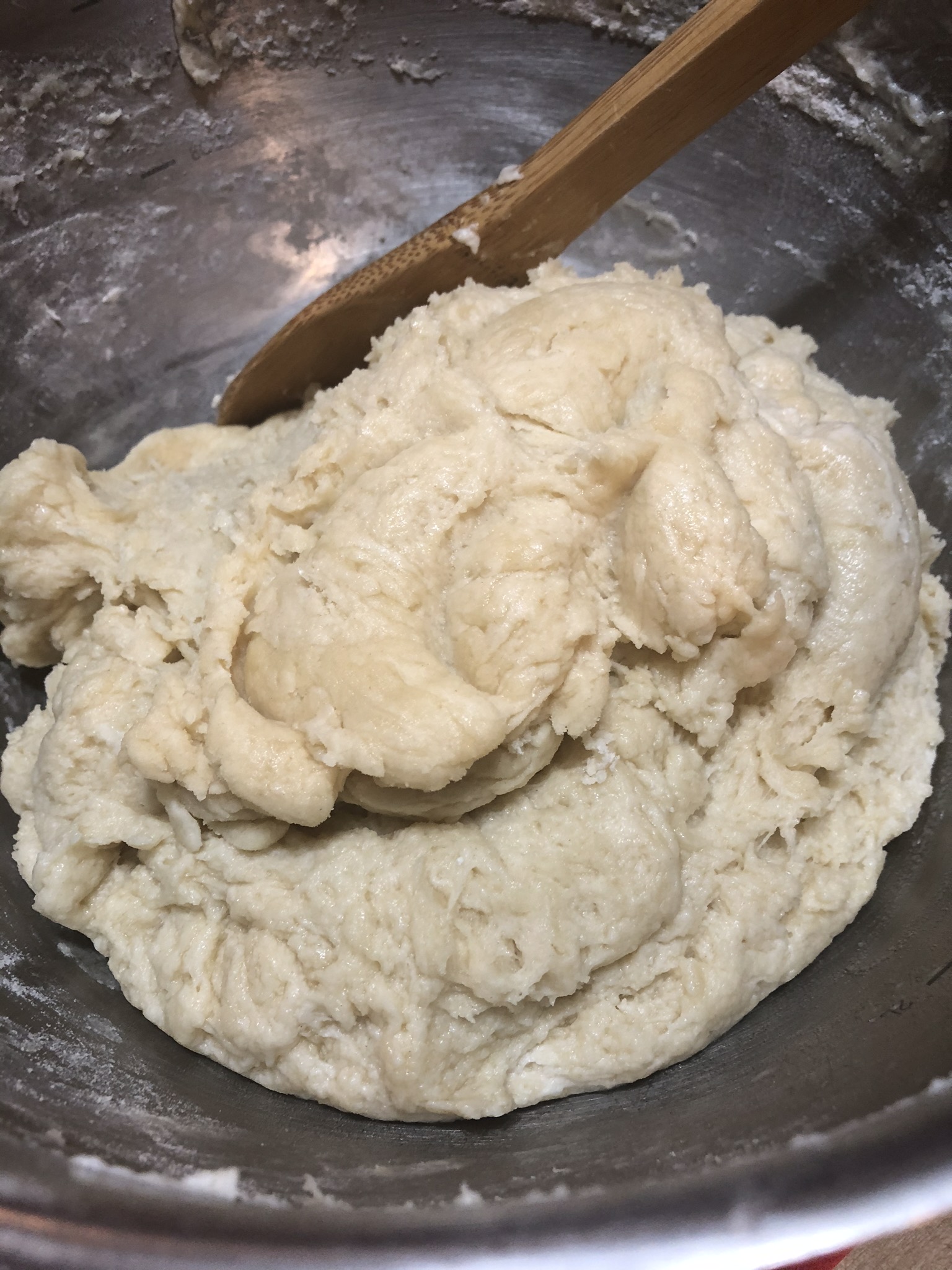
Stir in the flour and salt with a wooden spoon until you have a smooth, soft dough.
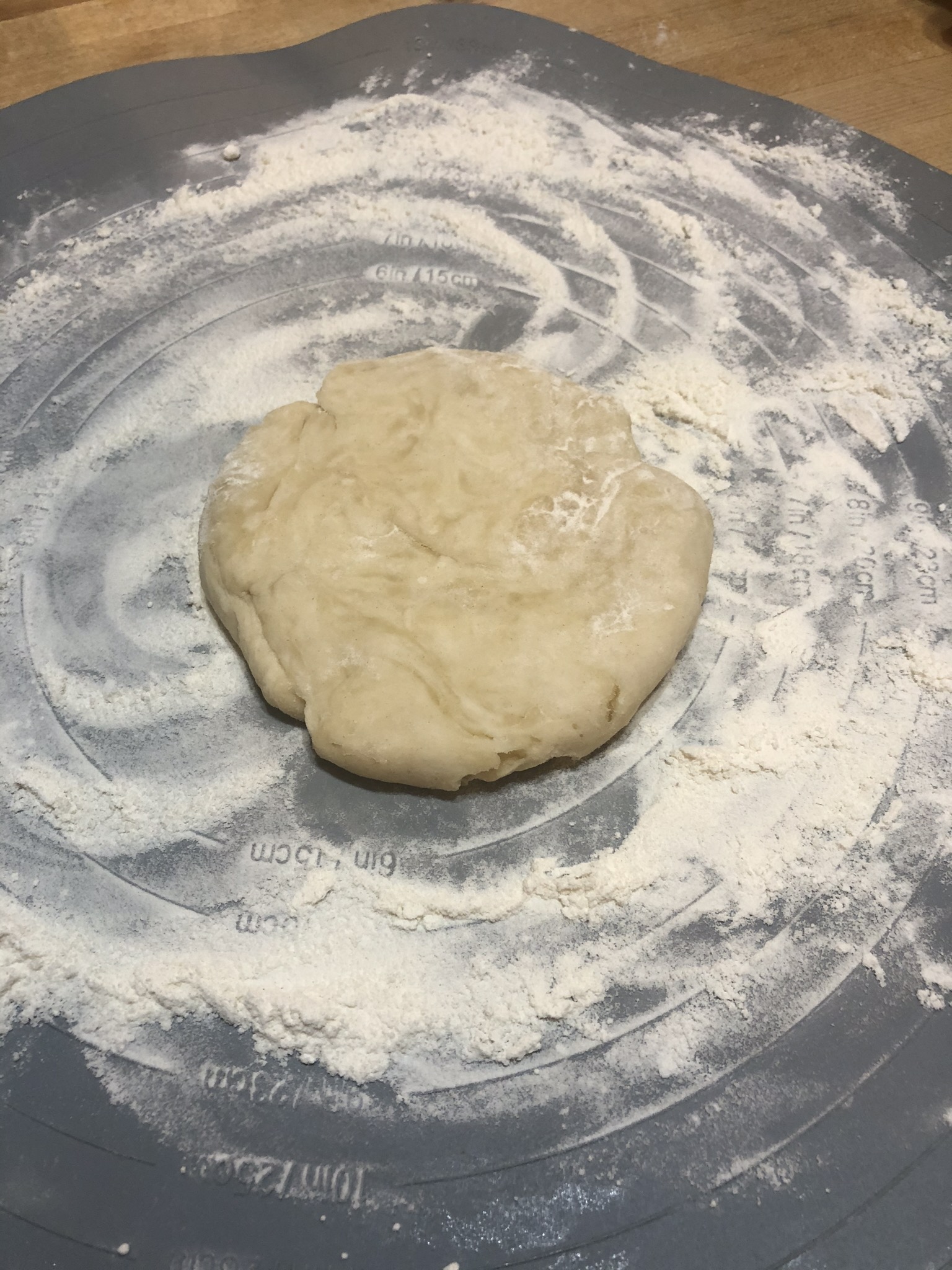
Turn the dough out onto a plate, cover with Saran Wrap, and refrigerate. Now you’re ready to start chopping your vegetables.
Filling Ingredients:
2 pounds of ground beef
1 pound of ground pork
9 cups of diced potatoes
3 cups of diced rutabaga
2 cups of diced carrots
4 cups of diced onion
Salt and Pepper
Peel the veggies and cut them into a very small dice, taking care to keep them fairly similar in size so they cook evenly. Combine all of the veggies in a large stainless steel bowl.
Add the ground meat, season well with salt and fresh ground pepper, and get your hands in there and mix all of the ingredients well. This will help to keep your ratio of meat and vegetables similar in each pasty.
Now you’re ready to take your dough out of the refrigerator and start rolling out the crusts. Divide the dough into a dozen even pieces. If you’re leery about eyeballing it weigh the dough on a food scale and do your math. Take one of the dough balls and, on a generously floured surface, roll it out into an 8 inch circle.
Once you’ve rolled out the dough put a cup and a half of the filling onto the dough.
With your fingers or a pastry brush moisten the edges of your dough for a good seal. Fold the dough over and crimp the edges. Cut a hole or two on top to vent the pasty while baking and transfer to a parchment lined baking sheet.
Once you have a sheet full of pasties bake them in an oven preheated to 350 degrees for 60 minutes.
Serve them piping hot or, if you’re going to freeze them, allow them to cool completely and wrap them in aluminum foil. Enjoy!
When I would make something for my Dad, like a pair of mittens or homemade cinnamon rolls, he would pay me the highest compliment by saying, “This is just like store bought.” Last night when my husband ate his pasty he said, “These are better than the ones we get from the store in the UP”. So I guess I’ve moved up in the compliment department because the ones we get at the store in the UP are pretty darn good!
NOTE: I use Brooks Tangy Catsup exclusively and it’s really good on pasties. You’re welcome to use gravy if you don’t mind being mistaken for a tourist.
Pasties freeze very well and are great to pull out for a meal when you’re short on time.
As always, a recipe is just a guide. Make whatever adjustments you’d like based on your personal preferences in terms of seasoning, vegetable proportions, and type of meat.
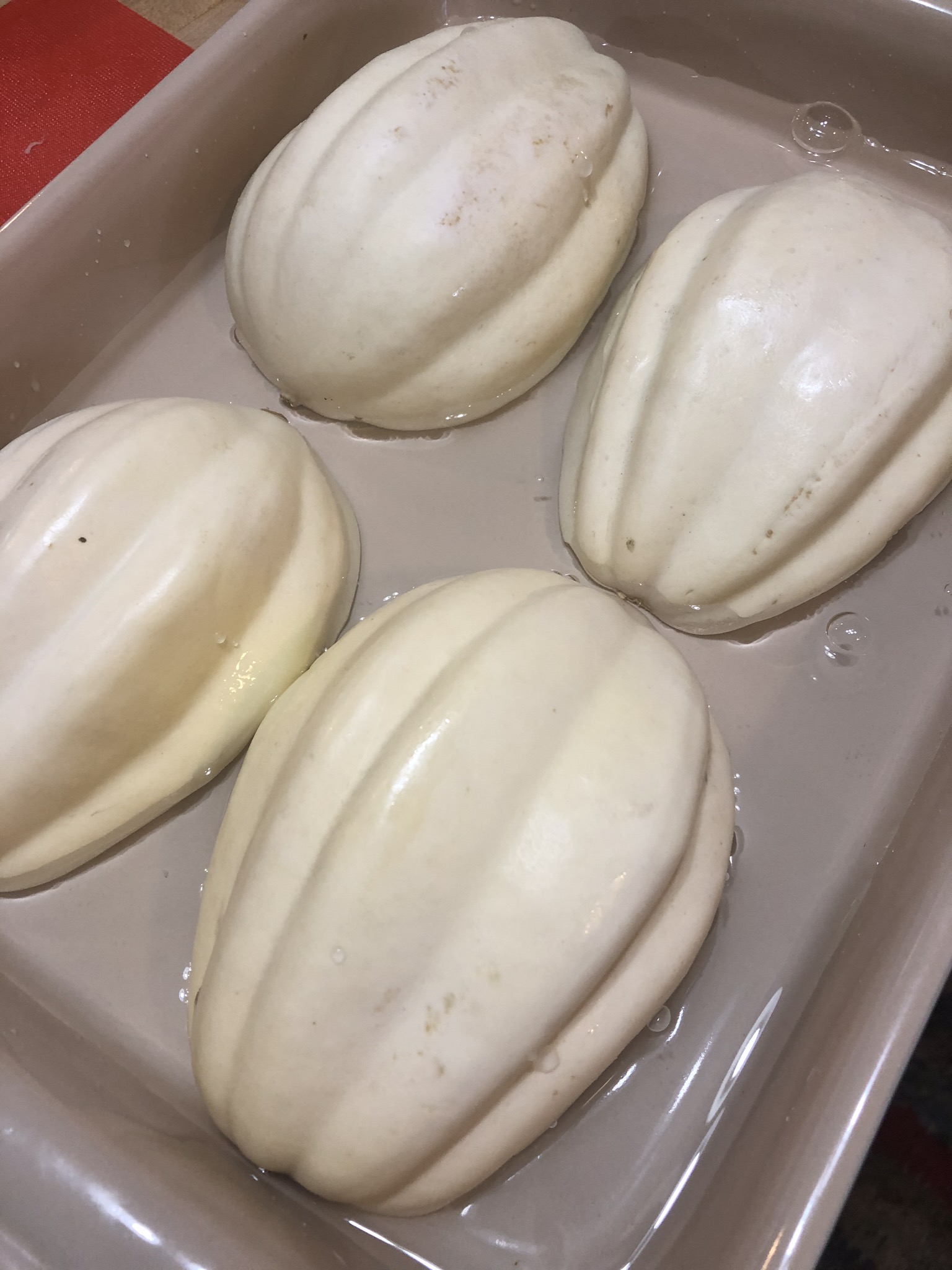
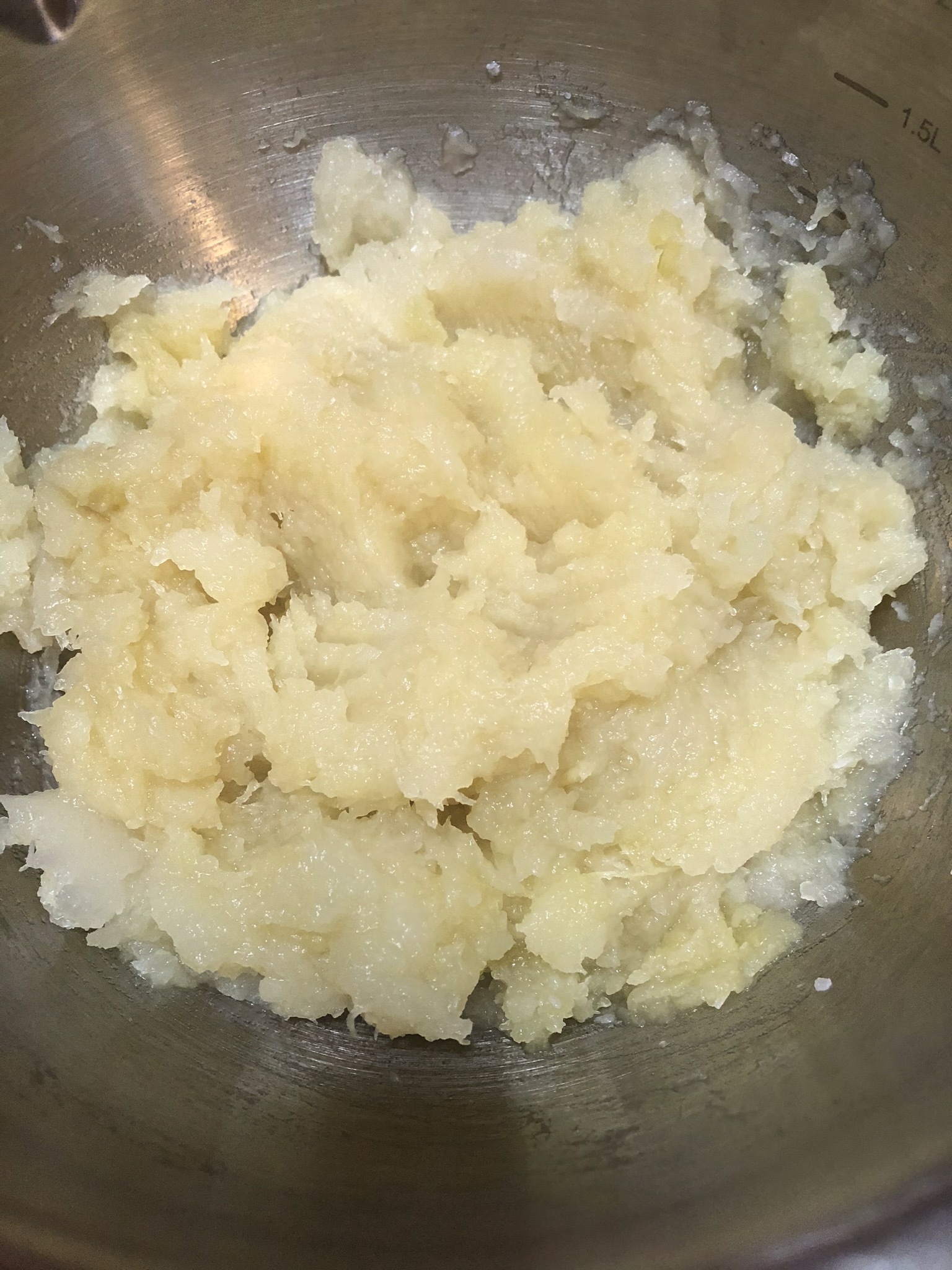
My friend and I stopped at a farm market and saw these interesting white acorn squash. I’ve never had them the clerk said, but they say they taste just like mashed potatoes. Always game to try something new I bought two of them. My husband doesn’t really care for squash, so I thought, if it tastes like mashed potatoes, he’ll like it. I cut them in half, removed the seeds, and baked them in a casserole dish with an inch or so of water until they were tender. I scooped the squash out of the shell and it was tender and creamy.
Then I tasted it. It tasted like nothing. It actually tasted worse than nothing. Potatoes taste like potatoes. This tasted like nothing. So I texted my daughter and one of her friends for recommendations on what to do with this squash to give it some taste. My daughter suggested stuffing it with wild rice and sausage which would have been good except I was serving it with a pork loin. Her friend John suggested butter and sage. I googled white acorn squash and they suggested apple, honey, robust cheeses, bacon, or fresh herbs. Obviously things that actually have flavor. I decided to caramelize onion in butter and sage.
The onions were sweet and melt in your mouth tasty. I stirred those in to the squash along with some fresh grated parmesan cheese. And more butter. It still did not taste good! I should have just served onions caramelized in sage butter with parmesan cheese as a side.
Lesson learned. I will never buy white acorn squash again. If I want something that tastes like potatoes, I’ll buy potatoes. But if you still want to try white acorn squash, don’t say I didn’t warn you.
One of the food magazines that I subscribe to is Cuisine at Home. It’s a magazine that has consistently good recipes, easy to follow instructions, and great pictures. The latest issue is full of “comfort foods.” We love cabbage and the September/October issue has several cabbage recipes including a chocolate cake with cabbage and this cheesy cabbage gratin. I haven’t tried the chocolate cake with cabbage but I’ve made this gratin recipe twice since this magazine came in the mail. The first time I made it we had it with polish sausage. Most recently we made it a vegetarian meal with sliced tomatoes and corn on the cob.
There is red, white and green cabbage. Cabbage is closely related to broccoli, cauliflower, and Brussels sprouts. Generally a head of cabbage is between one to two pounds. The perfect size for this recipe. I have a crock full of shredded cabbage right now that is working it’s way to sauerkraut. Each of the heads of cabbage I shredded for the kraut weighed between ten and twelve pounds. In the heat of summer cabbages can grow quite large…the largest recorded weighed in at a little over 138 pounds. You could make a lot of cabbage gratin with that!! Cabbage is a good source of dietary fiber and Vitamin K and C. It is economical and there are countless ways to prepare cabbage…stewing, frying, braising, pickling, fermenting. There are lots of great soup recipes that call for cabbage. If you like cabbage and bacon and cheese you will thoroughly enjoy this dish regardless of what you serve up on the side.
Ingredients:
1 head of green cabbage
2 T olive oil
Salt and pepper
6 strips of bacon diced
1 cup sliced leeks
1 T minced garlic
1 T AP flour
1 3/4 cups heavy cream
1/2 cup chicken broth
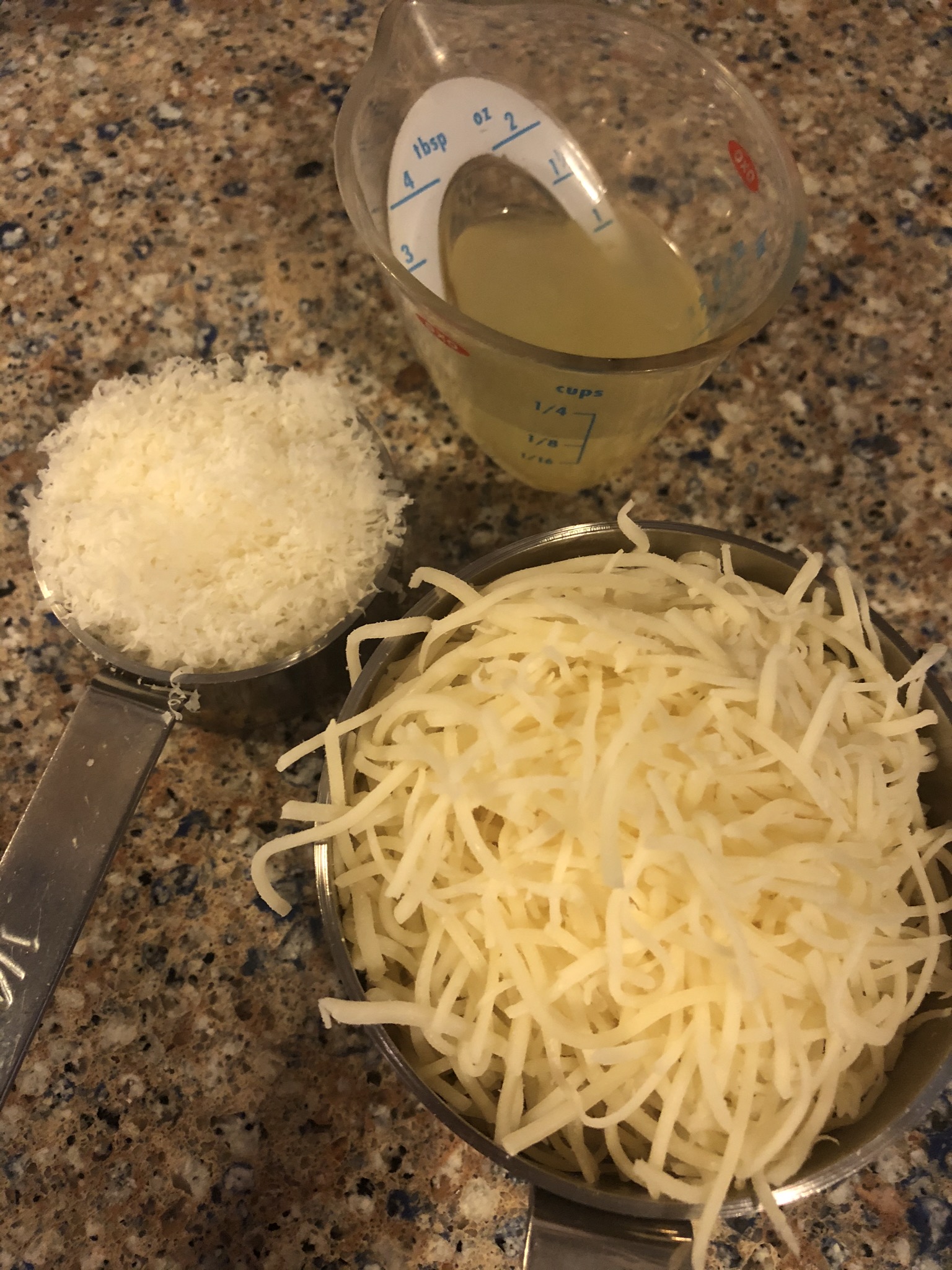
1 cup shredded gruyere cheese
1/4 cup shredded parmesan cheese
2 T lemon juice
2 T chopped fresh thyme
Ingredients for the Topping
1 T olive oil
3/4 cups fresh bread crumbs
1/2 cup shredded gruyere
1/4 cup grated parmesan
1 tsp minced lemon zest
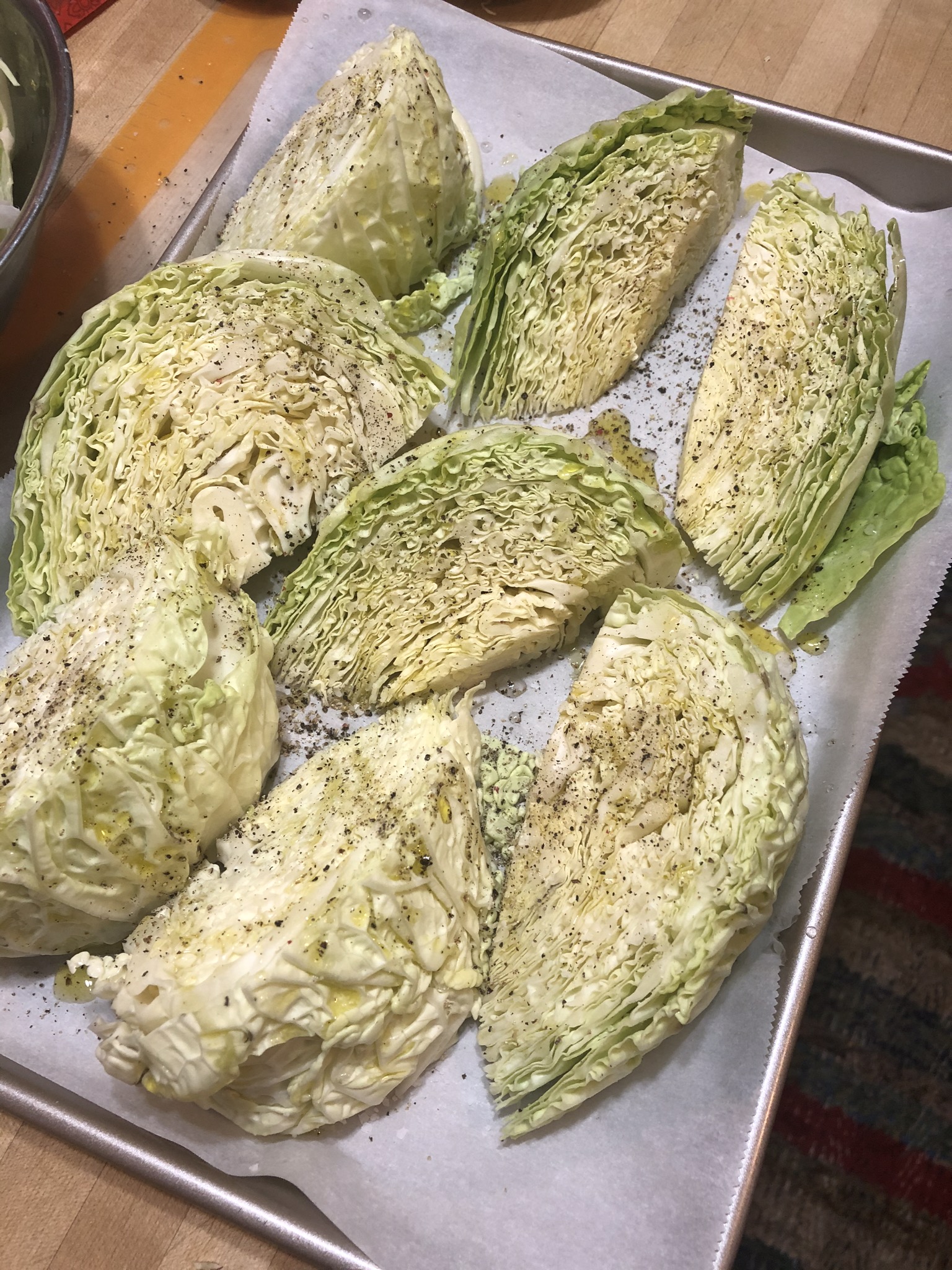
Preheat your oven to 375 degrees. Line a rimmed baking sheet with parchment paper or foil. Peel off the tough outer layers of cabbage and cut the cabbage into eight wedges. The instructions recommended leaving the core intact to help the wedges hold together while roasting. I removed the core before roasting and had no problem. Place the wedges on the baking sheet, drizzle with the oil and season with salt and pepper.
Roast for 40-45 minutes until the cabbage is tender and the edges are golden.
While your cabbage is roasting cook your diced bacon in a heavy skillet over medium heat until the bacon is crisp. Remove the bacon to a plate lined with paper towel.
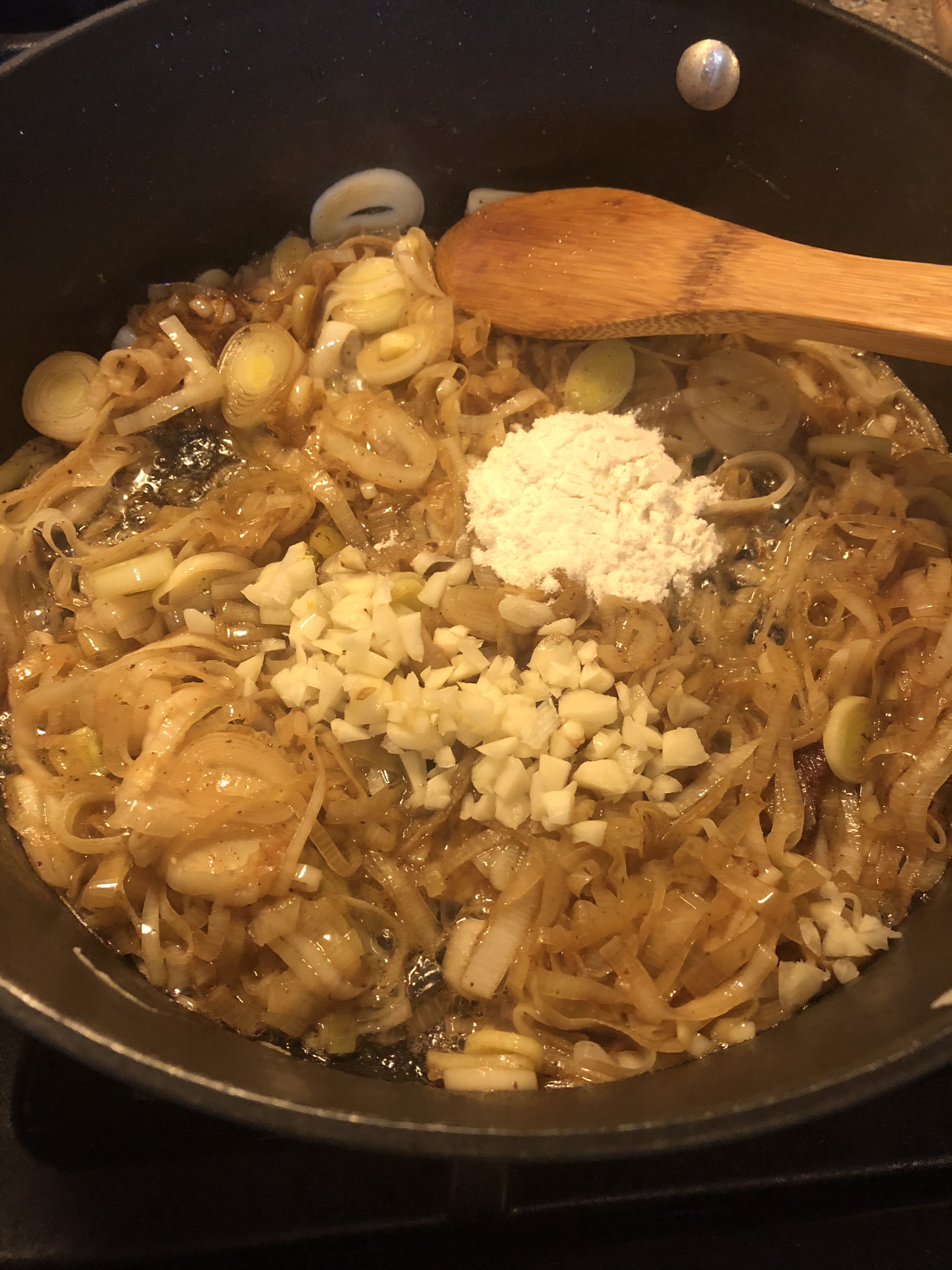
Add the leeks to the skillet with the bacon drippings and cook over medium heat until they are softened. Stir in the garlic and the flour and cook, stirring constantly, for one minute.
Stir in the cream and broth and bring to a simmer. Cook until the mixture begins to thicken, 6-8 minutes.
Off heat, stir in the bacon, gruyere, parmesan and lemon juice.
Set the cheese sauce aside and prepare the bread crumb topping. Heat 1 T olive oil in a skillet over medium heat. Cook the bread crumbs until they begin to toast up and transfer them to a bowl to cool for about 5 minutes.
Once the bread crumbs have cooled, stir in the cheeses and lemon zest.
Now you’re ready to assemble the gratin. Spray a 9×13 baking dish with nonstick spray. Arrange the cabbage in the dish, cut side down. Pour the cheese sauce over the cabbage wedges and sprinkle with the bread crumb topping.
Bake uncovered for 20-25 minutes until bubbly and the crumb topping has browned.
Serve hot as side dish to pork loin, chops or sausage or as the main dish. Maybe even as a Thanksgiving side dish. Enjoy!
NOTE: I save crusts and odds and ends of stale bread In the refrigerator, grind them in my food processor and freeze them in zip lock bags. The bread doesn’t go to waste and they’re perfect for recipes like this one.
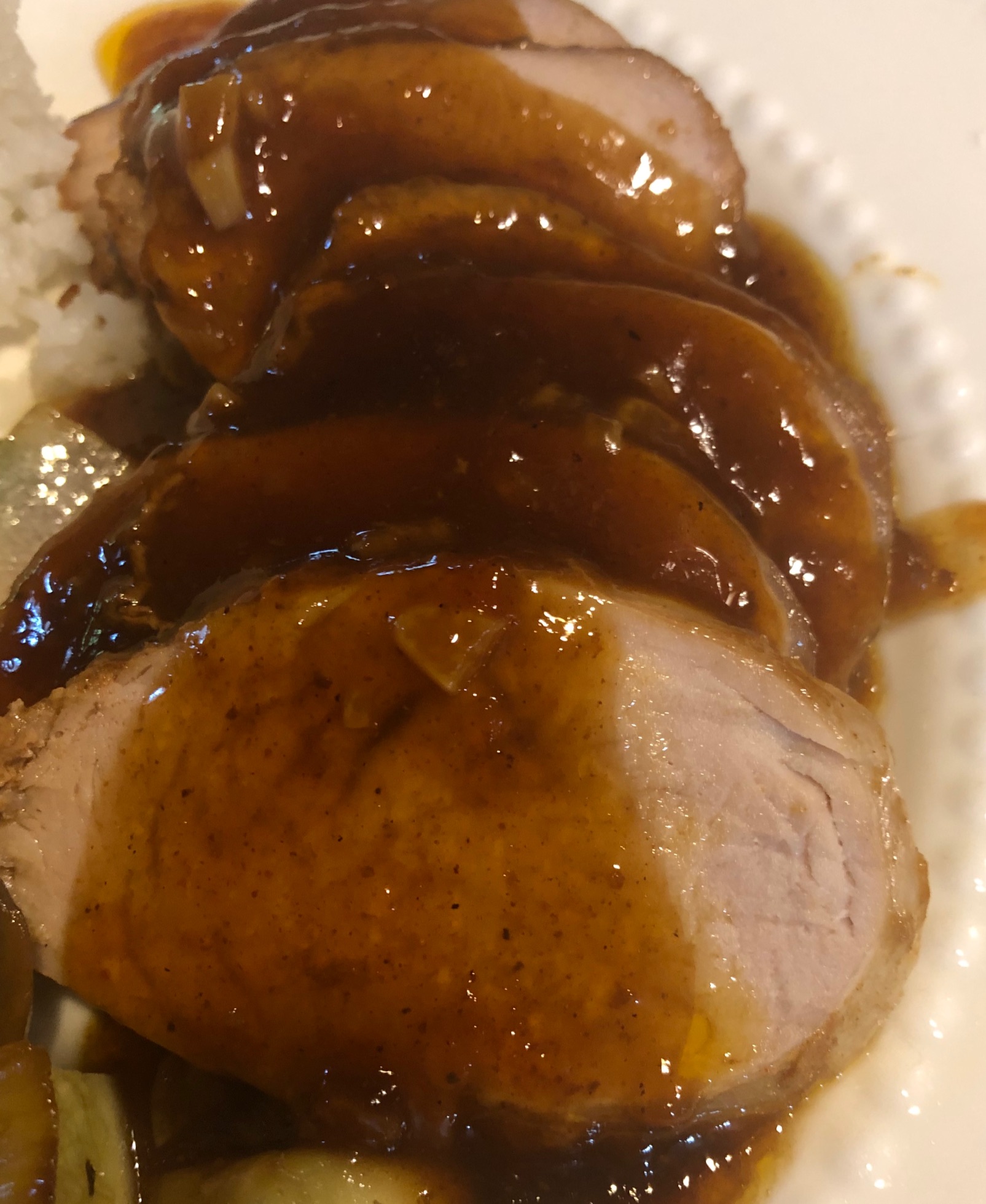
Even though I’ve always enjoyed cooking I’ve done more cooking and baking in the last few months than ever. I’m sure that it’s no different in most households since this pandemic. We aren’t going out to restaurants and, where we live, there are no delivery places. There is even a facebook web site, maybe several, with names like “crap I’ve cooked during this pandemic.” We all keep looking for new ways to make the same old things. Changing things up a little. And we also need to vary recipes based on what is in our pantry and refrigerator because we are going out for groceries less frequently. I had a very nice pork tenderloin in the freezer and decided that would be dinner. I looked through several recipes and got an idea that I modified based on ingredients I had on hand. It came together pretty quickly and was very tasty. I’ll definitely make this again.
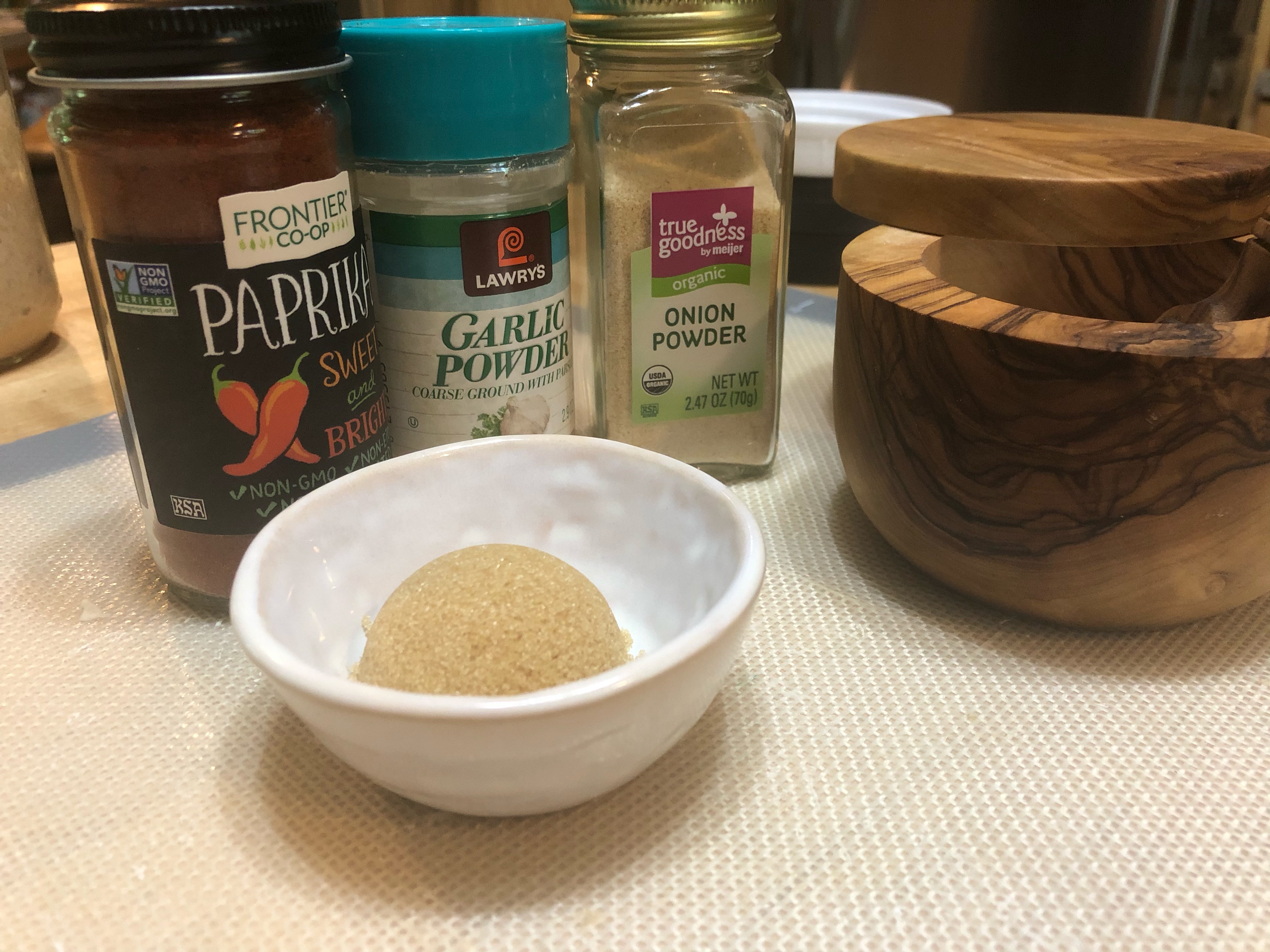
Rub Ingredients:
1 T paprika
1 T brown sugar
1 tsp garlic powder
1 tsp onion powder
1 T kosher salt
Sauce Ingredients:
1/2 cup butter
1 head of garlic minced (about 1/4 cup)
1/2 cup honey
3 T soy sauce
3 T rice vinegar
1 cup broth
1 T cornstarch
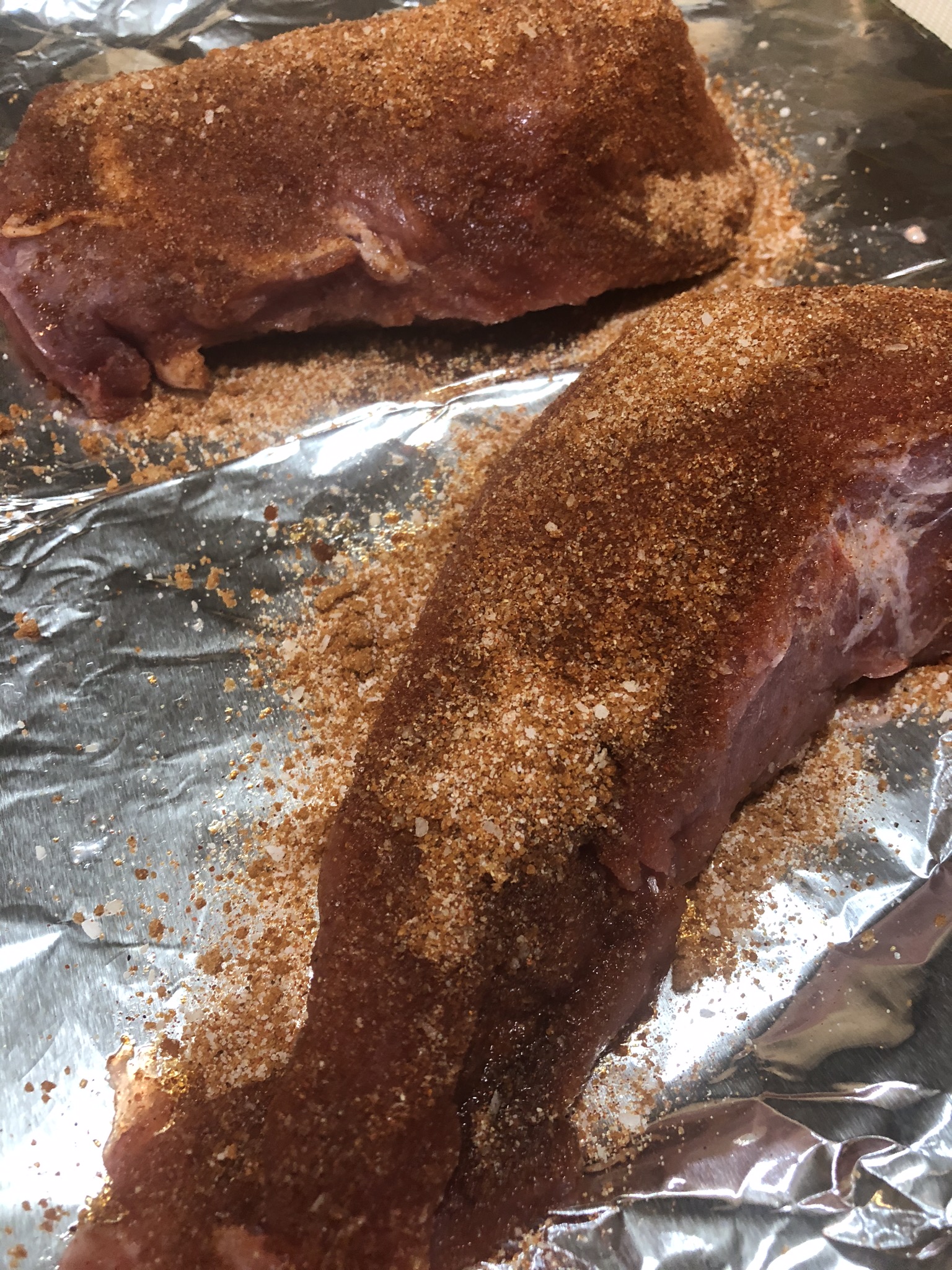
Using a paper towel, pat the tenderloin dry. Combine the rub ingredients and sprinkle on both sides of the pork.
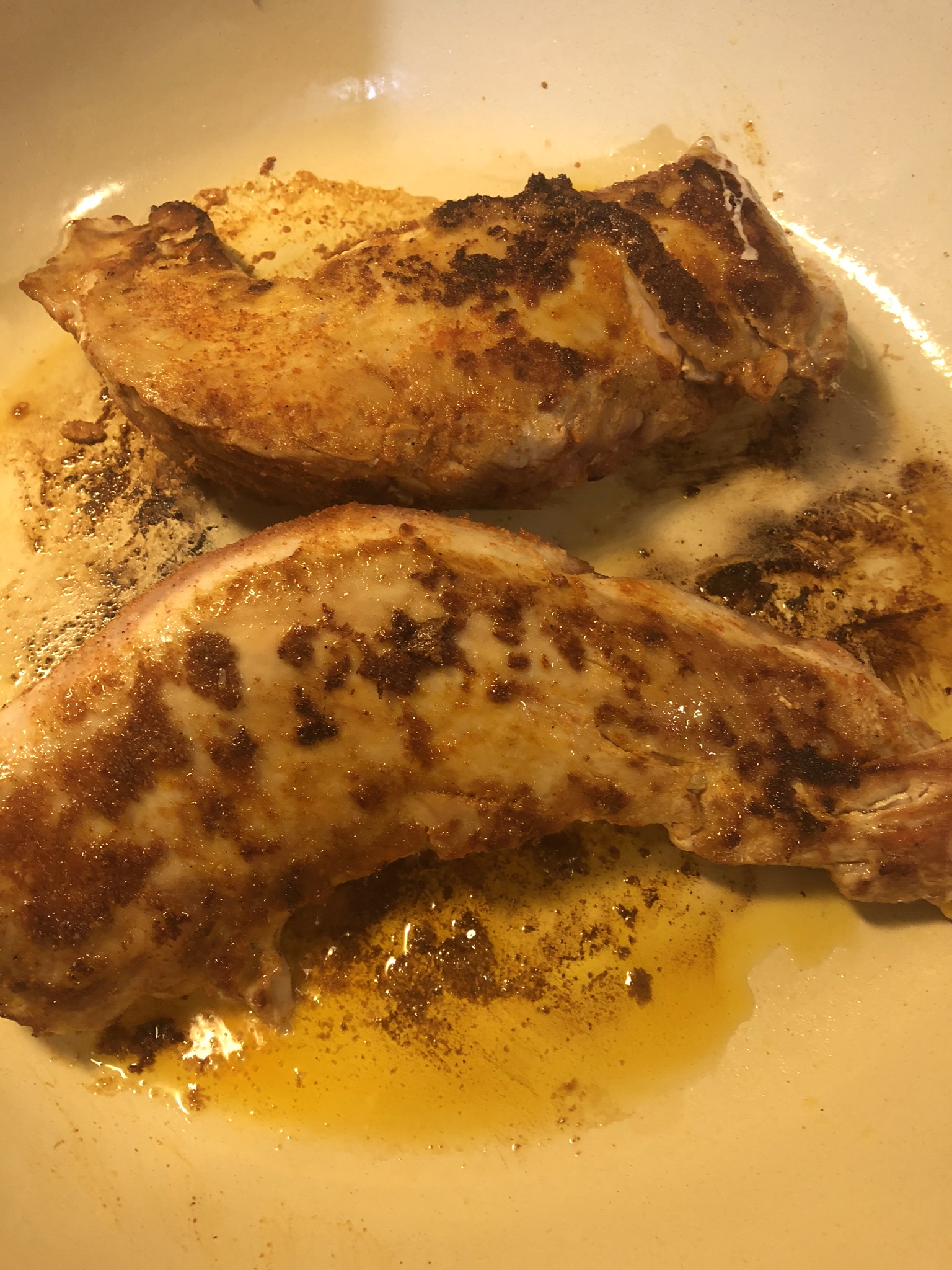
Heat 2 T of vegetable oil in a heavy skillet or dutch oven. Sear the tenderloin on all sides and set aside. Preheat the oven to 350.
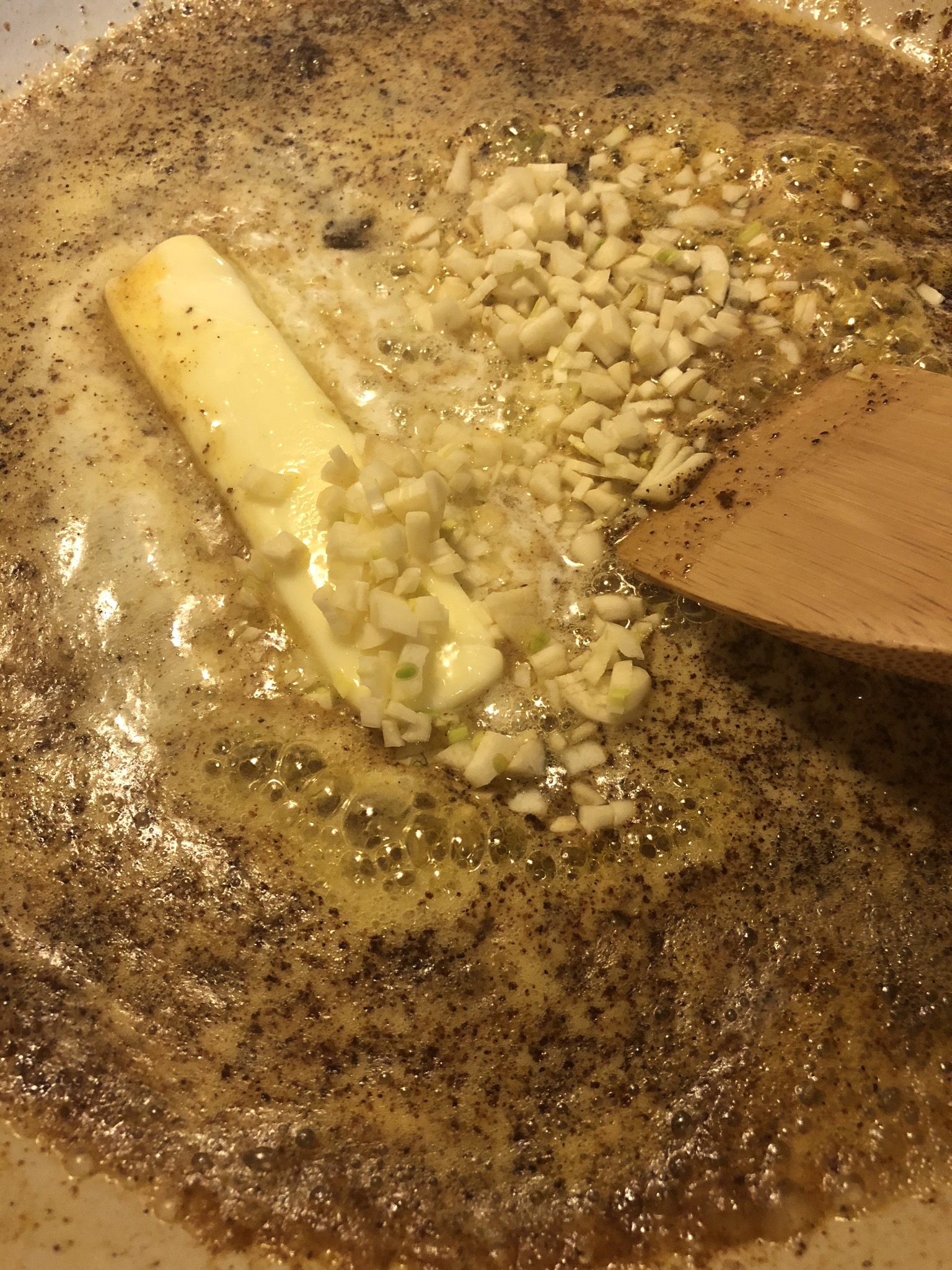
Turn the heat down to medium and add the butter and garlic to the pan drippings. Cook until the butter melts and the garlic becomes fragrant, about 5 minutes, scrapping up the browned bits in the skillet.
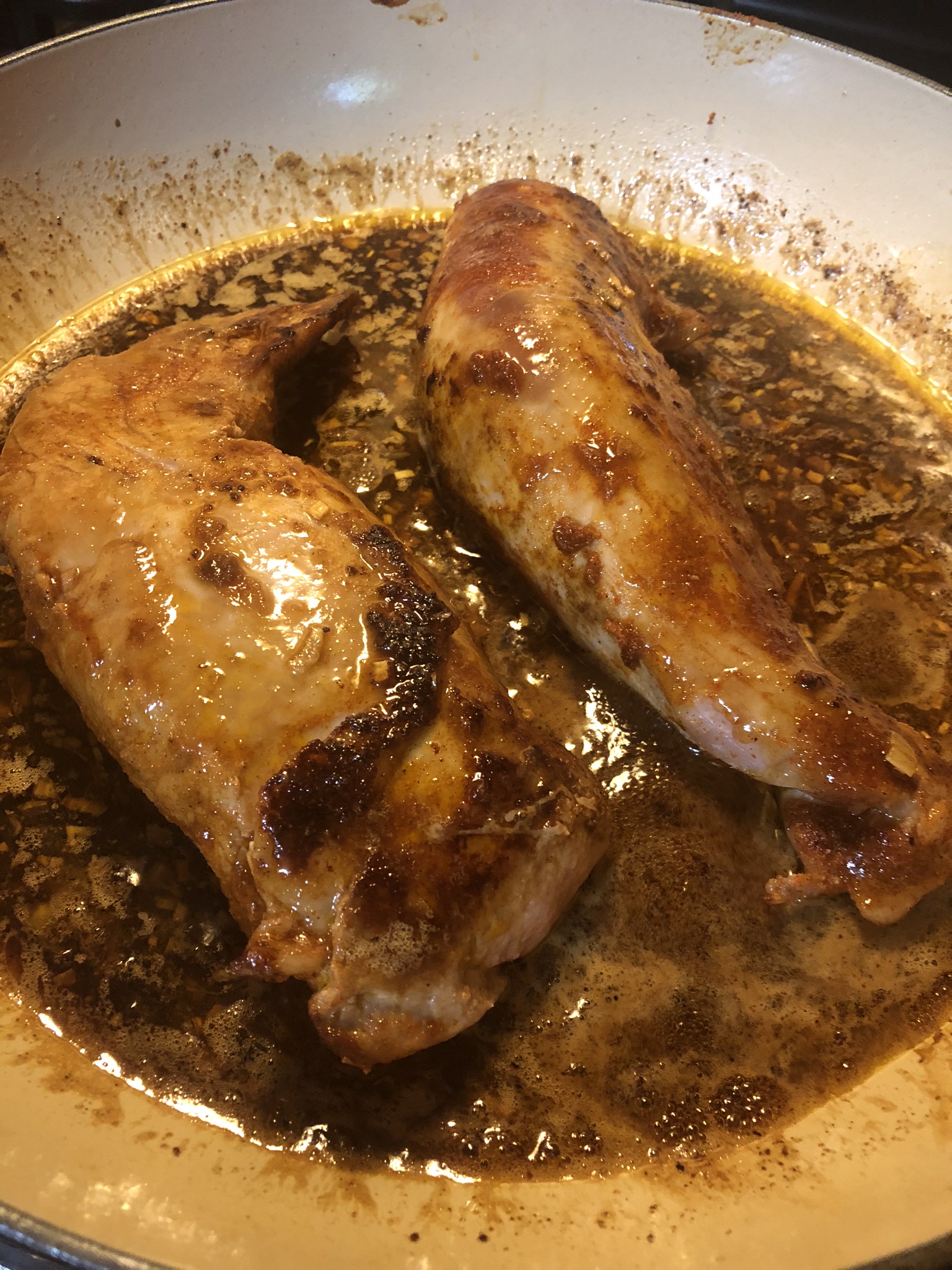
Add the honey, soy sauce, rice vinegar and broth. Bring the sauce to a simmer. Return the pork to the pan.
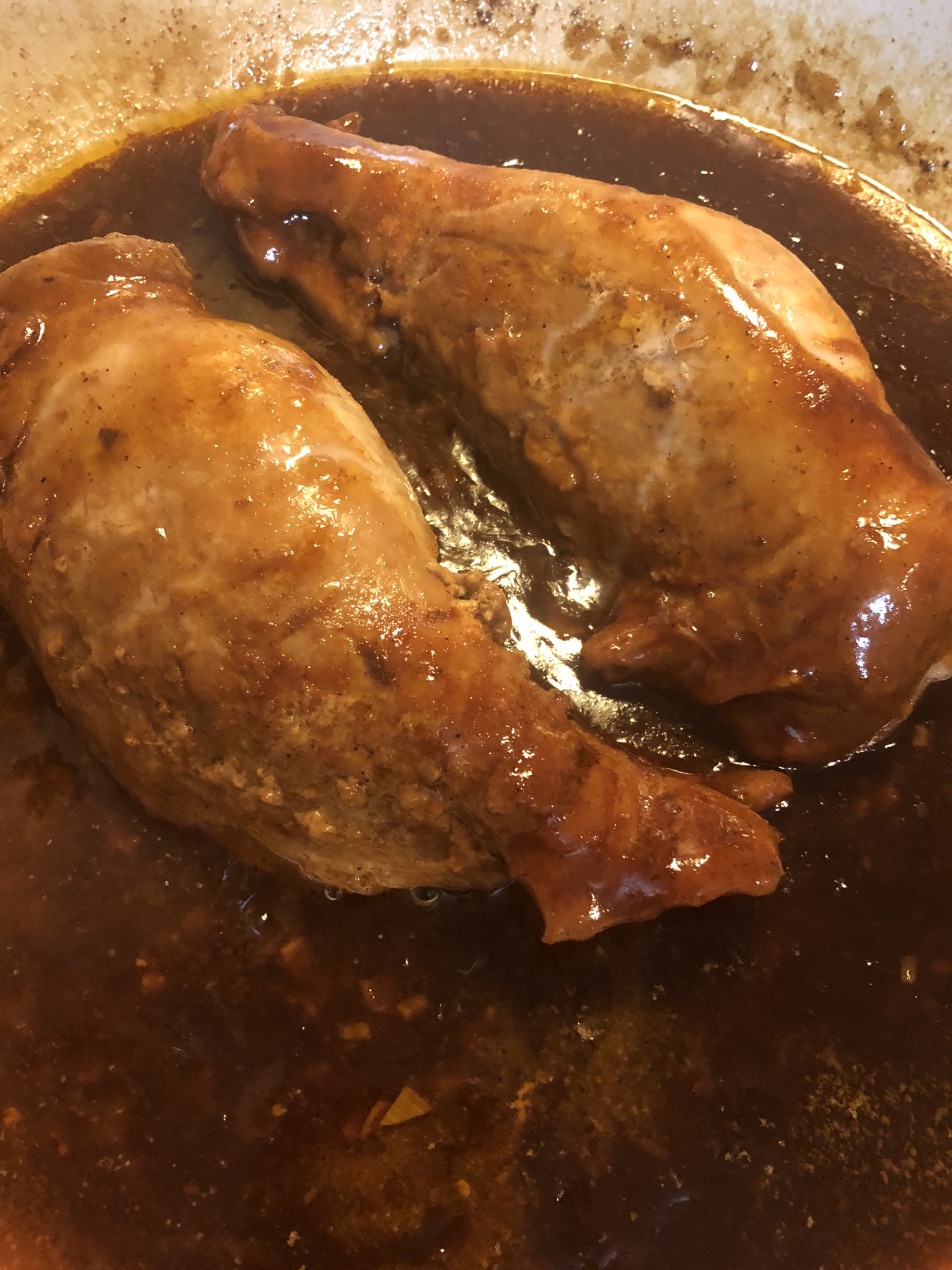
Cover and roast for 10 minutes. Uncover and continue roasting until the internal temperature reaches 145. Total roast time for me was 20 minutes. Remove from the oven. Set the tenderloins aside and cover with tin foil. Mix the cornstarch with a little water and add to the sauce. Cook over medium heat until the sauce thickens. Return the pork to the sauce. Ladle the sauce over the tenderloins.
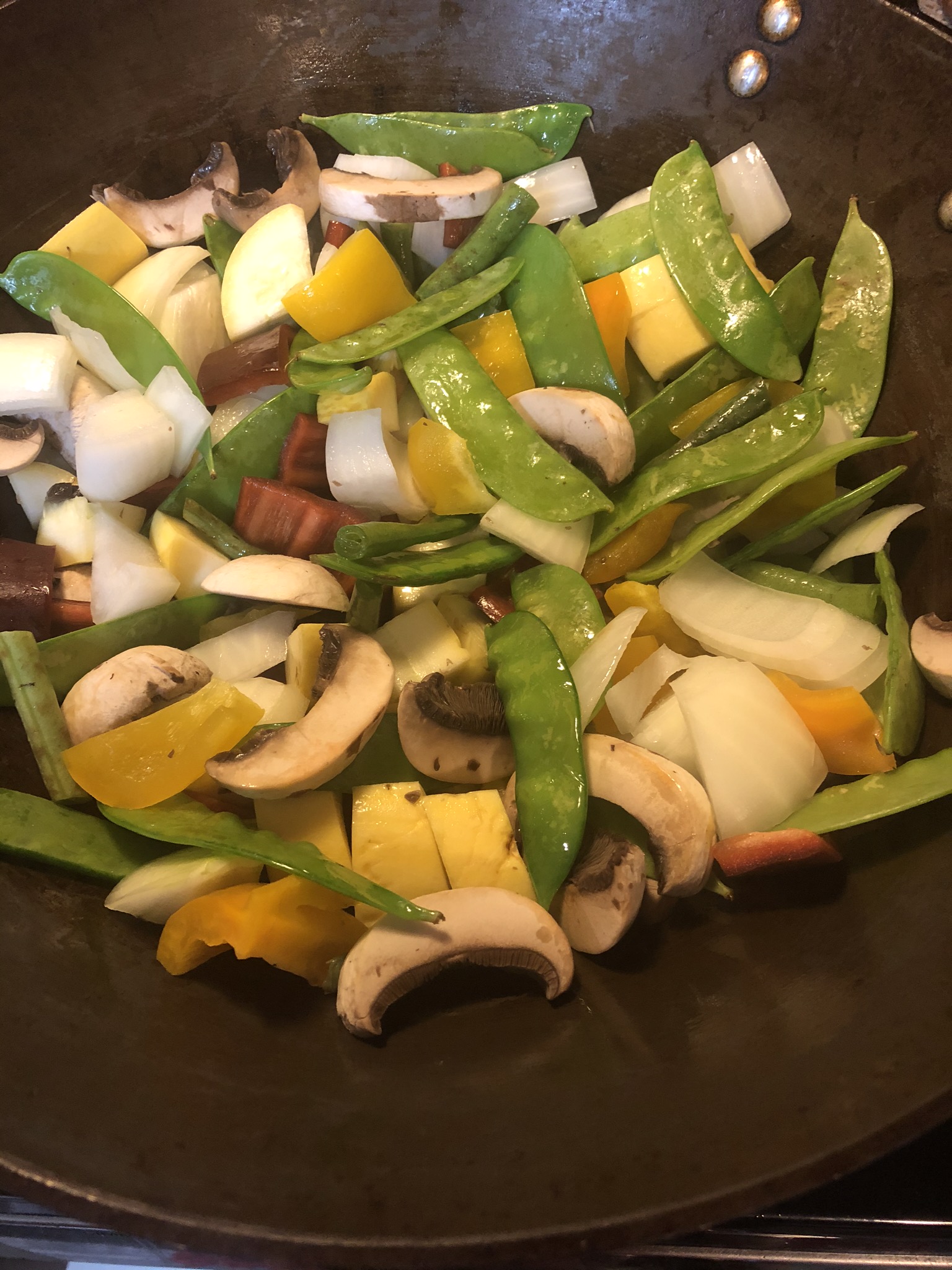
While the pork is roasting, get your vegetables ready to stir-fry. Any combination of vegetables work fine. I had pea pods, onion, sweet peppers, summer squash, green beans and mushrooms.
Just before you’re ready to serve, heat a little vegetable oil in a wok or heavy sauce pan until it’s screaming hot and stir-fry the vegetable until they are just tender crisp. Top off with a little toasted sesame oil and soy sauce.
I also served ours with jasmine rice. To plate, scoop rice, vegetables and slices of pork onto the plate and top with the garlic honey sauce.
Our dinner was excellent. And the leftovers were equally tasty.
NOTE: Any combination of vegetables work well for stir fry. Or just serve with a steamed or roasted vegetable of your choice. We also like lots of garlic, but if you’d like less just use a few cloves.
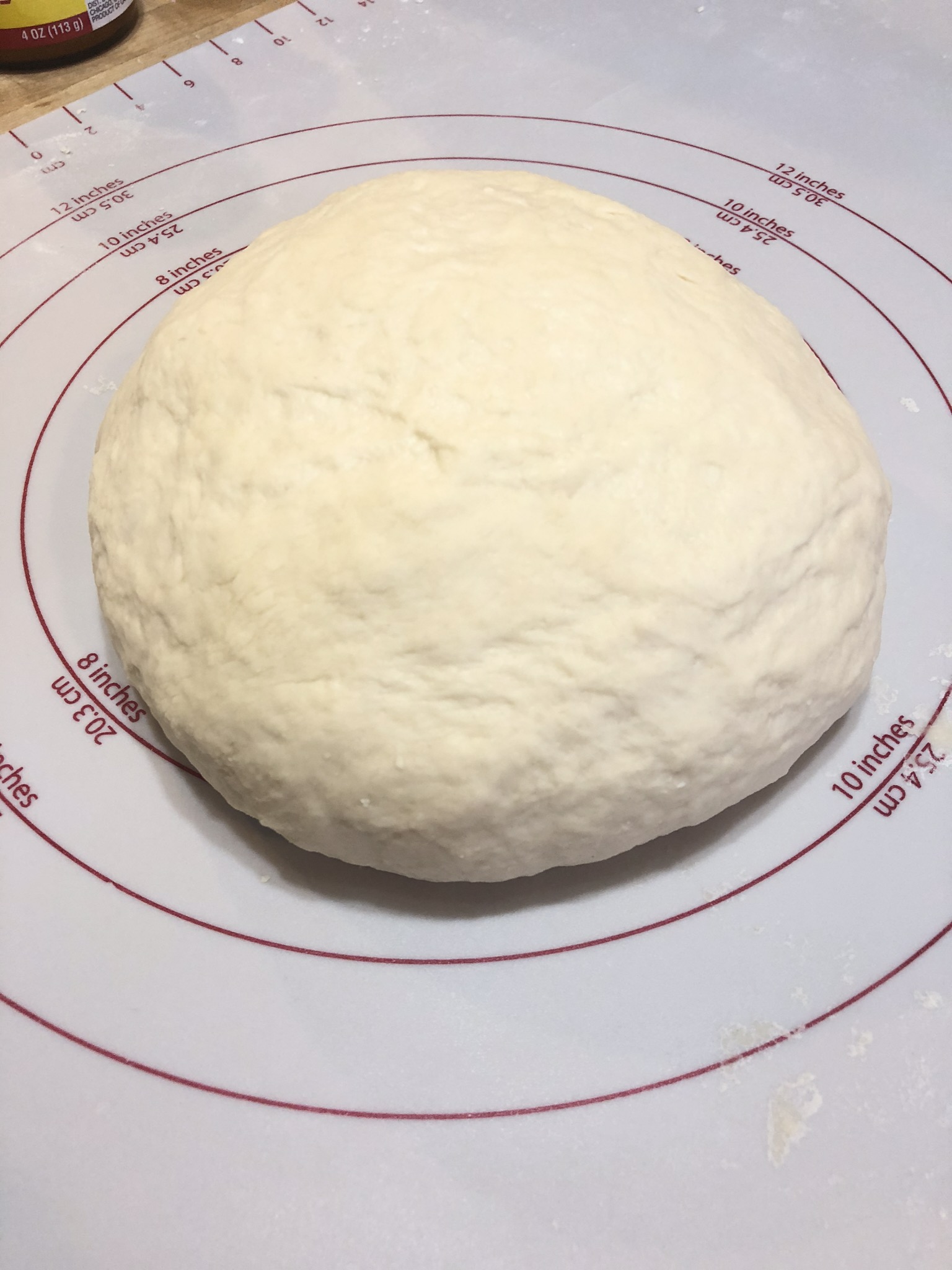
I’ve always enjoyed baking bread and often use the dough hook on my mixer to do the kneading. But, during this pandemic, I have been doing an awful lot of bread making and kneading by hand. Punching that dough can be therapeutic plus none of us are able to go to the gym so I’m thinking it also counts as exercise. As my daughter said, sometimes you just have the need to knead. Amazingly enough I have never made sour dough bread so this was a first for me. But you can’t just wake up in the morning and say I’m going to make sour dough bread. You have to plan ahead and start a starter. A few days ahead. But right now we are all on orders to stay at home so I have nothing but time. My friend Jane gave me her recipes for the sourdough starter and the bread. This bread recipe is Viola Tibbets’ Sourdough White Bread. I think the recipe has been around a long, long time. Step one is make your starter. You’ll need a good size glass or ceramic bowl. I have a perfect enameled metal bowl that I was going to use but after I googled it I decided against using a metal bowl.
Starter Ingredients:
1 tsp active dry yeast
1/4 cup warm water
2 T sugar
1 T vinegar
1 tsp salt
2 cups AP flour
2 cups warm water
Dissolve the yeast in 1/4 cup of warm water. Add the next four ingredients and add the 2 cups of warm water.
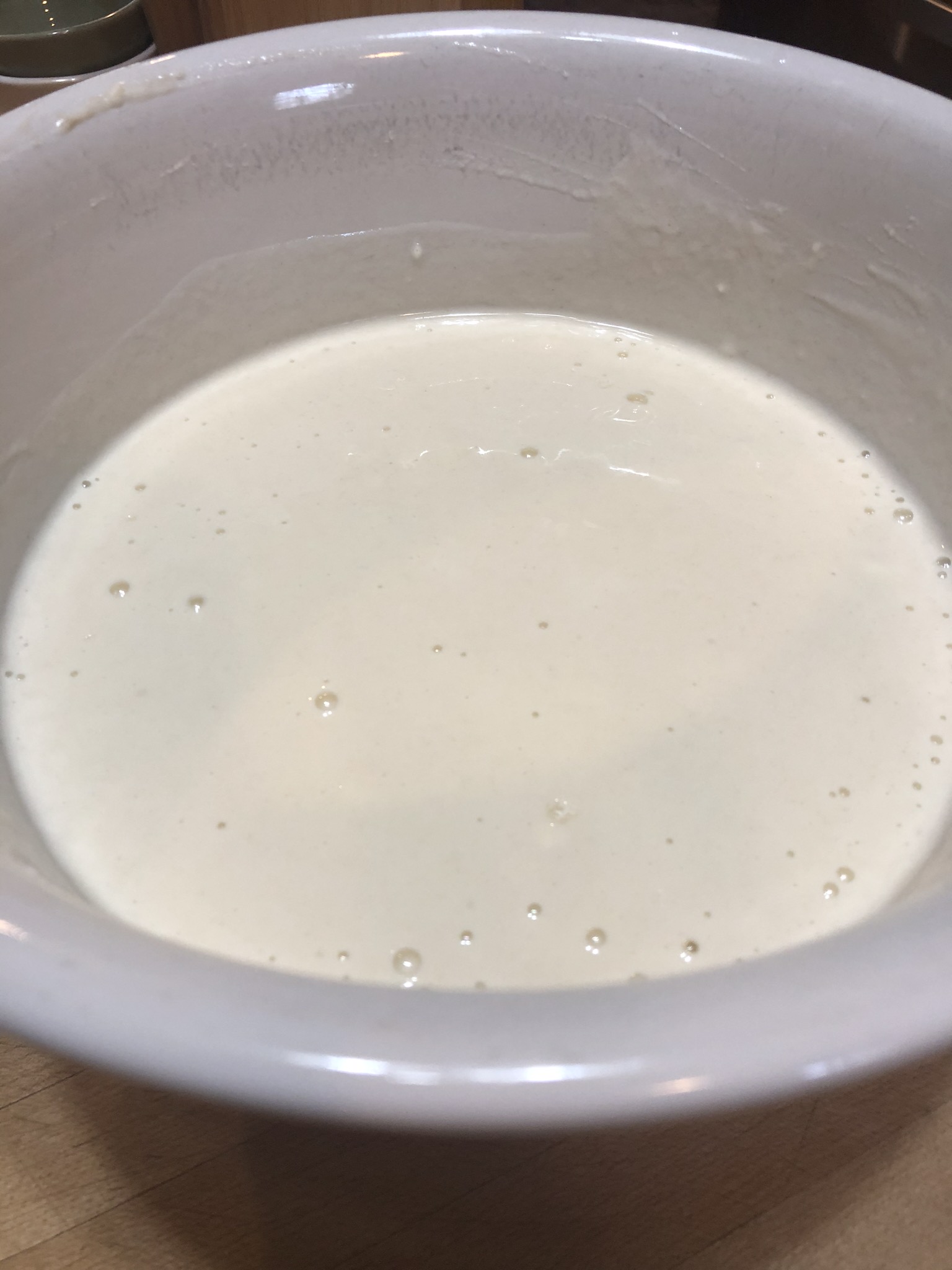
Cover the bowl loosely and allow it to stand in a warm place for two or three days to ferment. I just laid a piece of wax paper over the top. It will be bubbly and sour when it’s ready. Actually kind of gross, slimy, and smelly.
Your sourdough starter can be kept alive by replacing the starter you use with the same measurements of flour and water called for in the recipe. For instance, my recipe called for 1 1/2 cups of starter so I added 1 1/2 cups of flour and 1 1/2 cups of water to the remaining starter. Your starter can be kept indefinitely but you need to use it at least once a week for it to stay alive, just like the BeeGees song. You can put the starter in a glass jar and refrigerate. Just remember to use it or remove some of the starter and feed it once a week. Now that you have this sour, kind of gross starter ready, you can move on to making your bread.
Bread Ingredients:
1 cup hot tap water
3 T sugar
2 T butter
2 1/4 tsp of dry yeast (or 1 cake of yeast)
1 1/2 cups of starter
4-5 cups of unbleached or AP flour
2 tsp salt
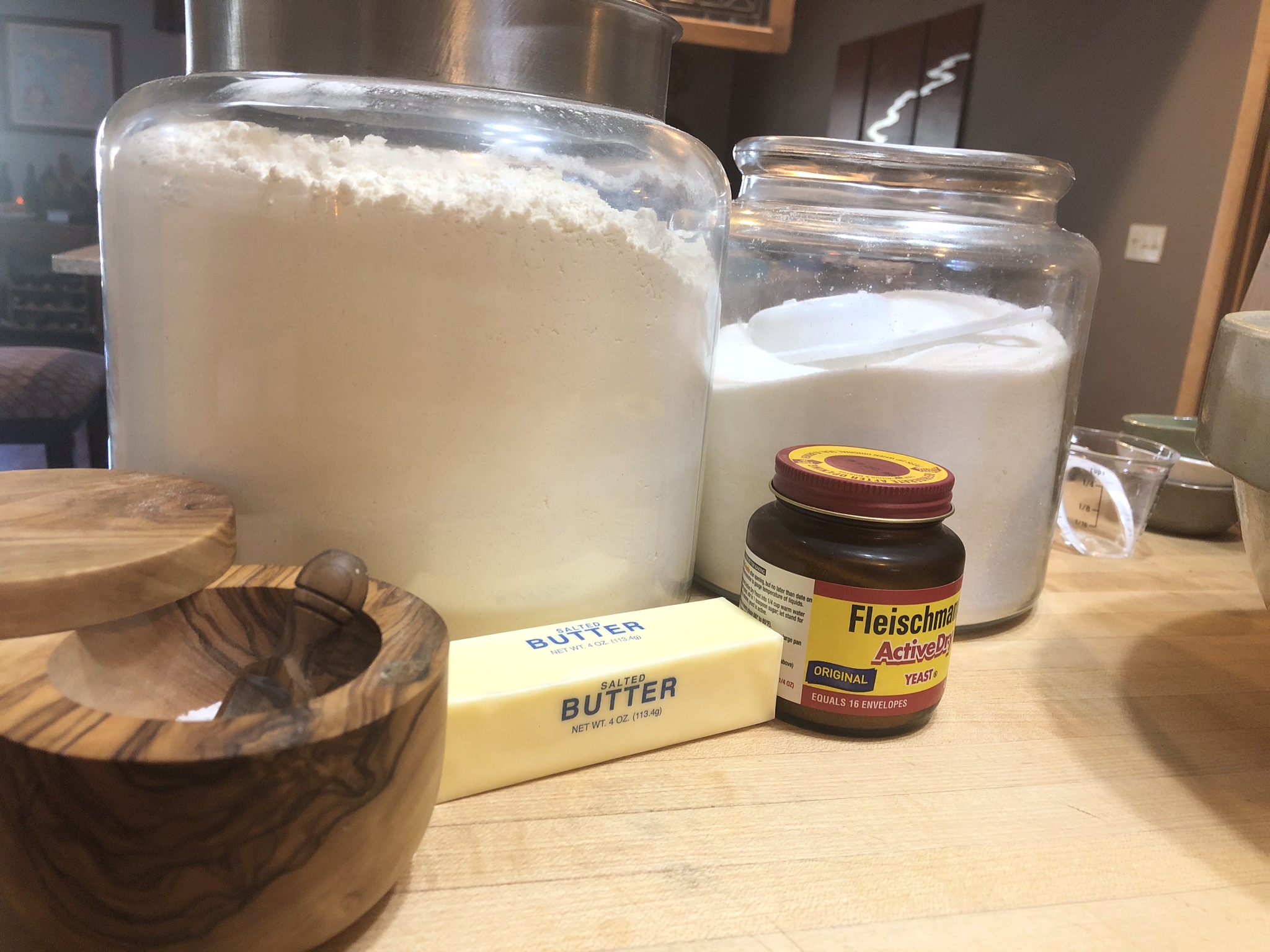
Dissolve your yeast in 2 T of warm water. Set aside. Measure your butter and sugar into a large mixing bowl and pour hot water over them. Stir and allow the mixture to cool to lukewarm. Once the mixture has cooled add the yeast, starter, two cups of flour and salt.
Using a wooden spoon beat to blend the ingredients. Stir in the remaining flour to make a firm dough. The dough will look shaggy.
Turn the dough out on a lightly floured surface and knead for about 10 minutes until you have a nice smooth, elastic dough.
Place the dough into a lightly greased bowl and cover with a clean dish towel. I never expect anyone to actually use a dirty dish towel, but recipes I read always suggest a clean towel so I’m just following suit. Put the dough in a cold oven to rise until the dough has doubled in bulk. My oven has a proof setting, but Viola’s recipe specifically said a cold oven.
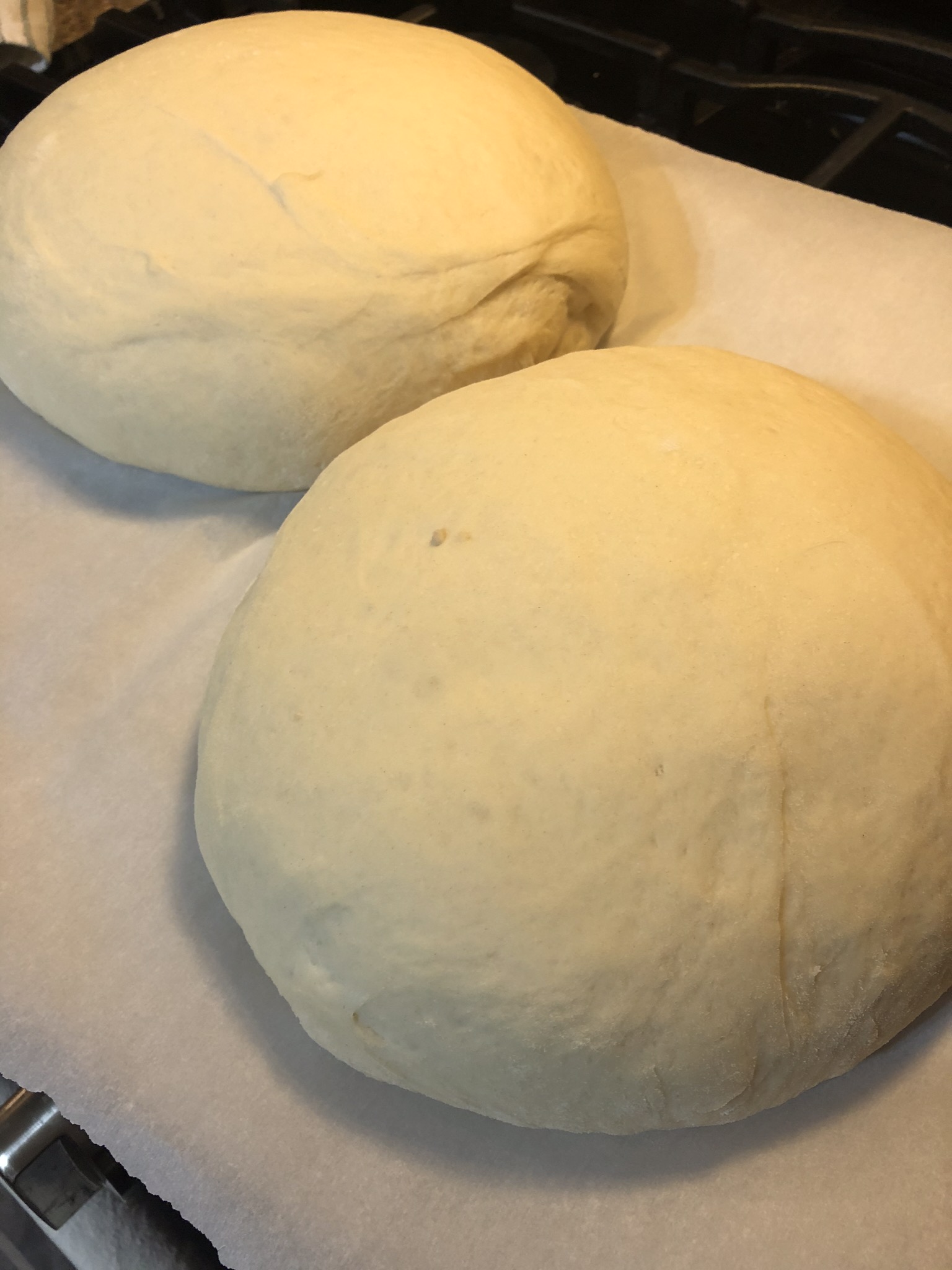
Punch the dough down, cover with that same clean towel, and let it rise for another half hour. Turn the dough out onto a lightly floured surface and allow it to rest for 10 minutes. Divide the dough into two parts. I did two round loaves and put them on a parchment lined sheet pan. If you prefer you can lightly grease two loaf pans and shape the dough accordingly.
Again the towel. Cover the loaves and put them back into the cold oven and allow them to rise until double in bulk, about an hour.
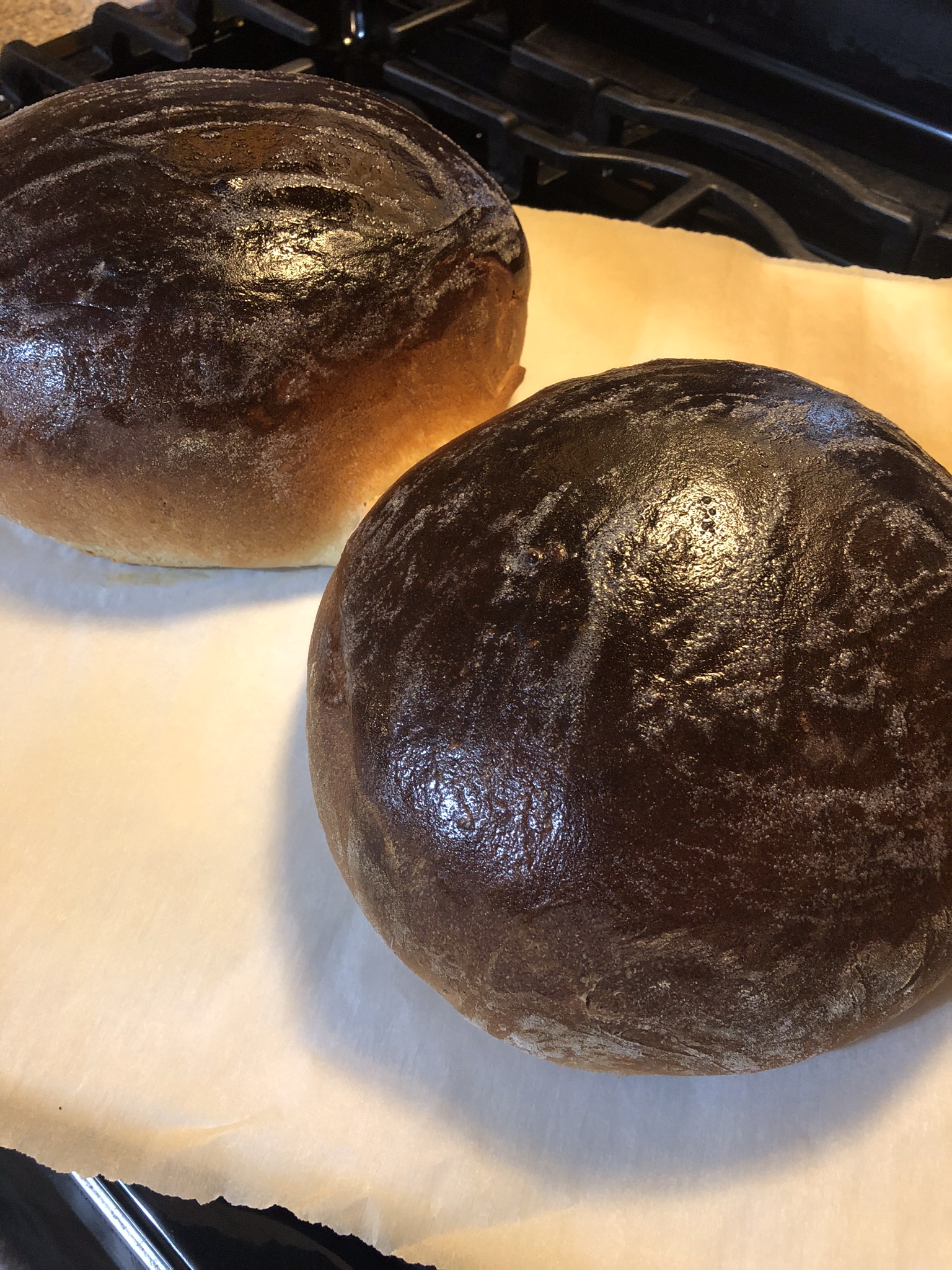
Remove the loaves from the oven and preheat to 400 degrees. Once the oven reaches 400 return the loaves to the hot oven and bake for 35 minutes.
I say 35 minutes but the original recipe said 50 minutes. I set my timer for 40 because I always like to check on progress early. Well, 40 minutes was at least 5 too long. The tops of my loaves were burnt. Not to a crisp. But burnt.
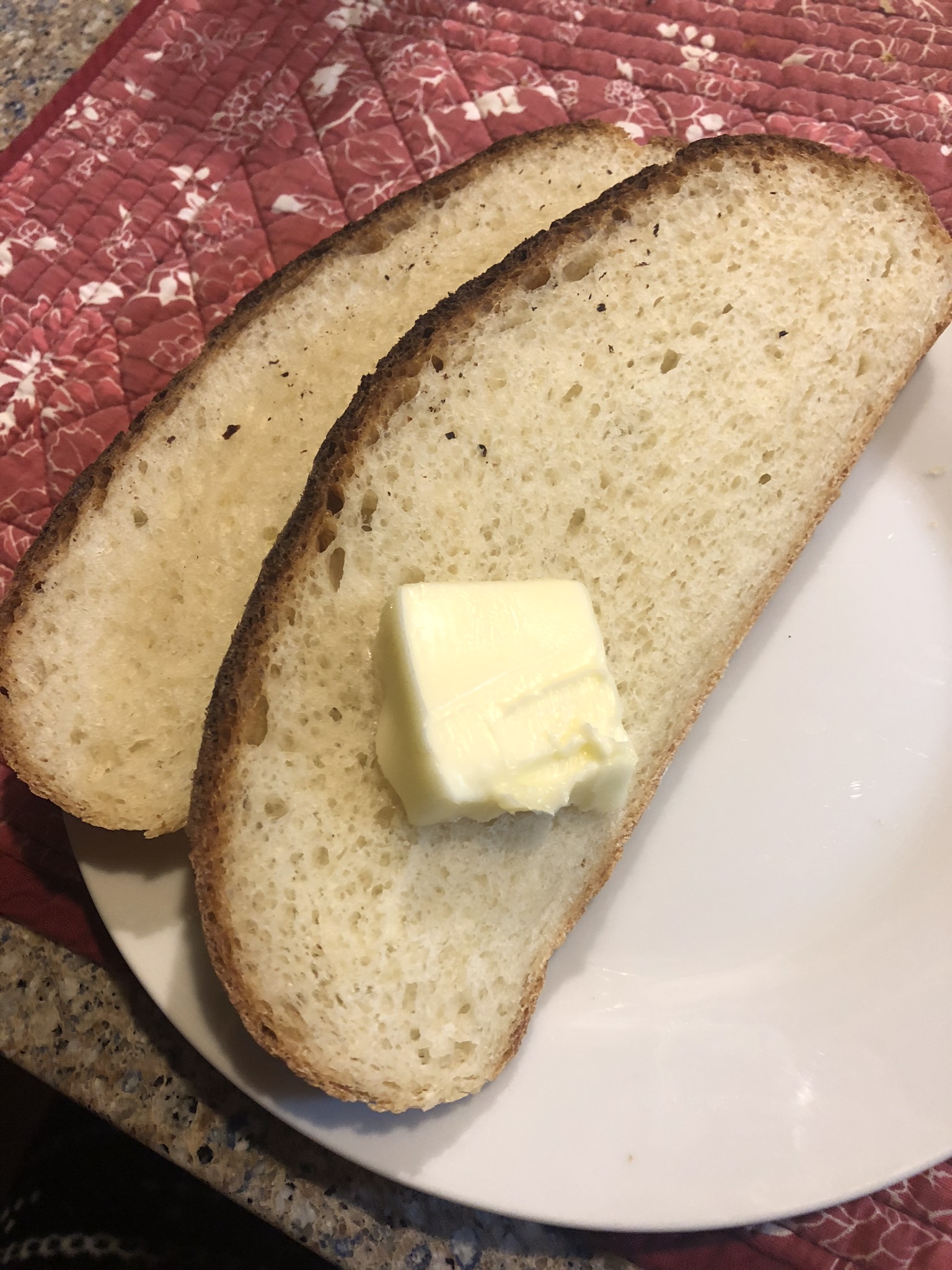
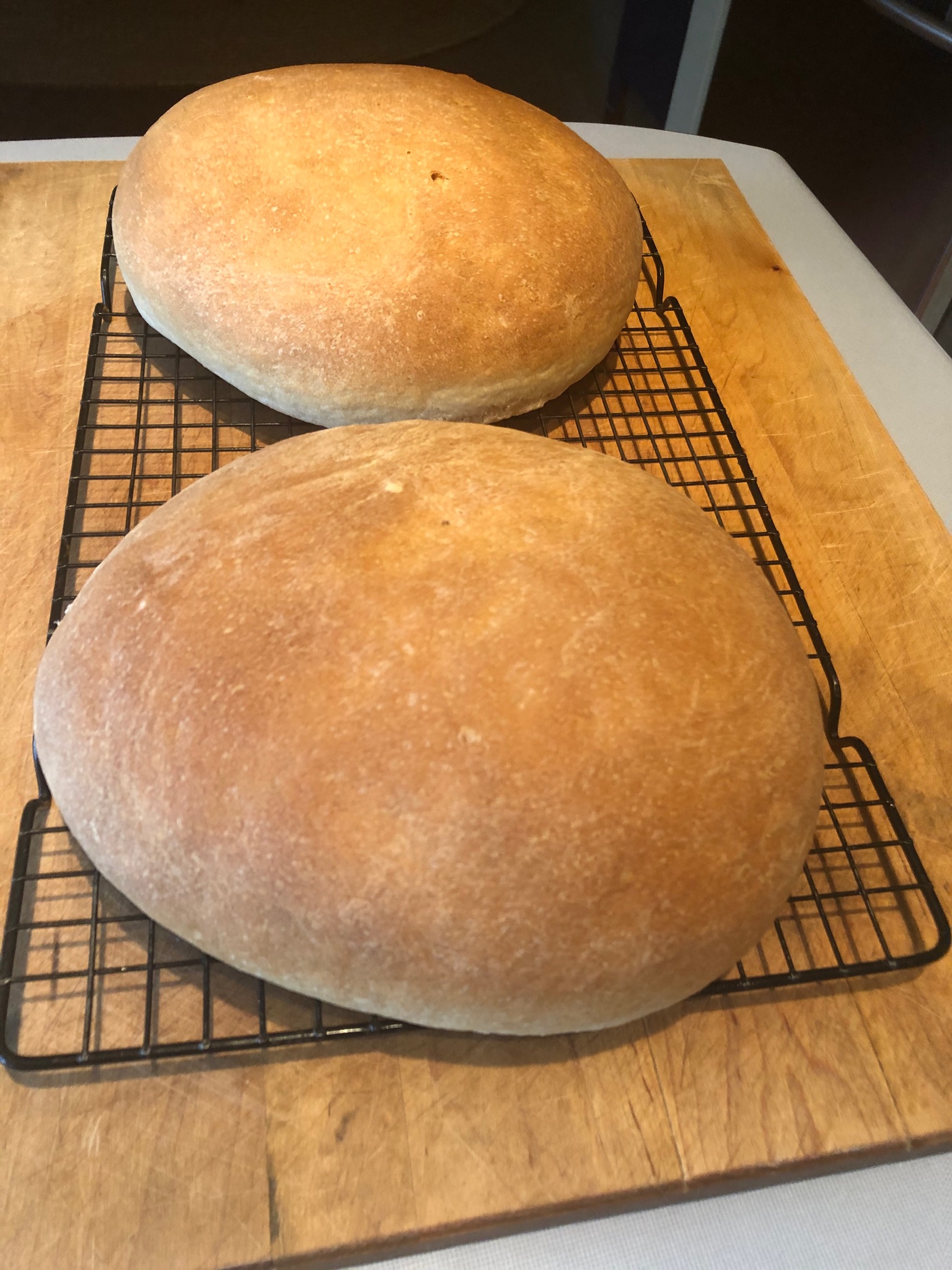
So lesson learned. The bread tastes great minus that top crust. My friend just baked some for 35 minutes. And you can see what a difference 5 minutes makes!
I fed my starter and put it in a quart jar in the refrigerator for next time.
I will try this again soon but I will be watching my bake time very carefully. I made avocado toast this morning and it was perfect!
NOTE: The longer you keep your sour dough starter around the more your bread will have that distinctive flavor. This starter was only two days old so the flavor is very “white bread”. Also, unlike this recipe, many sourdough bread recipes use only the starter and no additional active dry or cake yeast. The starter itself is what makes the dough rise. There is plenty of information online to help answer your questions about feeding and maintaining a sourdough starter.
During this Coronavirus Pandemic we are all spending more time on the internet. Food has become a preoccupation and, if we aren’t cooking, we’re on line looking for recipes. A week or so ago I came across a post with this recipe for Wacky Cake. This particular version is from a cookbook called “Really Cookin” by Carol Ferguson. Credit where credit is due. I messaged this recipe to my friend Georgia and asked if this was the same recipe she uses. She said yes. She has been making this cake for years and she always doubles the recipe. It’s one of their family favorites. The recipe was created as a result of rationing during World War II when milk and eggs were scarce. If you research the recipe it’s also called Crazy Cake, World War II Cake, and Depression Cake. One of the few cake recipes I’ve seen that has you use an ungreased pan and actually has you mix the cake right in the pan. I did make a double batch so that I could share one pan with our neighbors. I mixed it in my mixing bowl and divided the batter between two ungreased pans. But I get the logic of mixing the batter right in the pan…much less cleanup.
Ingredients Doubled:
3 cups AP flour
2 cups sugar
6 T cocoa
2 tsp baking powder
2 tsp baking soda
1 tsp salt
2/3 cup vegetable oil
2 T white vinegar
2 tsp vanilla
2 cups warm water (or coffee…I used coffee)
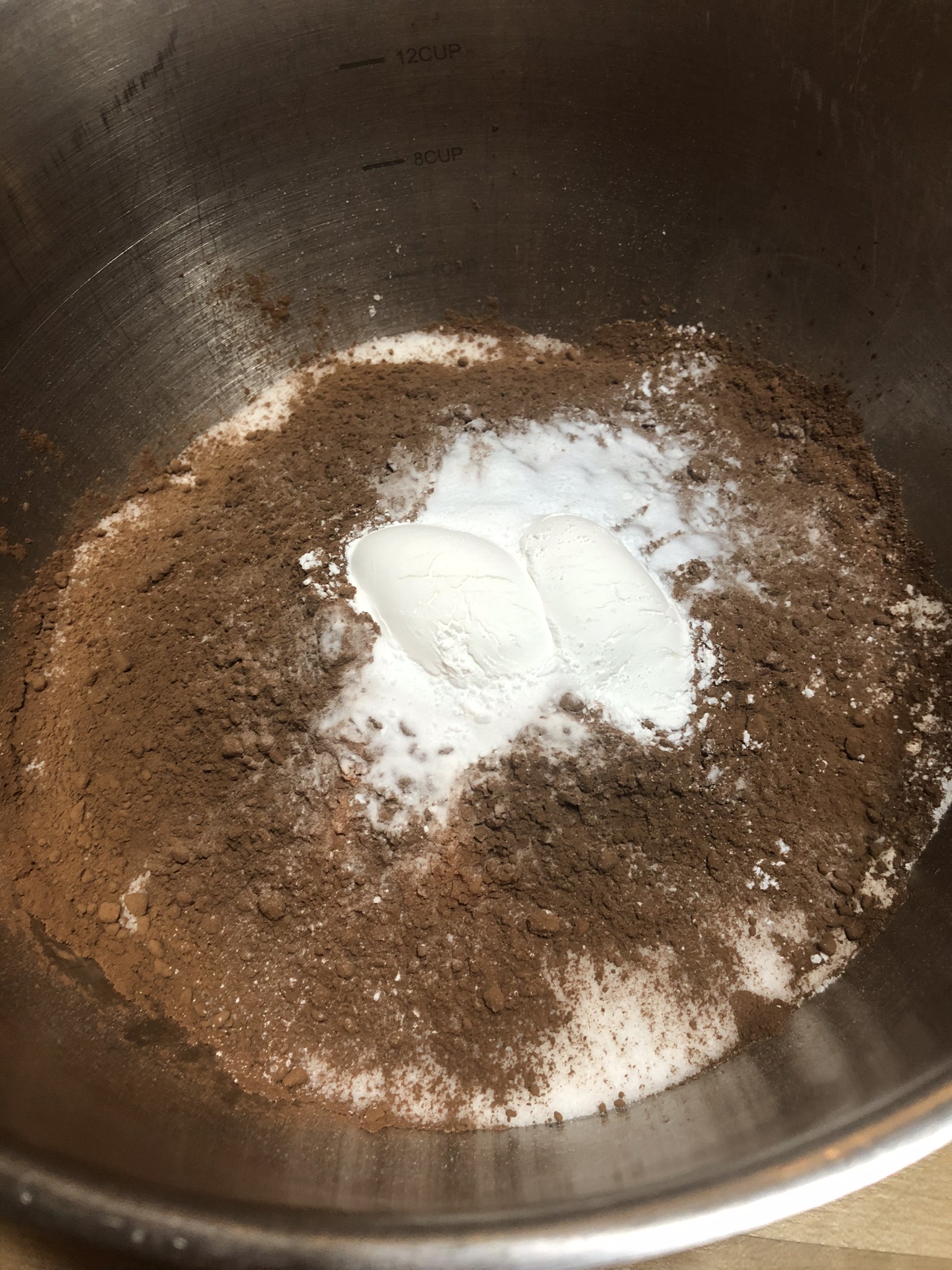
No mixer. No bowl. Simple directions. Get out one 9×13 pan or 2 8×8 pans. Or don’t double and just use one 8×8 pan if you want less cake to tempt you. Preheat your oven to 350. Combine all of your dry ingredients and mix thoroughly with a whisk or a fork.
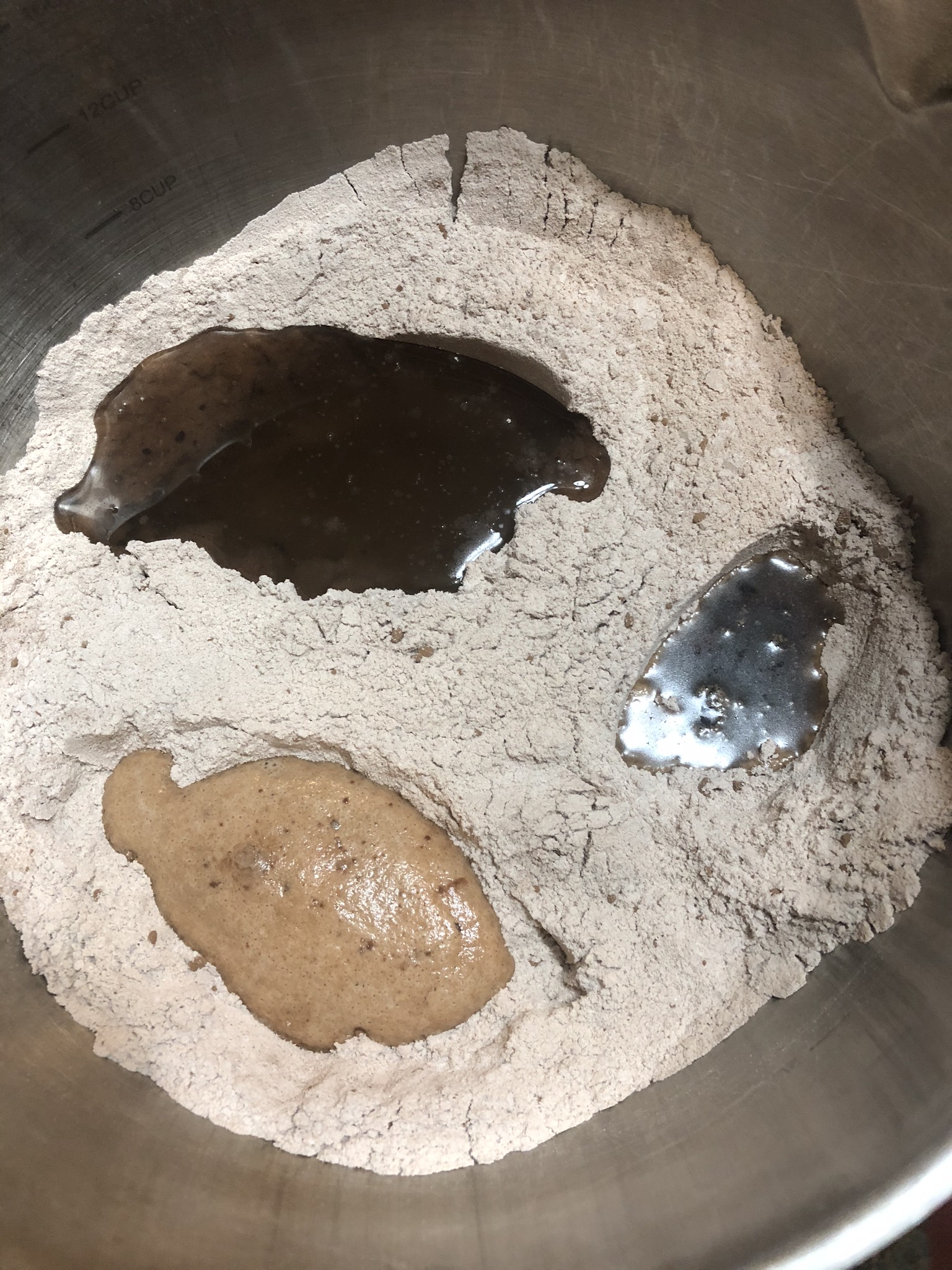
Once the dry ingredients have been mixed, level off the top and make three wells. Pour your oil in one, your vinegar in one and your vanilla in one.
Now pour your warm water or coffee over everything and mix thoroughly with a fork or whisk.
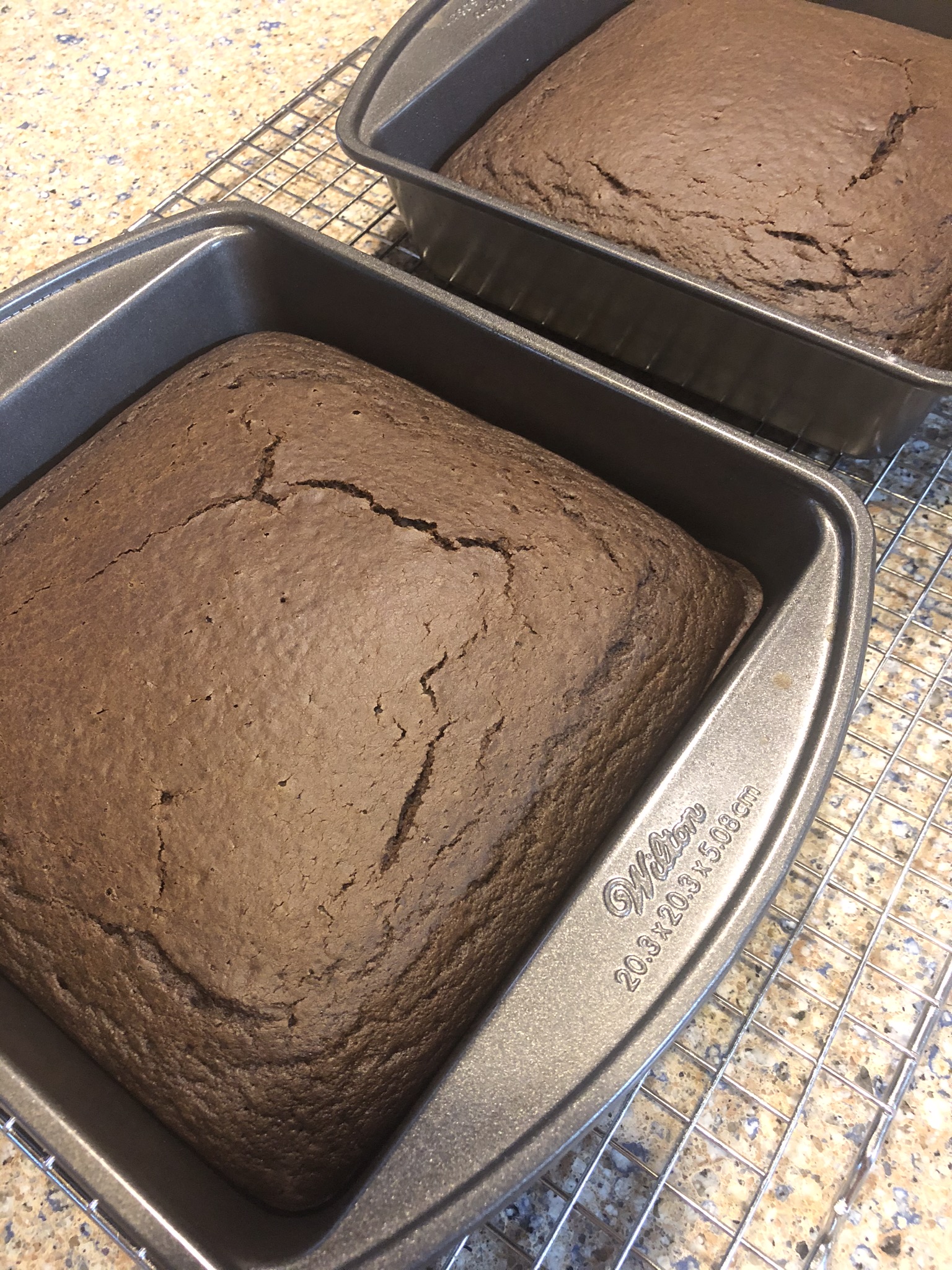
Put your pans in the oven and set your timer for 25 minutes.
Once the cake is done remove from the oven and allow it to cool completely on a wire rack,
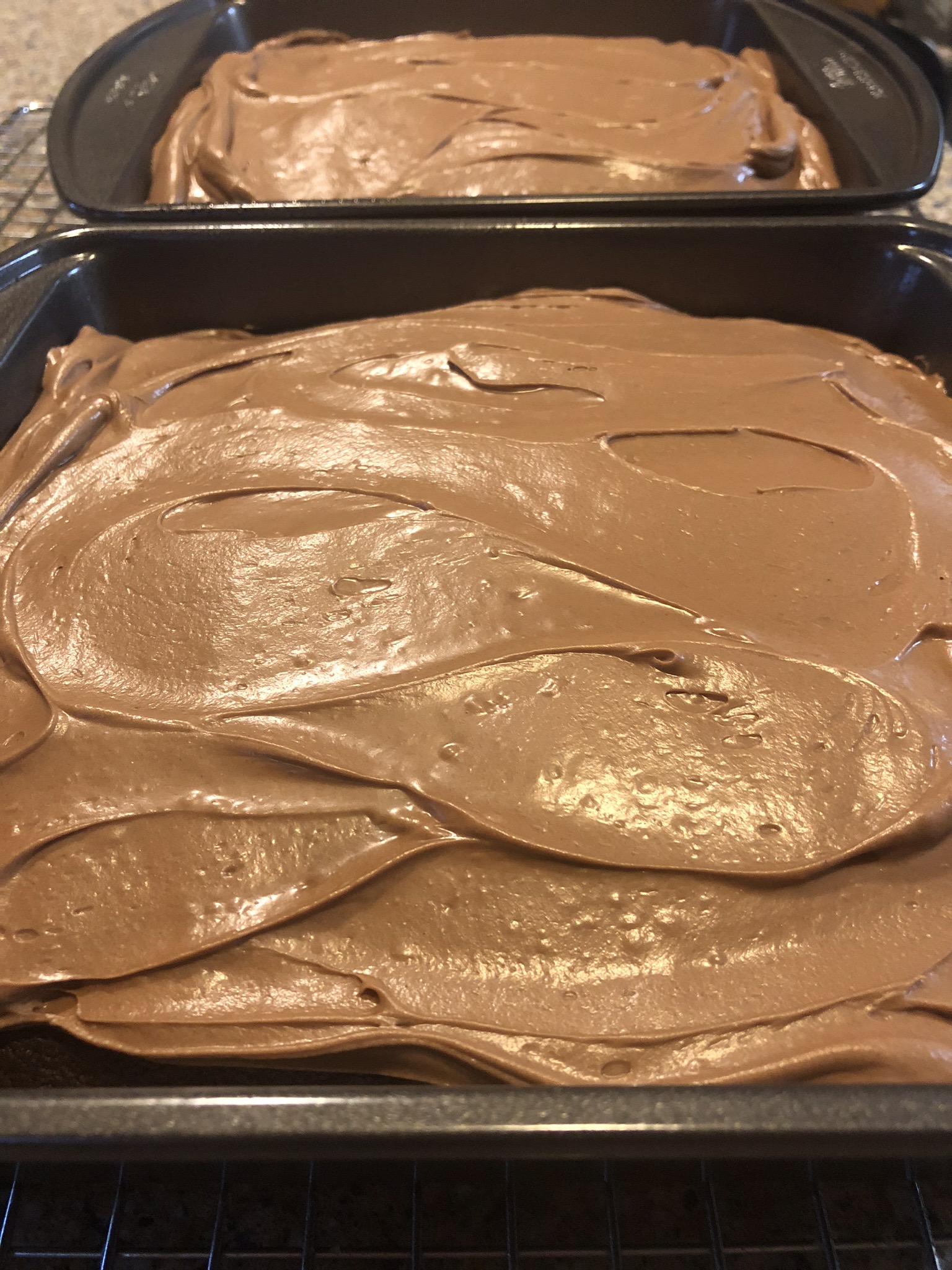
When your cake has cooled completely you can dust with powdered sugar or ice with a ganache or a chocolate buttercream. I used a chocolate butter cream.
Slice and enjoy.
NOTE: I can’t eat chocolate but I’m thinking this might also be good with a peanut butter icing or a vanilla butter cream. I substituted warm leftover coffee for the water because I’m told that coffee brings out the rich chocolate flavors.
Would really have to search to find a cake recipe easier than this one. And it will be perfect during our Coronavirus Pandemic if you are short of eggs and/or milk.
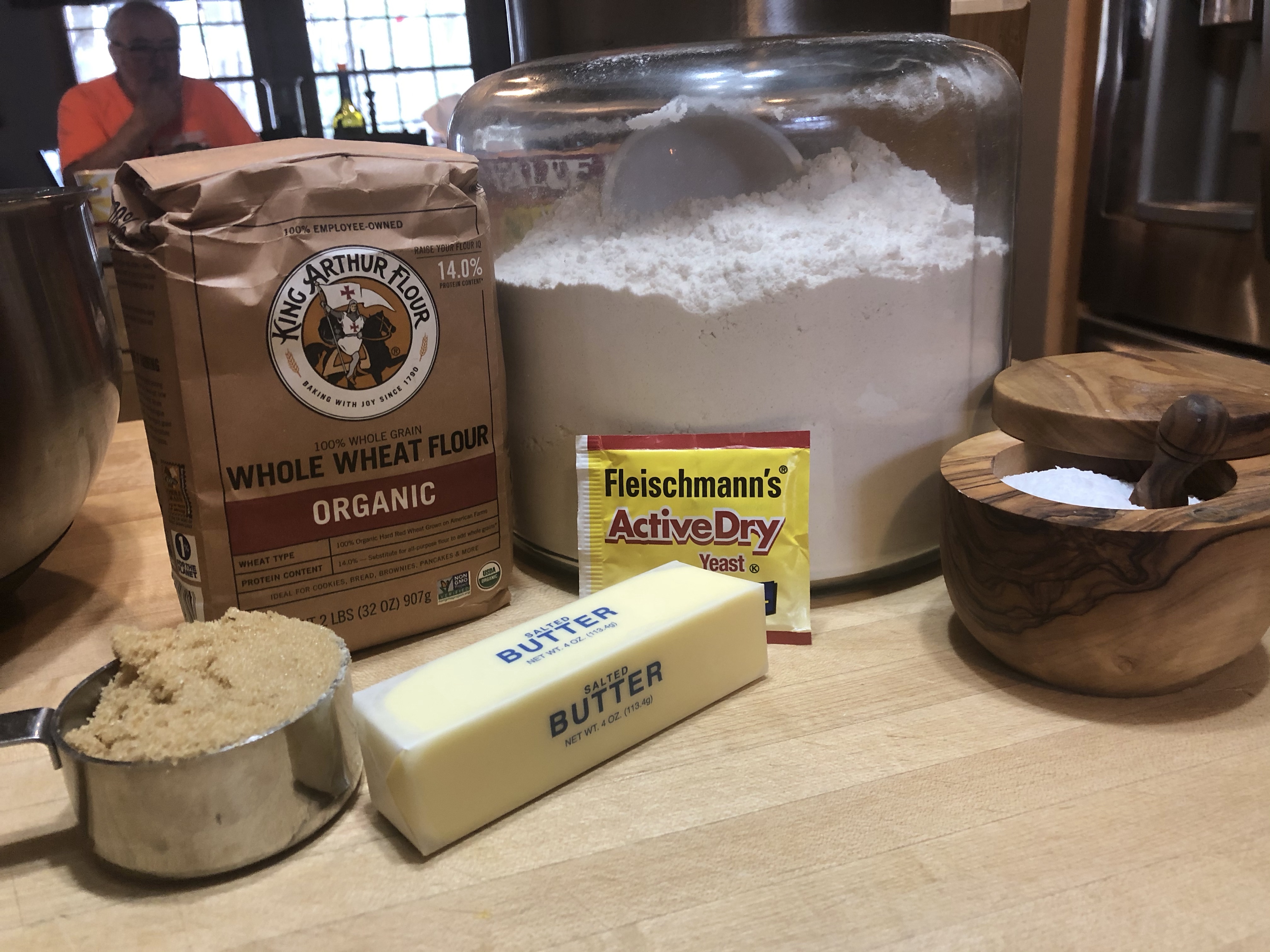
More pandemic bread making. I am using one of the last envelopes of yeast my neighbor was kind enough to share with me. Yeast and flour are extremely hard to come by right now. I’ve never before had trouble finding yeast on the grocery store shelves. Apparently toilet paper isn’t the only thing people are hoarding. A friend messaged me a couple days ago after finding a jar of yeast in her freezer which had a 2013 expiration date on it. She wanted to know if I thought it was still good. I sent her a link with instructions for testing the yeast to see if it would still work. Testing is really very simple. You put a little yeast in warm water with a pinch of sugar and it should start bubbling after a few minutes. If it bubbles, you’re good to go. Amazingly her yeast was still good. Freezing or refrigerating dry yeast lengthens its shelf life as long as it is in an airtight container. Cake yeast should not be frozen. But truthfully, I haven’t seen cake yeast in years!!
Back to my oatmeal bread. This recipe is one that I found years ago in the food section of a local newspaper. It’s a hearty, dense bread. Easy to make. The brown sugar and whole wheat flour give it a bit of a sweet molasses like flavor. We toasted some this morning and enjoyed it with a cup of coffee.
Ingredients:
1 cup old fashioned oats
1/2 cup whole wheat flour
1/2 cup brown sugar
1 T salt
2 T butter
2 cups boiling water
2 1/4 tsp dry yeast
1/2 cup warm water
4 cups AP flour, 1/2 cup whole wheat flour
Combine the first five ingredients in a large bowl, pouring the boiling water over the butter and dry ingredients. Stir and set aside until it cools to lukewarm.
Dissolve the yeast in the 1/2 cup of lukewarm water. Once the oatmeal mixture has cooled, add the yeast. If it is too hot it will kill the yeast so make sure you’ve allowed it to cool sufficiently. Start stirring in the 4 cups of AP flour and the 1/2 cup of wheat flour. You’ll have a shaggy dough.
Empty the dough onto a clean work surface and knead for 5 to 10 minutes. Add a little additional flour if necessary. After kneading you should have a smooth, slightly sticky dough.
Place the dough in a bowl that has been lightly greased with butter. Cover with a clean kitchen towel. This bowl belonged to my grandmother who regularly made pulla (a Finnish braided bread with cardamom) and limpu (a Finnish rye bread). Over the years I watched lots of bread dough rise in that bowl making it extra special to me.
Put the bowl in a warm place and allow the dough to rise until it is double in size. Many new ovens have a proof setting that you can use to speed the rise process a bit.
Punch the dough down and divide into two loaves. You can shape them into standard loaves and put them in greased pans or shape them in rounds on a parchment covered sheet pan. Whatever your shape preference. Cover with a towel and allow the dough to once again double. While your dough is rising preheat the oven to 350 degrees.
Bake for 30 to 40 minutes until golden brown. Remove from the pans and allow the loaves to cool on a wire rack. Slice and enjoy. There’s nothing like homemade bread. The ultimate comfort food.
NOTE: This dough can be made using the dough hook on your KitchenAid. But I think hand kneading is much more satisfying. As my daughter says, sometimes you just have the need to knead. If you keep making bread during this pandemic, it becomes important and necessary to share it with someone.












































 The Finnish Dish
You must be logged in to post a comment.